
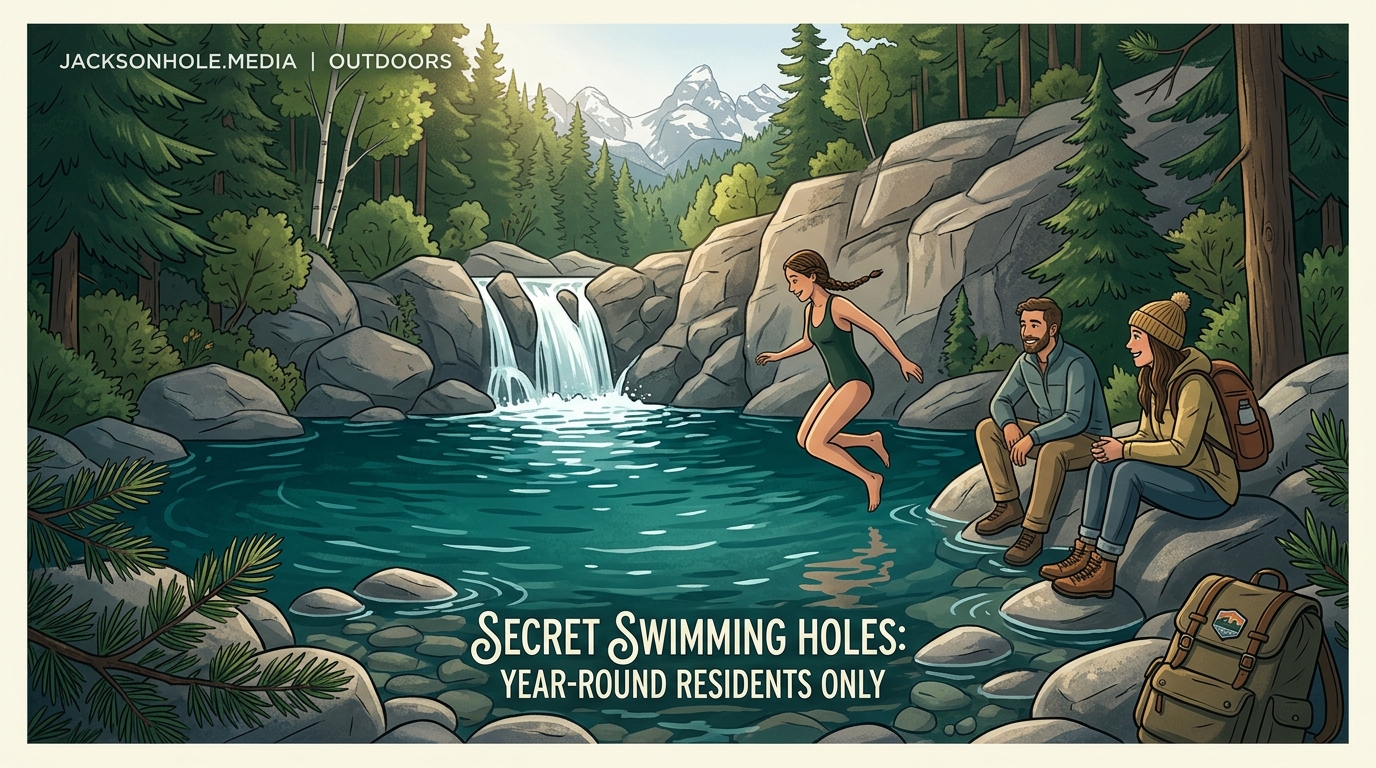
The tourist crowds cluster at Jenny Lake and String Lake like moths to a flame. Meanwhile, year-round residents slip away to swimming holes that rarely appear on maps or Instagram feeds. These aren’t just prettier alternatives. They’re the places locals have been jumping into for decades, the spots where you’ll find ranchers cooling off after fence work and ski patrollers floating on their days off.
Jackson Hole’s secret swimming holes only locals know include secluded river bends, alpine pools, and canyon hideaways that offer cold, clear water away from tourist traffic. Finding them requires insider knowledge, respect for access rules, and willingness to hike beyond the obvious trailheads. Most peak in July and August when snowmelt settles and [water temperature](https://www.cdc.gov/drowning/facts/index.html)s climb above bone-chilling levels.
Why locals keep these spots quiet
Sharing a swimming hole feels different than recommending a restaurant. Once a spot hits social media, it changes. Parking areas overflow. Trash appears. The quiet disappears.
Long-time residents remember when certain spots were truly empty. Now they’re more selective about who gets directions.
This isn’t gatekeeping for the sake of exclusivity. It’s about preservation. These places survive because they see light use. They stay clean because the people who visit them care.
Some swimming holes sit on private land where access depends on relationships built over years. Others require navigating unmarked trails where getting lost is a real possibility.
The unspoken rule among locals is simple. If someone shares a spot with you, you’ve been trusted with something valuable. Don’t broadcast it.
Reading the water before you jump
Not every beautiful pool is safe for swimming. Mountain water hides hazards that aren’t obvious from the bank.
Current strength matters more than it looks. What appears calm on the surface can have powerful undertows, especially near river bends where channels narrow.
Water temperature in these alpine areas stays cold even in August. Fifteen minutes feels refreshing. Thirty minutes can lead to hypothermia.
Depth changes dramatically throughout the season. A pool deep enough for diving in July might be three feet shallower by September.
Watch for submerged logs and rocks. Clear water can be deceiving. What looks like ten feet might be six, and that matters when you’re launching off a boulder.
“I’ve lived here 23 years and I still check every swimming hole before I let my kids jump. The river moves things around. What was safe last summer might have a new log pile this year.” – Sarah Chen, local paramedic and mother of three
The Gros Ventre’s hidden bends
The Gros Ventre River runs for miles through valley ranchland before entering the national forest. Most visitors never leave the main highway, missing the side roads that wind toward the water.
Several swimming holes cluster where the river curves through cottonwood groves. The trees provide shade that keeps the water a few degrees cooler but also shelter from wind.
Access here depends on understanding which sections cross public land versus private ranches. The last working cowboys of the Gros Ventre Valley know every property line, and they’re not always welcoming to trespassers.
The best pools form on outside bends where the current has carved deeper channels. Look for gravel bars on the inside of curves. Those make ideal entry and exit points.
Late July through mid-August offers the sweet spot. Water levels drop enough that current slows, but snowmelt keeps everything cold and clear.
Bring water shoes. The riverbed is all rounded stones that get slippery with algae as summer progresses.
Alpine pools that require the hike
Some of the best swimming holes sit at the end of trails that don’t appear in guidebooks. These require legitimate effort to reach.
Elevation matters. Most alpine lakes stay too cold for comfortable swimming until late July. Even then, you’re looking at water that barely cracks 60 degrees.
The payoff is solitude and scenery that makes the cold worthwhile. These pools often sit in cirques with granite walls rising on three sides.
Getting there means starting early. Not just to beat crowds, but because afternoon thunderstorms are nearly guaranteed in the high country during summer.
Navigation skills aren’t optional. Many of these spots require leaving maintained trails and following game paths or creek beds. Download offline maps before you lose cell service.
What to pack for alpine swimming holes
- Synthetic towel that dries faster than cotton
- Warm layers for after the swim
- Water shoes or old running shoes
- First aid kit including emergency blanket
- Waterproof bag for electronics and dry clothes
- High-calorie snacks for the hike out
Creek pools in the canyons
The canyons cutting into the Teton Range hide swimming holes that form where creeks cascade over bedrock ledges. These spots offer something different from river swimming.
Water moves faster here, creating natural water slides and plunge pools. The geology creates natural diving boards and sun-warmed rocks perfect for lounging between dips.
Cache Creek, Granite Creek, and several unnamed drainages all have sections where locals congregate on hot afternoons. Finding the right spots requires either local knowledge or willingness to bushwhack upstream.
The water here comes straight from snowfields and glaciers. It’s colder than river swimming, but the pools are often smaller and more sheltered, which makes the cold more manageable.
Flash flood risk is real in these narrow canyons. Check weather forecasts not just for the valley but for the high peaks. A thunderstorm ten miles away can send a wall of water down these drainages.
Snake River secrets
The Snake River gets plenty of attention from floaters and anglers, but swimmers tend to overlook it. The current intimidates people, and rightly so in many sections.
But certain bends and side channels offer swimming opportunities that locals have been using for generations. These spots require understanding river dynamics.
Look for eddies behind large boulders or where side channels split off from the main flow. These create pockets of calmer water while maintaining the river’s clarity.
Timing matters more on the Snake than anywhere else. Early summer runoff makes swimming dangerous. By late August, flows mellow enough that skilled swimmers can handle it.
Why a former Wall Street trader now guides fly fishing trips on the Snake River offers perspective on reading water conditions, skills that apply equally to swimming.
Never swim alone in the Snake. The current can shift faster than you expect, and cold water saps strength rapidly.
Seasonal timing for different spots
| Month | Best Locations | Water Temp | Conditions |
|---|---|---|---|
| June | Lower elevation rivers | 45-55°F | High water, strong current |
| July | Mid-elevation creeks | 50-60°F | Dropping flows, clearing water |
| August | Alpine pools, all rivers | 55-65°F | Peak swimming season |
| September | Lower canyons, rivers | 50-60°F | Cooling temps, stable flows |
How to find your own secret spot
The best swimming holes are the ones you discover yourself. That requires some detective work and willingness to get your feet wet, literally.
- Study topographic maps looking for where creeks widen or rivers bend sharply
- Talk to people who work outdoors, like trail crews or river guides
- Follow fishermen, they know where the deep pools are
- Hike upstream or downstream from popular access points
- Check water levels using online gauges before committing to a long drive
- Scout locations in spring, then return when water drops
Public land boundaries determine what’s accessible. The national forest offers the most options, but even there, some areas restrict access during wildlife sensitive periods.
Private property is everywhere in the valley. Assume land is private unless you’ve confirmed otherwise. Trespassing charges are real, and locals have little patience for it.
Safety considerations nobody mentions
Cold water shock kills people every year in mountain environments. Your body’s response to sudden immersion in water below 60 degrees can cause involuntary gasping and hyperventilation.
Enter gradually. Wade in rather than jumping, especially if you’re alone.
Alcohol and swimming don’t mix, particularly in cold water where your judgment is already impaired by temperature.
Know your limits. Mountain swimming isn’t like pool laps. The cold, current, and altitude all tax your system faster than you expect.
Tell someone where you’re going. Cell service is spotty to nonexistent at most of these locations.
The unwritten etiquette
Locals follow certain practices at swimming holes that keep these places special. Violate these norms and you’ll earn dirty looks at minimum.
Pack out everything you pack in. This seems obvious but bears repeating. Cigarette butts, food wrappers, and bottle caps all count as trash.
Keep noise levels reasonable. People come to these spots for peace. Bluetooth speakers destroy that.
Respect others’ space. If someone is already at a small swimming hole, consider it occupied and find another spot.
Don’t create new trails or campsites. Use existing access points and rest areas.
Leave no trace extends to social media. Consider keeping your photos to yourself or at least avoid geotagging the exact location.
When to avoid the water entirely
Some days and conditions make swimming dangerous regardless of your skill level.
Recent heavy rain turns creeks into chocolate milk and increases flow dramatically. Wait at least 24 hours after significant precipitation.
Lightning storms develop rapidly in the mountains during summer afternoons. If you hear thunder, get out of the water immediately. You’re the tallest object in most swimming holes.
Early season, before mid-July, brings high water that creates hazards even in normally calm pools. The cold also becomes genuinely dangerous rather than just uncomfortable.
Wildlife activity peaks at dawn and dusk near water sources. Swimming during these times increases your chances of unwanted encounters with moose, bears, or other animals.
Gear that makes the difference
You don’t need much equipment for swimming holes, but a few items improve the experience significantly.
A good dry bag protects your phone, keys, and wallet while you’re in the water. Get one that floats in case it comes loose.
Neoprene socks or water shoes protect your feet from sharp rocks and provide traction on slippery surfaces. They also make cold water more tolerable.
A small towel designed for backpacking dries you off and packs smaller than a beach towel. Synthetic materials dry faster than cotton.
Polarized sunglasses let you see underwater hazards before you step on them. They’re also crucial for spotting submerged logs or rocks.
Reading weather in the high country
How to read weather in the Tetons when your life depends on it becomes essential knowledge for anyone swimming in alpine areas.
Clouds building over the peaks by mid-morning signal likely afternoon storms. Plan to be off the water by 2 PM.
Wind direction tells you what’s coming. Weather systems typically move from west to east, so watch the western horizon.
Temperature drops of more than a few degrees within an hour often precede storms. Pay attention to sudden cooling.
Where locals actually swim
The specific locations matter less than understanding what makes a good swimming hole. Locals look for certain characteristics.
Clear water indicates stable flows and minimal sediment. Cloudy water means recent rain or snowmelt upstream.
Gradual entry allows you to adjust to cold temperatures. Steep banks force you to jump or dive, which increases cold water shock risk.
Nearby shade provides relief from intense mountain sun. Full sun exposure all day can lead to sunburn and dehydration.
Easy exit points matter more than people realize. Getting into water is easy. Getting out when you’re cold and tired requires thought.
The swimming holes that disappeared
Development, flooding, and changing land ownership have eliminated some historic swimming spots. Long-time residents remember places that no longer exist or became inaccessible.
The 2011 floods reshaped sections of the Gros Ventre River, destroying pools that had been there for decades. New ones formed, but they’re not the same.
Property sales sometimes close off access roads that crossed private land for years. What was available by handshake agreement becomes legally off-limits.
Increased visitation has forced some landowners to restrict access. Too many people led to trash, noise, and liability concerns.
This makes the remaining secret swimming holes only locals know even more precious. They’re not infinite resources.
Teaching the next generation
Parents who grew up swimming in these spots now bring their own kids. Passing down knowledge about safe access and proper behavior matters.
Children learn water safety differently in mountain environments than swimming pools. Current awareness, cold water management, and hazard recognition all require hands-on teaching.
The social contract around these places gets transmitted through example. Kids watch how adults treat the environment and other visitors.
Some families have been swimming at the same bend in the river for three generations. That continuity creates stewardship that no amount of regulation can replicate.
Making cold water tolerable
Mountain water rarely gets warm by most standards. Strategies exist for extending your swimming time.
Warm up thoroughly before entering. Do some jumping jacks or jog in place. Starting warm buys you more time in cold water.
Keep your head dry initially. Dunking your head triggers stronger cold shock responses. Wade in, adjust, then fully immerse.
Stay active while swimming. Floating motionless lets the cold penetrate faster. Keep moving to maintain body heat.
Know when to get out. Uncontrollable shivering means you’ve stayed too long. Exit before you reach that point.
Warm clothes and hot drinks immediately after swimming prevent the afterdrop, where your core temperature continues falling even after you’re out of the water.
Why these places matter beyond swimming
Secret swimming holes only locals know serve purposes beyond recreation. They’re gathering spots where community happens away from commercial spaces.
You’ll see the same faces at certain spots throughout summer. Conversations happen. Friendships form. Information gets shared.
These places provide free recreation in an area where what it really costs to live in Jackson Hole in 2026 makes affordable activities precious.
They also serve as ecological indicators. Locals notice when water quality changes or flows seem different than previous years. That informal monitoring matters.
Finding your place in the water
The best approach to discovering swimming holes is building relationships with people who already know them. That takes time and genuine interest in the community.
Work a summer season in the valley. You’ll meet other seasonal workers who know spots they’re willing to share.
Join outdoor clubs or volunteer for trail maintenance. The people doing conservation work often know the land intimately.
Be patient. Trust gets earned through demonstrated respect for places and people. Nobody shares their favorite spots with someone they met yesterday.
When someone does share a location with you, treat it like the gift it is. Keep it clean, keep it quiet, and maybe someday you’ll pass it along to someone else who deserves to know.
The secret swimming holes around Jackson Hole exist in a delicate balance between use and preservation. They survive because the people who love them most protect them fiercest. Understanding that dynamic matters more than knowing specific coordinates. The water will always be cold, the rocks will always be slippery, and the best spots will always be the ones you had to work to find.