
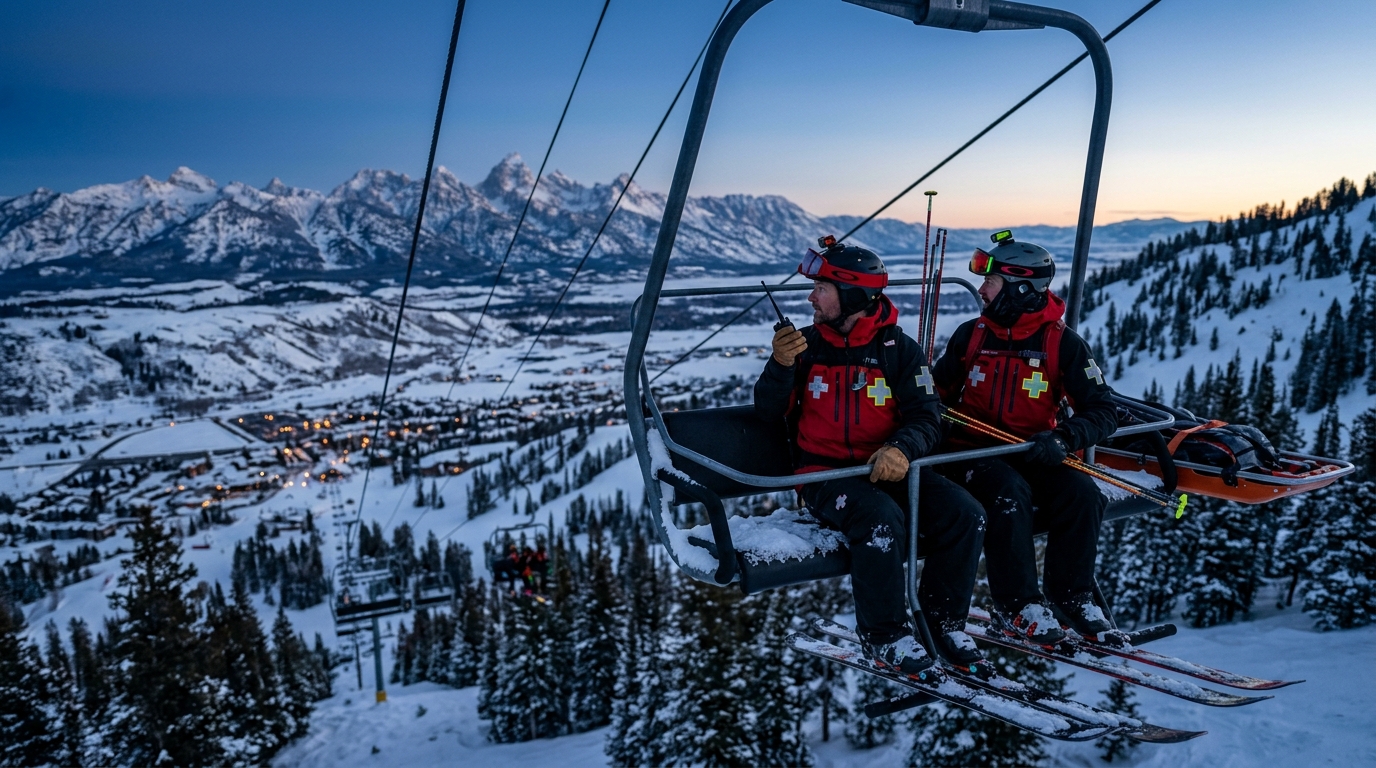
The first explosion echoes across Rendezvous Bowl at 6:47 a.m., well before the gondola starts spinning. Most skiers are still drinking coffee in the village below while the Jackson Hole ski patrol is already halfway through their most critical work of the day. They’re not just opening terrain. They’re making calculated decisions about avalanche control on some of the steepest inbounds skiing in North America.
Jackson Hole ski patrol operates one of the most demanding safety programs in American skiing, managing 2,500 acres of expert terrain through avalanche mitigation, medical response, and guest education. The team combines wilderness medicine expertise with explosive handling certifications, working in conditions that can shift from bluebird to whiteout within minutes across 4,139 vertical feet.
What makes Jackson Hole ski patrol different from other resorts
The numbers tell part of the story. Jackson Hole Mountain Resort claims 4,139 feet of continuous vertical, the most in the United States. Fifty percent of the terrain is rated expert. That’s not marketing speak. Corbet’s Couloir drops you into a mandatory air before you even start skiing.
This terrain profile creates unique demands. While patrol teams at many resorts focus primarily on groomed run maintenance and basic first aid, the Jackson Hole ski patrol deals with backcountry-level consequences on marked trails.
The team manages avalanche terrain that would be considered out of bounds at most other ski areas. Cody’s Bowl, the Hobacks, and Granite Canyon all require active snow safety management throughout the season.
Weather compounds everything. The Tetons generate their own microclimates. A storm can deposit three feet of snow overnight, then high winds redistribute it into loaded pockets that require careful assessment before opening.
“We’re not just checking if a run is safe to open. We’re constantly evaluating whether the snowpack will hold on slopes that average 38 degrees and sometimes hit 50. That calculation changes hour by hour.” – Veteran Jackson Hole ski patrol member
The morning routine that keeps the mountain safe
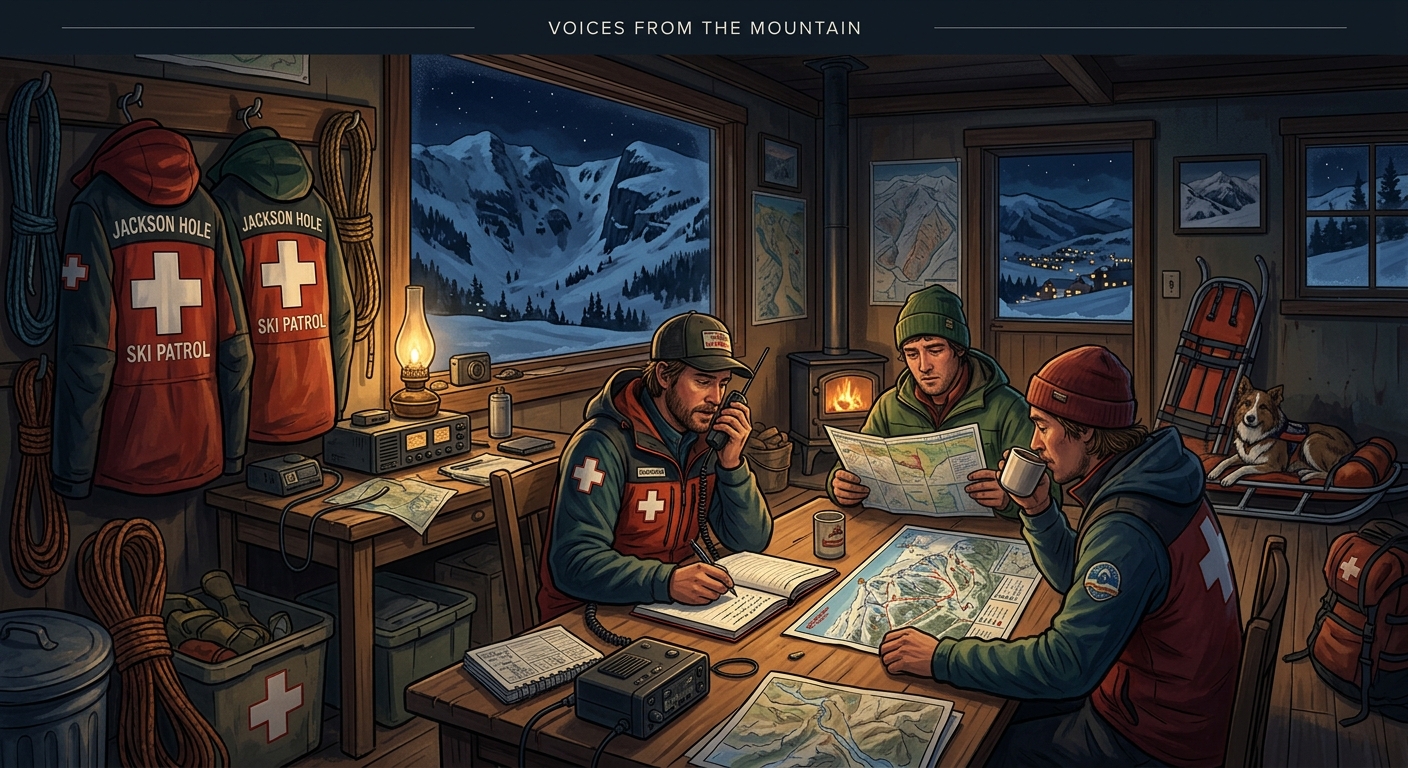
Patrol members arrive between 6:00 and 6:30 a.m., depending on their route assignment. The day begins with a detailed weather and snowpack briefing.
Here’s how a typical opening sequence unfolds:
-
Snow pit analysis and stability testing – Teams dig pits in representative terrain to examine weak layers, perform compression tests, and document crystal structure changes from the previous day.
-
Route assignments and explosive allocation – The patrol director assigns teams to specific zones based on overnight snowfall, wind loading patterns, and areas that haven’t been skied recently.
-
Avalanche control work – Using a combination of hand charges, helicopter bombing in extreme conditions, and the resort’s military-surplus howitzer, teams systematically release unstable snow before guests arrive.
-
Sweep and verification – After control work, patrollers ski each route to verify stability, mark hazards, and confirm that the terrain matches the predicted outcome.
-
Final opening decision – Zone by zone, terrain opens only after the patrol director receives confirmation that all protocols are complete.
This process can take anywhere from two to five hours depending on conditions. On a big powder day following a storm, some expert terrain might not open until noon.
The physical demands are substantial. Patrollers often ski 15,000 to 20,000 vertical feet before the first guest gets off the tram. They’re carrying packs loaded with medical supplies, avalanche rescue gear, and communication equipment.
Medical response in vertical terrain
Jackson Hole ski patrol responds to roughly 1,200 incidents each season. These range from minor cuts requiring a bandage to full trauma scenarios involving helicopter evacuation.
The vertical relief creates transport challenges that don’t exist at smaller resorts. An injury at the top of Rendezvous Bowl sits more than 4,000 feet above the base. Getting a patient down safely might involve:
- Toboggan transport on steep, mogul-covered terrain
- Coordination with Teton County Search and Rescue for helicopter extraction
- Managing patient care in subzero temperatures and high winds
- Navigating cliffs and narrow chutes that limit route options
Every Jackson Hole ski patrol member holds Outdoor Emergency Care certification at minimum. Many pursue additional credentials in wilderness medicine, recognizing that they’re often providing care in conditions where evacuation might take an hour or more.
The patrol maintains multiple stations across the mountain, but response times vary dramatically based on location. An incident near the base of Après Vous can see help arrive in under five minutes. Someone injured deep in the Hoback backcountry might wait 20 to 30 minutes even with immediate dispatch.
Similar to how patrollers work in challenging conditions elsewhere, those who spend winter as a ski patrol on Teton Pass face comparable demands managing avalanche terrain and remote rescues.
The skills and certifications required to join the team
Getting hired onto Jackson Hole ski patrol requires more than just strong skiing ability, though that’s certainly a prerequisite. Candidates must demonstrate expert-level proficiency in all conditions and terrain types.
The baseline requirements include:
- Advanced or expert skiing ability verified through on-snow testing
- Outdoor Emergency Care certification or higher medical training
- Avalanche Level 1 certification minimum (Level 2 preferred)
- Physical fitness to work at altitude in extreme weather
- Valid driver’s license and clean background check
But those qualifications only get you to the interview stage. The patrol looks for specific character traits that matter more than any certification.
They want people who stay calm when everything goes sideways. When you’re managing a spinal injury on a 40-degree slope in a whiteout, your certification card matters less than your ability to think clearly under pressure.
They need team members who communicate precisely. Unclear radio traffic during avalanche control work can have serious consequences.
They value people who can read snow and weather conditions intuitively, not just textbook knowledge. The ability to look at a slope and integrate wind direction, recent temperature changes, and crystal type into a stability assessment comes from experience, not classroom hours.
Training that never stops
New hires enter a probationary period lasting their entire first season. During this time, they work under direct supervision while learning Jackson Hole’s specific protocols and terrain.
The training program covers:
- Resort-specific avalanche paths and their historical behavior
- Explosive handling and storage procedures
- Toboggan handling techniques for steep, technical terrain
- Radio communication protocols and emergency codes
- Guest service standards and conflict de-escalation
- Lift evacuation procedures for the tram and all chairlifts
Even veteran patrollers participate in ongoing education. The team conducts regular scenario training throughout the season, practicing everything from multiple casualty incidents to lost child protocols.
Fall training begins in October, well before the lifts start running. The patrol spends weeks refreshing medical skills, reviewing avalanche science updates, and practicing rope rescue techniques.
Physical fitness testing happens annually. The job demands cardiovascular endurance, core strength for toboggan handling, and the ability to function effectively in thin air and cold temperatures.
A day in the life beyond the morning routine
After the mountain opens, Jackson Hole ski patrol transitions into operational mode. Teams spread across the resort’s various zones, maintaining visibility and responding to incidents.
Patrollers rotate through different assignments:
- Zone patrol – Skiing assigned terrain, interacting with guests, identifying hazards, and providing immediate response to incidents
- Lift operations support – Assisting with lift loading, monitoring for unsafe behavior, and managing lift-related medical calls
- Clinic duty – Staffing the base area medical clinic for walk-in injuries and illnesses
- Sweep – Conducting end-of-day runs to ensure no one remains on the mountain after closure
The work requires constant situational awareness. Patrollers track changing weather, monitor radio traffic, watch for signs of guest distress, and continuously assess snow conditions.
Lunch breaks are staggered to maintain coverage. Many patrollers eat quickly in the patrol room rather than in public dining areas, staying available for emergency response.
Afternoon brings its own challenges. As the day warms, snow conditions change. Slopes that were stable at 9 a.m. might develop wet slide potential by 2 p.m. The patrol adjusts closure decisions accordingly.
Common mistakes and how patrol addresses them
Guest behavior creates predictable patterns that Jackson Hole ski patrol manages daily. Understanding these patterns helps explain why certain rules exist.
| Mistake | Why It Happens | How Patrol Responds |
|---|---|---|
| Skiing closed terrain | Powder fever overrides judgment | Ticket revocation, potential trespass charges |
| Inadequate equipment for conditions | Underestimating Teton weather | Education, lending program for essentials |
| Skiing beyond ability level | Peer pressure or misreading trail ratings | Escort to appropriate terrain, technique coaching |
| Ignoring rope lines and signs | Assumption that markings are suggestions | Direct intervention, explanation of consequences |
| Separating from group without communication | Excitement in large terrain | Lost person protocols, family reunification |
The patrol emphasizes education over punishment when possible. A first-time visitor who makes an honest mistake receives different treatment than a local who repeatedly ignores closures.
That said, some violations carry immediate consequences. Ducking ropes into avalanche terrain results in pass revocation without exception. The patrol can’t risk someone triggering a slide that might bury other skiers below.
The physical and mental toll of the job
Working Jackson Hole ski patrol is not a casual seasonal gig. The job demands physical output that rivals professional athletics, combined with the stress of life-and-death decision making.
Patrollers regularly work in conditions that would send most people indoors. Temperatures can drop to 20 below zero at the summit. Wind chills reach dangerous levels. Visibility sometimes drops to arm’s length.
The cumulative vertical skied over a season can exceed 500,000 feet. That’s the equivalent of skiing from sea level to the summit of Everest nearly 17 times. Knees, backs, and shoulders take sustained punishment.
Mental fatigue is less visible but equally significant. The responsibility of making avalanche control decisions, managing serious medical emergencies, and maintaining constant vigilance creates stress that accumulates over months.
Patrol members develop coping strategies. Many maintain rigorous fitness routines during the off-season. Some pursue professional counseling to process traumatic incidents. The team culture emphasizes peer support and open communication about the job’s challenges.
Turnover exists, but many patrollers make this a decades-long career. The combination of meaningful work, exceptional skiing access, and tight team bonds keeps people committed despite the demands.
Just as others find fulfillment in unconventional mountain careers, the patrol attracts people who prioritize purpose over conventional success markers, much like those who’ve made career changes to pursue outdoor guiding.
Guest interactions that define the experience
Jackson Hole ski patrol serves as the primary face of mountain safety for hundreds of thousands of annual visitors. These interactions range from brief trail encounters to extended patient care scenarios.
The best patrollers master the balance between authority and approachability. They need to enforce rules firmly when safety is at stake while remaining friendly ambassadors for the resort experience.
Common interaction types include:
- Providing directions and terrain recommendations
- Explaining closure reasons and estimated opening times
- Offering skiing tips and technique suggestions
- De-escalating conflicts between guests
- Educating visitors about mountain hazards
- Celebrating great runs and powder days with enthusiastic skiers
Many guests never think about patrol unless they need help. Others seek out patrollers for conversation, recognizing them as experts who can enhance their mountain experience.
The patrol also manages difficult conversations. Telling someone their injured friend needs helicopter evacuation requires both medical knowledge and emotional intelligence. Explaining to a parent why their child can’t ski certain terrain despite having the physical ability demands patience and clear communication.
Weather challenges unique to the Tetons
The Teton Range generates weather patterns that confound even experienced mountain professionals. Jackson Hole ski patrol must interpret and respond to conditions that can shift dramatically within minutes.
The resort’s location creates several complicating factors. The mountains rise abruptly from the valley floor with minimal foothills to moderate weather systems. Storms hit with full intensity.
Wind is a constant consideration. The summit of Rendezvous Mountain regularly experiences gusts exceeding 60 mph. These winds transport snow, creating loaded slopes on leeward aspects while scouring windward faces down to ice.
Temperature inversions are common. The base might sit at 15 degrees while the summit reaches 5 below. Patrollers dress in layers, constantly adjusting to maintain comfort across massive elevation changes.
Whiteout conditions can develop rapidly. What begins as light snow can intensify into zero visibility within 20 minutes as winds pick up. The patrol monitors weather stations across the mountain, making closure decisions before conditions trap guests in dangerous situations.
Spring brings different challenges. Warm temperatures create wet slide conditions on sun-exposed slopes. The patrol must time closures precisely, balancing guest access against increasing avalanche danger as the day progresses.
Understanding these patterns takes years of observation. New patrol members lean heavily on veterans who’ve watched the mountain through dozens of winter cycles, learning which weather combinations produce specific snow stability scenarios.
Those who work outdoors year-round in the Tetons develop similar weather reading skills, recognizing that reading weather when your life depends on it becomes second nature after enough seasons.
The relationship between patrol and ski community
Jackson Hole ski patrol occupies a unique position within the local skiing culture. They’re simultaneously authority figures, fellow skiers, and community members who share the same powder days and après spots as everyone else.
This dual identity creates interesting dynamics. Off-duty patrollers might lap the tram with the same people they’ll be enforcing rules on the next day. That local at the bar might be the person who ducked a rope last week.
The patrol works to maintain credibility through consistency and competence. When locals see patrol making sound decisions about terrain openings, managing incidents professionally, and skiing with obvious skill, respect follows naturally.
Conflicts arise when guests disagree with closure decisions or feel rules are enforced arbitrarily. The patrol addresses this through transparency, explaining the reasoning behind decisions whenever possible.
Many community members don’t realize the full scope of what patrol does. They see the visible aspects like toboggan rescues and rope line enforcement, but miss the 6 a.m. avalanche control work that makes their powder run possible.
The patrol has worked to increase visibility into their operations. Social media posts showing morning control work, educational presentations about avalanche science, and community events help build understanding and appreciation.
Career progression and long-term opportunities
Starting as a seasonal patrol member can lead to various career paths within mountain safety and resort operations. Jackson Hole offers opportunities for those who prove themselves over multiple seasons.
Advancement typically follows this progression:
- Seasonal patroller (first 1-3 years)
- Senior patroller with specialized certifications (3-7 years)
- Lead patroller overseeing specific zones (5-10 years)
- Assistant patrol director managing operations (10+ years)
- Patrol director with full program responsibility (15+ years)
Some patrollers branch into related fields. The skills developed on patrol translate well to careers in avalanche forecasting, wilderness medicine, search and rescue, and outdoor education.
Others use patrol as a foundation for professional ski careers. Several Jackson Hole patrol alumni have competed professionally, worked as heli-ski guides, or started their own mountain safety consulting businesses.
The pay structure reflects the demanding nature of the work, though it’s rarely the primary motivator. Starting wages for seasonal patrollers typically range from $18 to $25 per hour depending on certifications and experience. Senior positions and year-round roles offer higher compensation plus benefits.
Many patrollers supplement income through off-season work. Construction, guiding, firefighting, and teaching are common second careers that allow people to maintain the patrol lifestyle long-term.
The real compensation comes in the form of skiing access and life experience. Patrollers ski more vertical feet in better conditions than almost anyone else on the mountain. They develop expertise that takes decades to acquire. They’re part of a tight community doing meaningful work in an extraordinary place.
Why this team matters beyond the mountain
Jackson Hole ski patrol’s influence extends well beyond resort boundaries. The team contributes to broader mountain safety knowledge, emergency response capacity, and community resilience.
Patrol members frequently assist with backcountry rescues in Grand Teton National Park and surrounding wilderness areas. Their avalanche expertise, medical training, and familiarity with the terrain make them valuable resources when Teton County Search and Rescue needs additional personnel.
The patrol participates in regional avalanche forecasting networks, sharing snowpack observations that inform decisions across the entire Teton Range. This data helps backcountry users, highway departments, and other ski areas assess conditions.
Training programs run by Jackson Hole ski patrol attract participants from across the mountain industry. Other resorts send their patrollers to learn techniques for managing steep terrain and complex avalanche scenarios.
The team also serves an educational function for the broader skiing public. Through daily interactions with thousands of guests, they teach basic mountain safety principles that people carry to other ski areas and backcountry environments.
The reality of protecting Jackson Hole’s terrain
The Jackson Hole ski patrol operates at the intersection of wilderness consequence and resort infrastructure. They manage terrain that would challenge expert backcountry skiers, but do it while serving a public that includes everyone from first-timers to professionals.
This creates tension that never fully resolves. The patrol must maintain safety standards that protect all guests while preserving the character and challenge that make Jackson Hole legendary.
They can’t eliminate risk entirely. The mountain’s appeal comes partly from its genuine exposure and consequence. The patrol’s job is to manage risk to acceptable levels while being transparent about what remains.
That means making tough calls about closures when conditions warrant. It means enforcing rules that some guests find frustrating. It means accepting that despite their best efforts, serious injuries will still occur.
It also means showing up at 6 a.m. in a blizzard to do avalanche control work that most people will never see or appreciate. It means staying late to sweep terrain in deteriorating weather. It means carrying the weight of responsibility for decisions that affect thousands of people daily.
The patrol accepts these realities because the work matters. They’re protecting people’s lives, enabling extraordinary experiences, and maintaining a mountain that represents something rare in modern skiing. That purpose sustains them through the hardest days and longest seasons.