
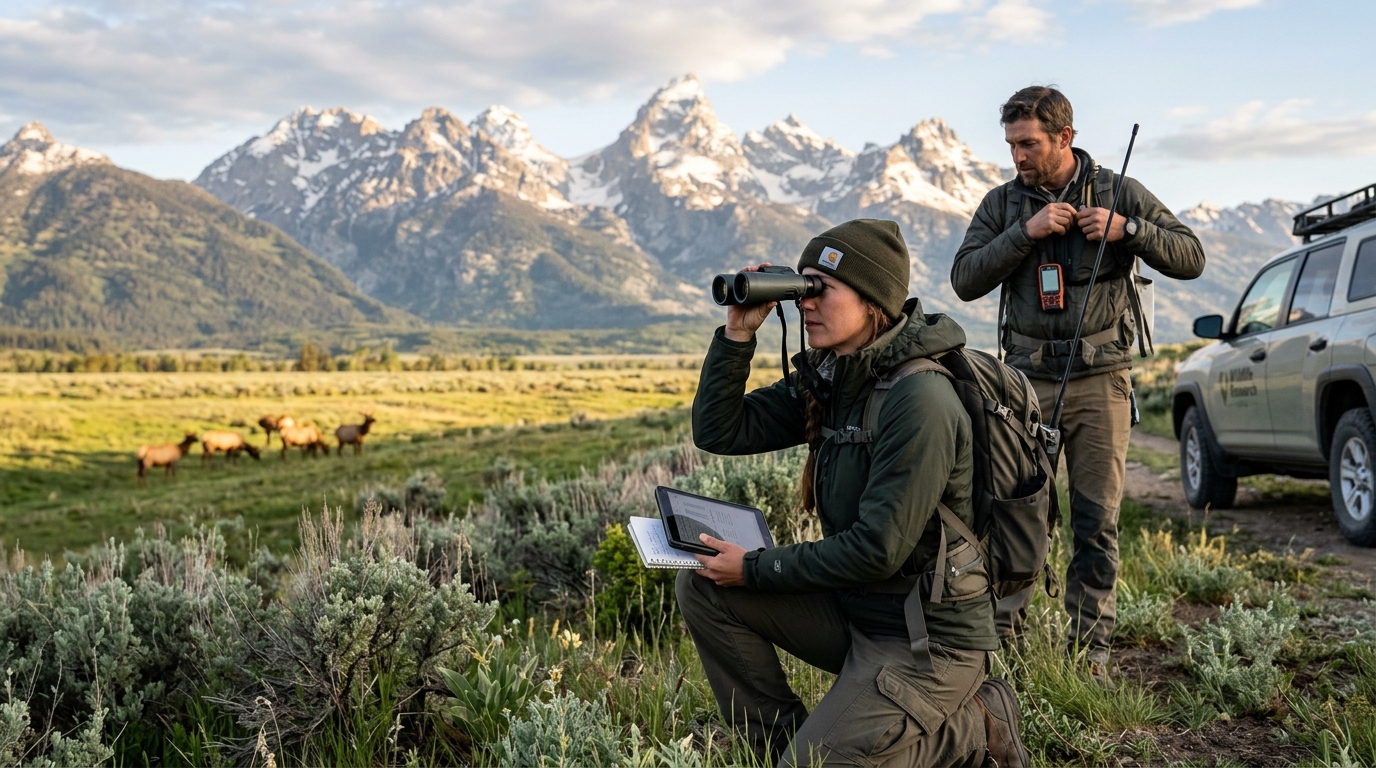
The first time I watched a wildlife biologist dart a grizzly bear in the Gros Ventre, I understood why these scientists spend months in the backcountry. It wasn’t just about data collection. It was about understanding the invisible threads connecting predators, prey, and people in one of North America’s most intact ecosystems.
Jackson Hole wildlife biologists conduct hands-on research tracking bears, wolves, elk, and other species across Grand Teton and surrounding wildlands. Their work combines radio telemetry, DNA analysis, and behavioral observation to inform conservation decisions that protect both wildlife and human communities. This article reveals their daily routines, research techniques, and the challenges they face in one of America’s most studied ecosystems.
Who Studies Wildlife in Jackson Hole
Multiple agencies employ wildlife biologists in the Greater Yellowstone Ecosystem. The National Park Service maintains research teams in Grand Teton National Park. The Wyoming Game and Fish Department monitors populations across state lands. The U.S. Fish and Wildlife Service oversees the National Elk Refuge. Independent nonprofits like the Jackson Hole Wildlife Foundation add specialized research capacity.
Each organization focuses on different species and questions. Park Service biologists track how tourism affects animal behavior. State biologists manage hunting quotas and human-wildlife conflict. Refuge staff study disease transmission in concentrated elk herds. The work overlaps, but each team brings unique expertise.
Most biologists here hold advanced degrees in wildlife ecology, conservation biology, or related fields. Many spent years in other ecosystems before landing positions in Jackson Hole. The competition is fierce. Dozens of qualified candidates apply for every opening.
Field Research Methods That Define the Work
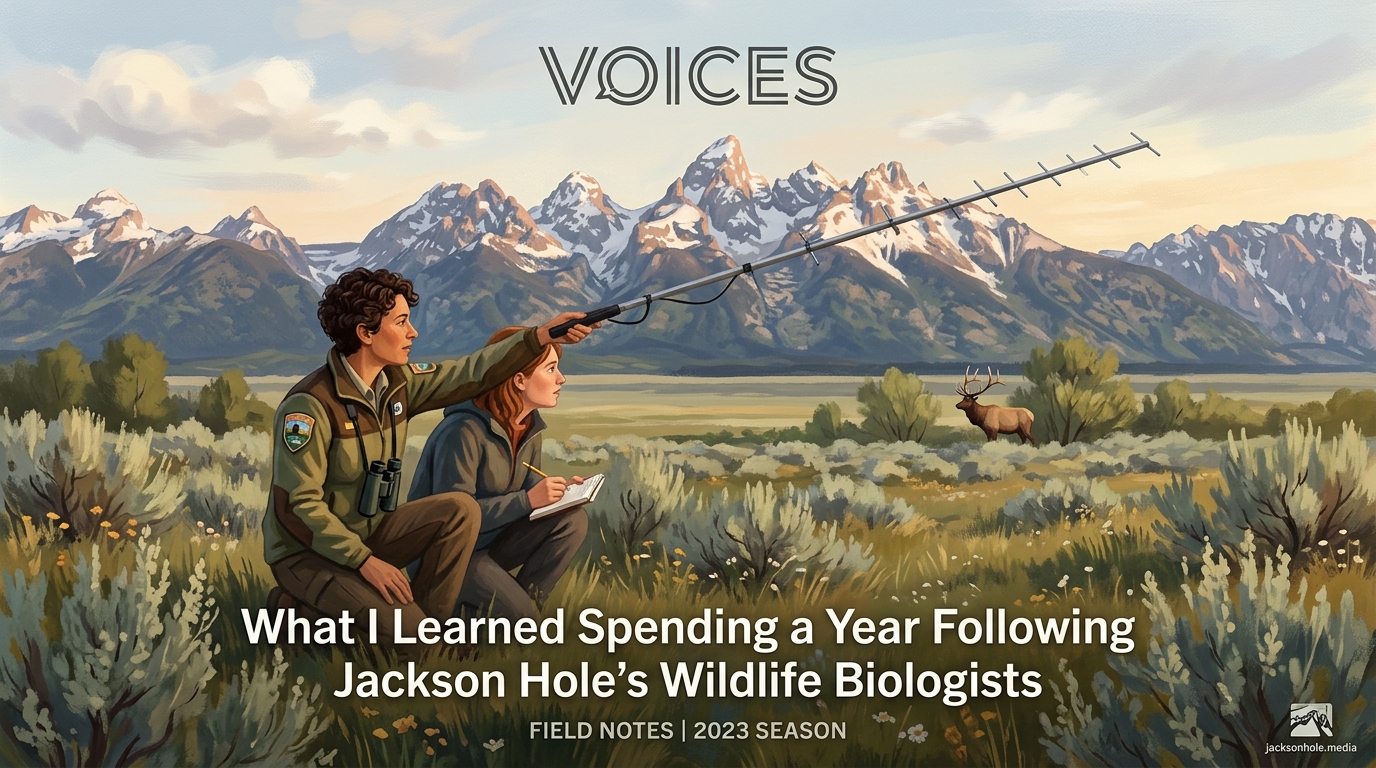
Radio telemetry remains the backbone of large mammal research. Biologists capture animals, fit them with GPS collars, and track their movements for months or years. The data reveals migration routes, home ranges, and habitat preferences that would be impossible to document through observation alone.
Capturing a grizzly requires coordination between multiple team members. One person operates the helicopter. Another handles the dart gun. Ground crews monitor the sedated animal, collect biological samples, and attach the collar. The entire process takes less than an hour. Speed matters. Stress on the animal must be minimized.
Camera traps provide non-invasive monitoring for species that are difficult to capture. Motion-triggered cameras placed along game trails photograph passing wildlife 24 hours a day. A single camera might capture thousands of images over a season. Biologists review every photo, identifying species, counting individuals, and noting behaviors.
DNA analysis has transformed how researchers track populations. Hair snares collect samples without capturing animals. Biologists string barbed wire at bear height around bait stations. Bears rub against the wire, leaving hair samples that reveal individual identity, sex, and family relationships.
“We can estimate population size, track genetic diversity, and identify individual bears without ever seeing them. The hair tells us everything we need to know.” – Sarah Dewey, Grand Teton National Park Wildlife Biologist
A Typical Day in the Field
Field seasons vary by species and research question. Bear work happens primarily in spring and fall when animals are most active. Elk monitoring intensifies during winter when herds concentrate on the refuge. Bird surveys run through breeding season. There’s always something happening.
A spring bear survey day starts before dawn. Biologists load tracking equipment, dart guns, and medical supplies into trucks or helicopters. They check weather conditions. High winds ground aircraft. Heavy snow makes ground access impossible.
Once airborne, the crew follows radio signals from collared bears. They locate animals, assess body condition, and note habitat use. If a collar needs replacement, they dart the bear and land nearby. The ground work is methodical. Temperature, heart rate, and respiration get checked every few minutes. Blood samples go into coolers. Old collars come off. New ones go on.
Back at the office, biologists download GPS data, enter observations into databases, and prepare samples for lab analysis. Fieldwork might be glamorous, but data management consumes equal time. Every observation must be documented, verified, and stored properly.
Species Under Close Watch
Grizzly Bears
The Greater Yellowstone grizzly population has recovered from fewer than 150 individuals in the 1970s to more than 700 today. Jackson Hole biologists monitor this success story while managing new challenges. Bears now occupy habitat they haven’t used in decades. Conflicts with humans have increased as the population expands.
Research focuses on reproduction rates, mortality causes, and habitat selection. Biologists track how many cubs each female produces. They investigate every bear death, determining whether it resulted from natural causes, vehicle strikes, or management actions. They map where bears find food across seasons.
Gray Wolves
Wolves recolonized Jackson Hole naturally after Yellowstone reintroduction in 1995. Multiple packs now hunt elk, deer, and moose across the valley. Biologists study pack dynamics, prey selection, and territorial behavior.
Collar data reveals how wolves navigate around human development. Packs avoid roads during daylight but cross them at night. They hunt closer to town in winter when elk concentrate on the refuge. Understanding these patterns helps managers reduce conflicts.
Elk
The Jackson elk herd numbers around 11,000 animals. Thousands winter on the National Elk Refuge, creating the largest concentration of elk in North America. This density enables research impossible elsewhere but also creates management challenges.
Biologists monitor body condition, pregnancy rates, and calf survival. They test for chronic wasting disease, a fatal neurological condition spreading through western deer and elk populations. They study how supplemental feeding affects migration patterns and disease transmission.
Research Techniques Compared
| Method | Best For | Limitations | Cost |
|---|---|---|---|
| GPS Collars | Movement patterns, habitat use | Requires capture, limited battery life | High |
| Camera Traps | Population surveys, behavior | Can’t identify all individuals | Medium |
| DNA Analysis | Population size, genetic diversity | Requires lab processing | Medium |
| Aerial Surveys | Large area coverage, counts | Weather dependent, expensive | Very High |
| Scat Analysis | Diet composition, health | Time intensive, requires expertise | Low |
Challenges That Complicate the Work
Weather dominates fieldwork planning. Spring storms can dump three feet of snow overnight. Summer thunderstorms make helicopter work dangerous. Winter temperatures drop below zero for weeks. Biologists work around conditions they can’t control.
Equipment failures happen constantly. Collars stop transmitting. Cameras malfunction. Batteries die. Trucks break down on remote roads. Every field day includes contingency plans.
Human-wildlife conflict demands immediate response. When a bear breaks into a home or a wolf kills livestock, biologists investigate. They determine what happened, assess whether the animal poses ongoing risk, and recommend management actions. These calls come at all hours.
Funding constraints limit research scope. Grant writing consumes significant time. Biologists compete for limited dollars from federal agencies, state budgets, and private foundations. Promising research questions go unanswered because resources don’t exist.
How Tourism Affects Wildlife Research
Three million visitors pass through Grand Teton National Park annually. Their presence changes animal behavior in measurable ways. Bears avoid popular trails during peak hours. Elk shift feeding times to early morning and late evening. Wolves den farther from roads than they did decades ago.
Biologists study these behavioral shifts to inform management decisions. Should certain trails close during denning season? Do roadside viewing areas stress animals? How close is too close for photographers? Research provides evidence for policy decisions that balance recreation and conservation.
The relationship between researchers and visitors creates opportunities for education. Biologists lead wildlife watching tours, present evening programs, and staff information booths. They explain their work to curious tourists, building public support for conservation. Similar community engagement happens across Jackson Hole, much like how the National Museum of Wildlife Art became a hidden gem for locals by connecting residents with nature through art.
Conservation Wins Worth Celebrating
The grizzly recovery stands as one of North America’s greatest conservation achievements. Biologists provided the research foundation for protection measures that brought the species back from the brink. Their work continues guiding management as the population expands.
Wolf restoration succeeded partly because biologists documented ecosystem benefits. Research showed how wolves changed elk behavior, reduced browsing pressure on vegetation, and benefited other species. The science built public acceptance for predator recovery.
Migration corridor protection emerged from GPS collar data. Biologists mapped the routes elk, deer, and pronghorn use traveling between summer and winter ranges. Wyoming now protects these corridors, ensuring animals can complete migrations they’ve followed for millennia. The work mirrors how understanding seasonal patterns matters across different aspects of valley life, including what happens to Jackson Hole’s wildlife when 3 million tourists show up.
Getting Involved in Wildlife Research
Volunteer opportunities exist for people willing to commit time and energy. Camera trap projects need volunteers to review photos. Migration monitoring requires observers stationed along routes during peak movement. Citizen science programs welcome contributions from trained volunteers.
The Jackson Hole Wildlife Foundation offers training programs for aspiring wildlife technicians. Participants learn capture techniques, data collection methods, and safety protocols. Many volunteers transition into paid seasonal positions.
Photography can contribute to research. Biologists use social media reports to track animal movements. A tourist’s bear photo might reveal an uncollared individual. Wolf sightings help researchers understand pack territories. Documented observations become data points.
Supporting research financially matters too. Donations fund projects that government budgets can’t cover. Equipment purchases, lab analyses, and seasonal staff positions often depend on private funding. Every contribution expands research capacity.
Common Mistakes People Make Around Research Animals
Approaching collared animals for photos stresses them and compromises research. The collar indicates an animal under study. Biologists need natural behavior data. Human interference invalidates observations.
Feeding wildlife, even unintentionally, creates problems researchers spend years trying to solve. Food-conditioned animals lose their natural wariness. They approach humans, enter buildings, and ultimately get removed or killed. One tourist’s careless moment can end an animal’s life.
Reporting false information wastes research time. Social media posts claiming wolf sightings in areas where wolves don’t occur send biologists on wild goose chases. Accurate reporting helps. Speculation hurts.
Disturbing research equipment damages ongoing studies. Camera traps get stolen or vandalized. Bait stations get disturbed. Hair snares get torn down. These setups represent months of planning and significant expense. Leaving them alone allows research to continue.
The Future of Wildlife Research Here
Climate change is reshaping research priorities. Biologists study how warming temperatures affect migration timing, food availability, and disease patterns. Winters are shorter. Snowpack is declining. These changes ripple through entire ecosystems.
Chronic wasting disease poses an emerging threat. The fatal condition affects deer, elk, and moose. It spreads through environmental contamination and direct contact. Researchers race to understand transmission dynamics before the disease devastates populations.
Technology advances are opening new research possibilities. Drones provide aerial imagery without helicopter costs. Improved GPS collars collect more data while lasting longer. Genetic techniques reveal population structure in unprecedented detail.
Collaboration between agencies is increasing. Researchers share data, coordinate studies, and tackle questions too large for single organizations. The Greater Yellowstone Ecosystem spans multiple jurisdictions. Effective conservation requires cooperation across boundaries.
What This Work Means for Jackson Hole
Wildlife research here informs conservation decisions worldwide. The lessons learned managing bears, wolves, and elk in Jackson Hole apply to other ecosystems facing similar challenges. Scientists from every continent visit to observe methods and discuss findings.
The research supports the local economy in ways people rarely consider. Wildlife viewing generates millions in tourism revenue. Hunters pay for licenses and guides. Photographers buy equipment and lodging. None of this happens without healthy wildlife populations maintained through science-based management.
Biologists contribute to community life beyond their research. They serve on land use planning committees. They advise homeowners on bear-proofing measures. They teach in local schools. Their expertise benefits everyone who lives here.
The work continues year-round, in all weather, often in challenging conditions. Biologists accept these hardships because the stakes matter. Every data point contributes to understanding how humans and wildlife can coexist in a landscape both call home. Their dedication ensures that future generations will experience the same wildlife abundance that defines Jackson Hole today, preserving the wild character that makes this place extraordinary.