
The crowds thin out in late April. Hotel rates drop by half. The elk move through town on their spring migration, and suddenly you can get a dinner reservation without booking three weeks ahead.
This is shoulder season in Jackson Hole, and it might be the best time to visit.
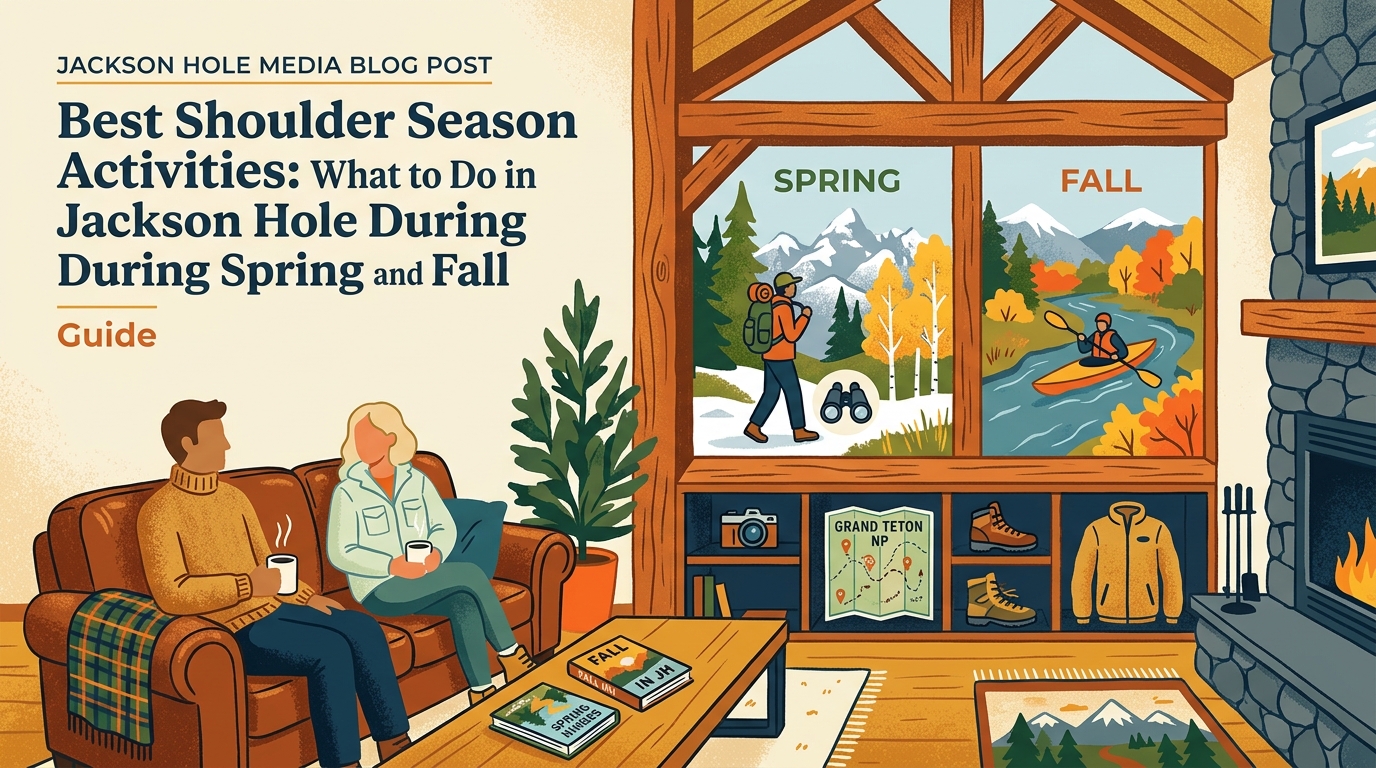
Shoulder season in Jackson Hole runs from mid-April through May and September through October. You’ll find significantly lower prices, minimal crowds, exceptional wildlife viewing during migration periods, open trails and waterways, and access to cultural events that locals actually attend. Most restaurants and shops remain open, though some outdoor outfitters operate on reduced schedules.
What makes shoulder season different
Peak summer brings three million visitors. Winter fills the valley with skiers. But spring and fall belong to a different kind of traveler.
The weather shifts constantly. You might need a down jacket at sunrise and shorts by noon. Afternoon thunderstorms roll through without warning. Snow can fall in May or September, then melt by afternoon.
This unpredictability keeps casual tourists away. That’s exactly why you should come.
Wildlife activity peaks during these transition months. Bears emerge from hibernation in spring. Elk bugle during fall rut. Moose feed in willow thickets without summer crowds watching. Spring bear watching in Grand Teton offers encounters you won’t find during busy months.
Prices drop across the board. Hotels charge 40 to 60 percent less than summer rates. Rental cars cost half as much. Even high-end restaurants offer better availability and occasional specials.
Spring activities from April through May
The National Elk Refuge hosts thousands of elk during their spring migration. They move through the valley in waves, calves trailing behind mothers. You can watch from pullouts along Highway 89 without paying for a tour.
Hiking trails open at lower elevations first. Cache Creek and the base of Snow King remain snow-free by late April. Higher trails like Death Canyon and Paintbrush Canyon stay buried until June.
Fishing season opens April 1 on most waters. The Snake River runs high and cold, but productive. Cutthroat trout move into shallow water to feed after winter. Former Wall Street traders turned fishing guides know exactly where to find them during runoff.
Town Square comes alive with locals. The winter seasonal workers have left. Summer staff hasn’t arrived yet. Coffee shops and breweries fill with year-round residents who reclaim their town for a few weeks.
Spring weather considerations
Pack layers. Temperatures swing 40 degrees between morning and afternoon. Rain gear matters more than sunscreen, though you’ll need both.
Roads to higher elevations stay closed. Teton Pass opens for vehicles by late May, weather permitting. Signal Mountain Road in Grand Teton National Park usually opens in early May.
Mud season is real. Trails turn to soup. Parking lots become obstacle courses. Waterproof boots aren’t optional.
Fall activities from September through October
Aspen trees turn gold in late September. The transformation starts at higher elevations and moves down valley over three weeks. Every canyon glows yellow against evergreen forests.
Elk rut dominates the wildlife calendar. Bulls bugle at dawn and dusk. You’ll hear them from town. The sound carries for miles across the valley.
Grand Teton National Park empties after Labor Day. You can park at Jenny Lake without circling for an hour. Trails that required 6 a.m. starts in July become peaceful afternoon walks.
The arts scene kicks into gear. Jackson Hole’s cowboy poetry scene hosts fall gatherings. Gallery walks happen monthly. The National Museum of Wildlife Art opens special exhibitions for locals before tourist season returns.
Best fall hiking trails
These trails offer peak fall colors and manageable conditions:
- Phelps Lake Loop (6.7 miles, moderate)
- Taggart Lake (3.2 miles, easy)
- Two Ocean Lake (6.4 miles, easy)
- Amphitheater Lake (9.6 miles, strenuous, closes with first snow)
- Death Canyon (7.6 miles to patrol cabin, strenuous)
Planning your shoulder season visit
Follow this timeline for the smoothest trip:
- Book accommodations two to three weeks ahead instead of three months
- Check weather forecasts daily starting five days before arrival
- Pack for 30-degree temperature swings and sudden precipitation
- Download offline maps for cell-dead zones in the parks
- Make dinner reservations the day before or day of
- Keep backup indoor activities ready for weather changes
What stays open and what closes
Most restaurants and shops operate year-round. A few take brief breaks between seasons, usually two to three weeks in April or November.
Hotel options expand beyond chains. Locally owned properties that fill up in summer suddenly have availability. You can stay in places that book solid for peak season.
Outdoor outfitters run reduced schedules. Rafting companies operate weather-dependent trips. Fishing guides stay busy. Horseback riding continues through October at most ranches, including those working ranches in the Gros Ventre Valley.
Jackson Hole Mountain Resort closes from mid-April until late May, then again from October until Thanksgiving. Snow King operates limited summer activities through September.
Wildlife viewing strategies
| Season | Best Species | Prime Locations | Ideal Times |
|---|---|---|---|
| Spring | Bears, elk, moose | Elk Refuge, Oxbow Bend | Dawn, dusk |
| Fall | Elk, bison, pronghorn | Antelope Flats, Moose-Wilson Road | Early morning |
| Both | Birds, small mammals | Schwabacher Landing, Blacktail Ponds | All day |
Bring binoculars. Spotting scopes help for distant animals. Stay 100 yards from bears and wolves, 25 yards from everything else.
Weather affects animal behavior more during shoulder seasons. Bears stay active on warm days, den up during cold snaps. Elk move to lower elevations when snow hits high country.
“September and May are when we see the most interesting animal behavior. They’re not just surviving like in winter or raising young like in summer. They’re moving, competing, preparing. That’s when nature gets dramatic.” — Local wildlife biologist with 15 years in the valley
Cultural events worth timing your trip around
Fall Arts Festival runs for 11 days in September. Artists redefining western art open their studios. Gallery walks happen nightly. Workshops fill up but accept walk-ins.
Old Bill’s Fun Run happens in late September. The whole town shows up. It’s a glimpse into local culture you won’t find in summer.
Taste of the Tetons in late September showcases restaurant talent. Chefs experiment with dishes they can’t serve during busy season. Cache Creek’s supper club scene gets extra creative during this event.
Common shoulder season mistakes
Visitors underestimate weather volatility. That sunny morning forecast means nothing by afternoon. Always pack rain gear and warm layers.
People assume everything will be open. Some trails stay snowbound into June. Call ahead for activity availability.
Travelers book too much in advance. Shoulder season rewards flexibility. Leave days unplanned so you can chase good weather.
Many skip the parks thinking they’re closed. Grand Teton and Yellowstone stay open. Roads close, but trails and wildlife viewing continue.
Budget advantages that actually matter
Here’s what costs less during shoulder season:
- Hotels drop 40 to 60 percent below peak rates
- Rental cars cost half of summer prices
- Guided trips offer midweek discounts
- Restaurants run specials locals actually use
- Ski resort lodging hits annual lows in May
You can stay in properties that run $600 per night in July for $200 in May. That’s real money for better accommodations or longer stays.
Day trip options from Jackson
Teton Valley sits 30 minutes over the pass. The craft beer scene thrives year-round. Fewer tourists mean better conversations with brewers.
Yellowstone’s south entrance stays open. The 45-minute drive gets you to Old Faithful without summer traffic jams. You can park at major features without circling.
The Gros Ventre Valley offers solitude even in peak season. During shoulder months, you might have entire valleys to yourself. Dirt roads stay passable except during heavy rain.
Weather reading basics
Understanding Teton weather patterns matters more during shoulder season. Clouds building over the peaks by noon mean afternoon storms. Clear mornings often produce the best conditions for outdoor activities.
Wind patterns shift with seasons. Spring brings sustained winds from the west. Fall sees calmer conditions with occasional cold fronts from the north.
Temperature inversions happen frequently. The valley fills with cold air while mountains stay warm. This creates dramatic sunrise conditions and affects wildlife movement.
Trail conditions and access
Lower elevation trails dry out by late April. Anything below 7,000 feet usually stays snow-free. Cache Creek, Hagen Trail, and Game Creek open first.
Mid-elevation trails from 7,000 to 9,000 feet clear by late May. This includes popular destinations like Phelps Lake and Taggart Lake.
High alpine zones above 9,000 feet hold snow into July. Don’t expect Death Canyon Shelf or Hurricane Pass to be passable during shoulder season.
Fall reverses this pattern. First snow hits high elevations in September. By late October, only valley floor trails remain reliably clear.
Getting around without summer crowds
Parking becomes trivial. Jenny Lake fills up by 8 a.m. in July. In May or September, you can arrive at 10 a.m. and find spots.
Traffic disappears. The backup at Moose Junction that costs 30 minutes in summer takes five minutes during shoulder season.
Trailhead logistics simplify. No need for permit systems or timed entries. Just show up and go.
Town feels navigable. You can walk from shop to restaurant without dodging tour groups. Local spots have time for conversations.
Why locals prefer these months
Year-round residents reclaim their valley between seasons. The pace slows. Parking appears. Trails empty. Restaurants remember your name.
Living in Jackson Hole means appreciating these transition periods. They’re when community resurfaces between tourist waves.
Locals hike midweek. They fish in the morning before work. They grab dinner without reservations. Shoulder season is when Jackson Hole feels like a mountain town instead of a resort.
Making the most of unpredictable weather
Build flexibility into every day. Plan an outdoor morning activity and an indoor afternoon backup. Museums, galleries, and breweries fill weather delays.
Start early. Mornings offer the most stable conditions. Afternoons bring weather changes.
Check forecasts obsessively. Mountain weather shifts fast. What looks like a clear day at 7 a.m. might turn stormy by 2 p.m.
Embrace the variability. Some of the best experiences happen when plans change. That rainstorm might clear for a dramatic sunset. That cold morning might produce incredible wildlife sightings.
When shoulder season delivers the best experience
Spring works best for wildlife enthusiasts. Migration, births, and emergence from hibernation create constant activity.
Fall suits photographers and hikers. Golden aspens, clear air, and dramatic light make every photo spectacular.
Both seasons reward travelers who value authenticity over convenience. You’ll see Jackson Hole as locals experience it, not as a polished tourist product.
The valley breathes during these months. It transitions between extremes. And in that transition, you’ll find the real character of this place.
Finding your rhythm between seasons
Come to Jackson Hole in April, May, September, or October. You’ll save money, avoid crowds, and see wildlife behavior that summer visitors miss entirely.
Pack layers. Stay flexible. Wake up early. The valley will reward your timing with experiences that feel earned rather than purchased. That’s the whole point of shoulder season.