
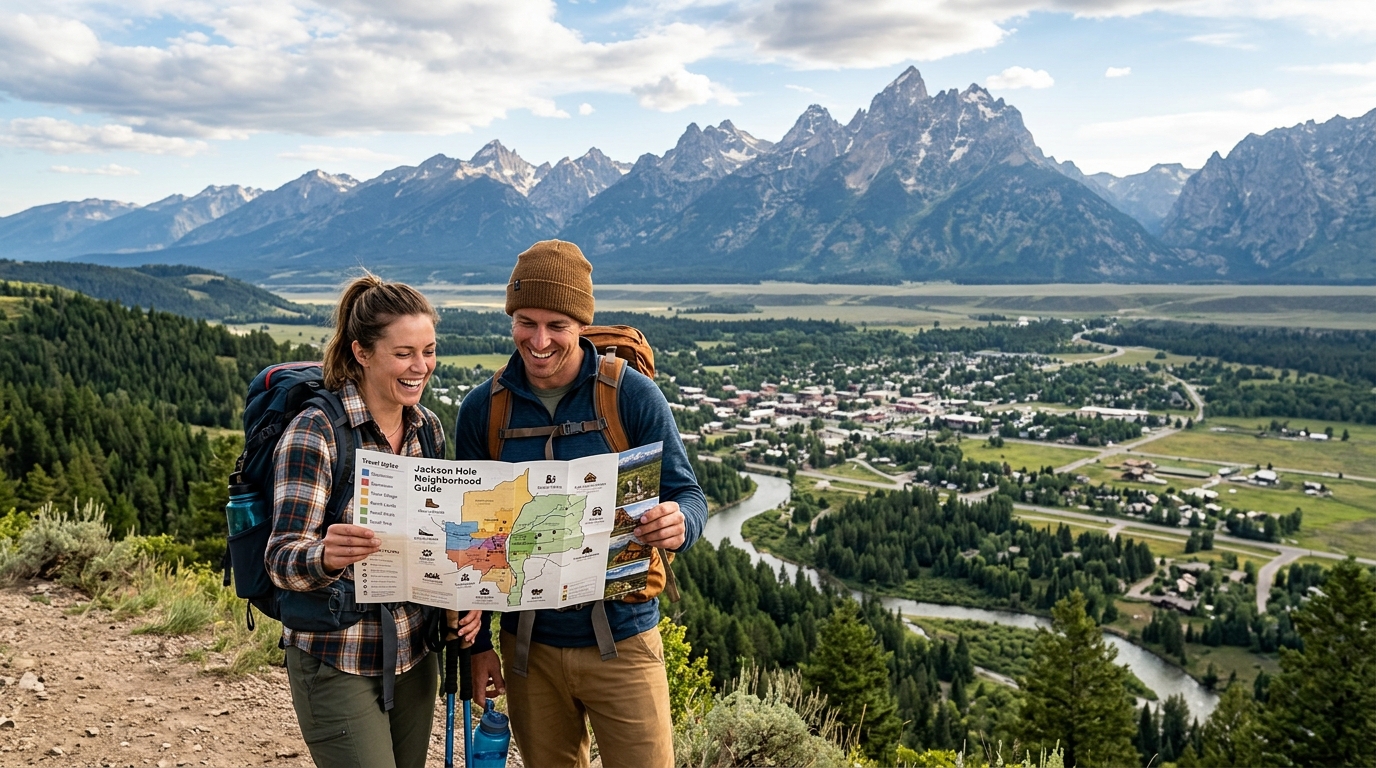
You’ve booked your flights. You’ve mapped out trails and restaurant reservations. But you’re staring at accommodation listings scattered across a dozen different areas, wondering which one actually makes sense for the way you want to spend your days.
Location matters more in Jackson Hole than most destinations. The valley stretches nearly 60 miles from end to end, and choosing the wrong base can mean hours of driving instead of minutes walking to what you came here to do.
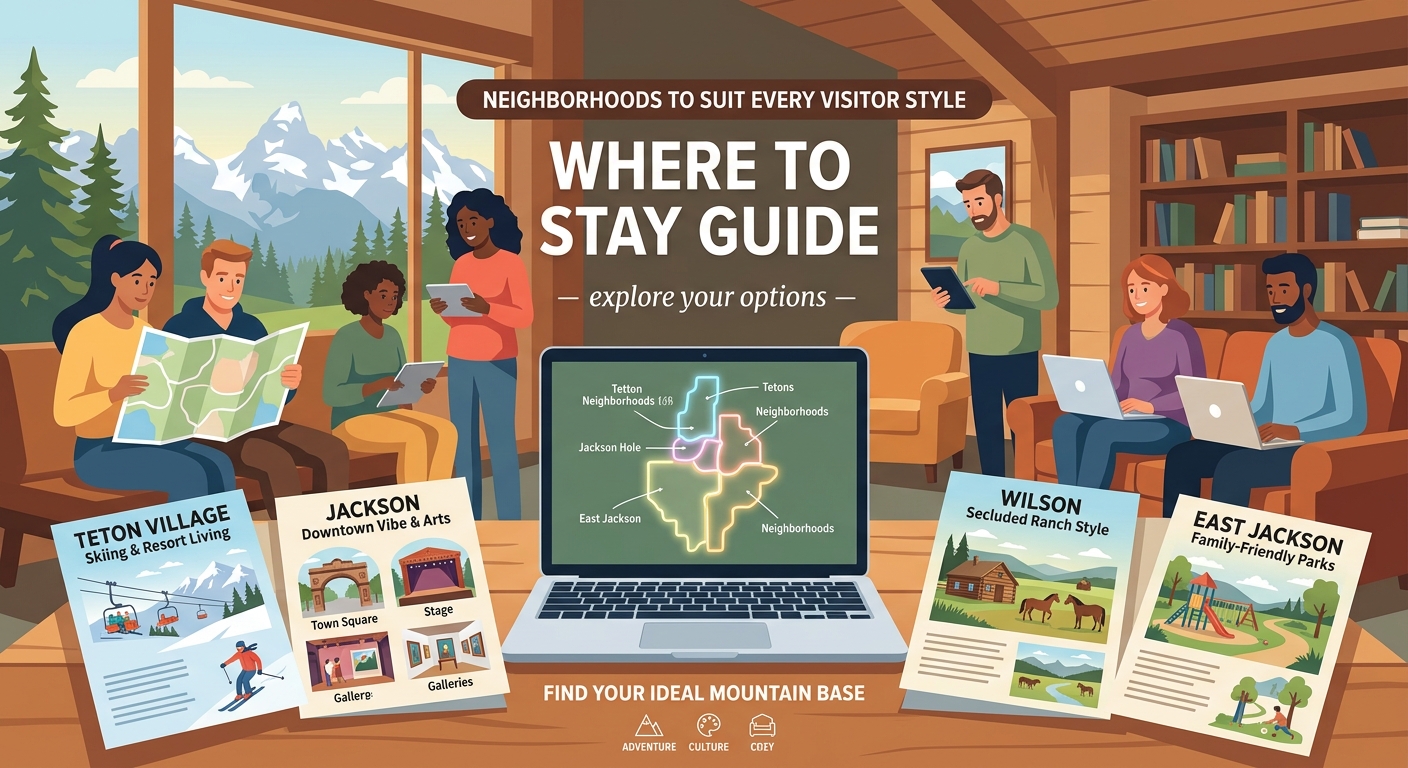
Jackson Hole’s neighborhoods serve different travel styles. Downtown Jackson offers walkable access to dining and culture. Teton Village puts you steps from ski lifts and summer trails. Wilson appeals to families seeking quieter settings. Grand Teton’s gateway areas like Moose and Moran provide wildlife access. Your ideal location depends on whether you prioritize convenience, scenery, budget, or proximity to specific activities like skiing or park exploration.
Downtown Jackson for walkable access
The Town of Jackson sits at the southern end of the valley. It’s the only place where you can park your car and forget about it for days.
Most hotels and vacation rentals sit within a ten-block radius of Town Square. You can walk to breakfast, browse galleries, grab coffee, and book tomorrow’s wildlife tour without ever starting your engine.
This density makes downtown the best choice if you’re traveling without a car or prefer urban convenience. Restaurants stay open later here than anywhere else in the valley. Bars and live music venues cluster within stumbling distance of each other.
Downsides to consider:
- Summer crowds peak in July and August
- Parking fills up by mid-morning during ski season
- Prices run 20 to 40 percent higher than outlying areas
- Street noise can be an issue on weekend nights
Downtown works best for couples or solo travelers who plan to mix outdoor activities with cultural experiences. If you want to catch a show at the Center for the Arts after a day on the trails, this is your spot.
Teton Village for ski-in convenience
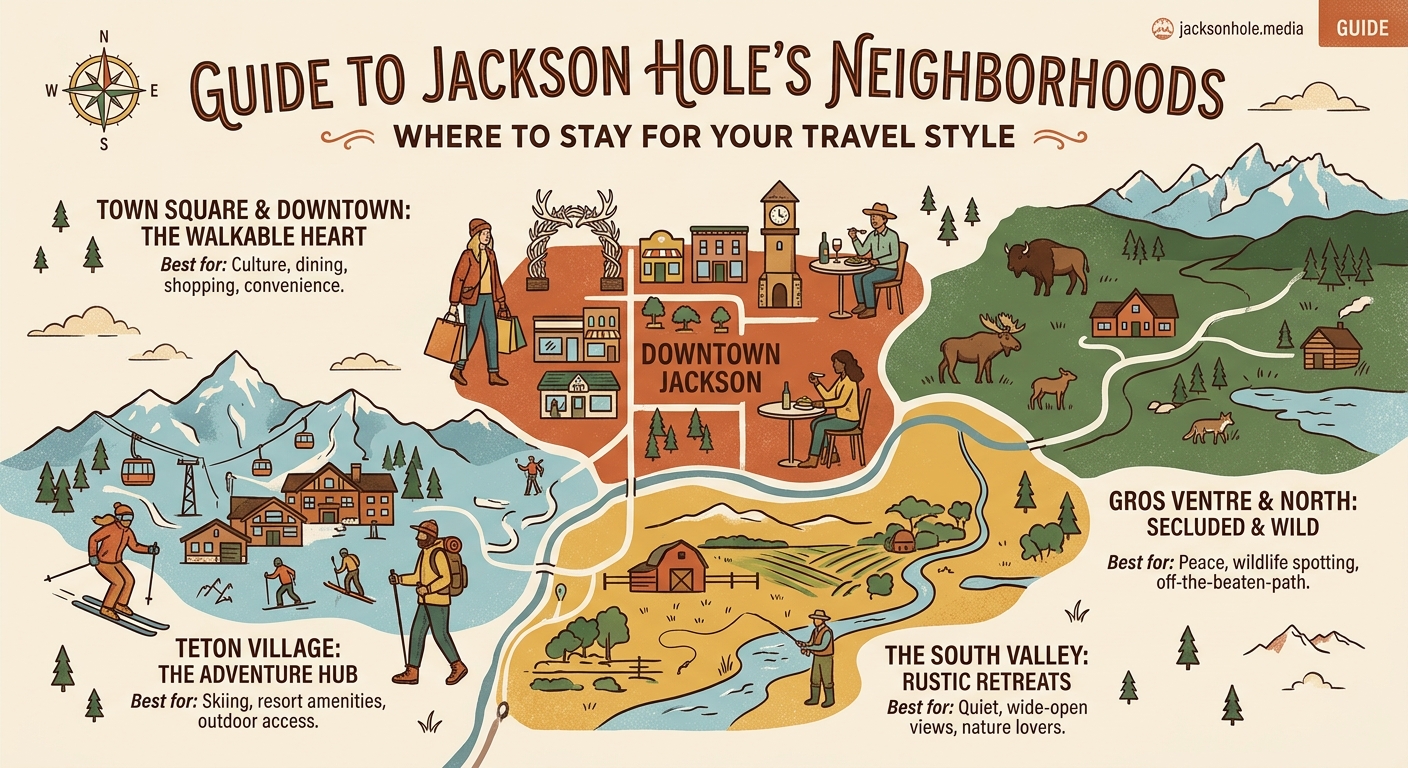
Teton Village exists for one reason: Jackson Hole Mountain Resort. The base area sits 12 miles northwest of town, tucked against the Tetons at 6,311 feet.
If skiing or snowboarding drives your trip, staying here eliminates the morning commute. You can walk from your room to the tram in under five minutes. No shuttle schedules. No fighting for parking spots at 7 a.m.
Summer transforms the village into a hiking hub. The aerial tram runs year-round, depositing you at 10,450 feet where trails fan out across the ridgeline. Mountain biking, via ferrata routes, and scenic lift rides keep the base busy through September.
What you gain:
- First tracks on powder days
- Immediate access to 2,500 acres of terrain
- Multiple dining options within walking distance
- Evening entertainment at the base area
What you sacrifice:
- Limited grocery options (one small market)
- Fewer restaurant choices than downtown
- Higher lodging costs during peak season
- 20-minute drive for anything beyond skiing
Teton Village makes sense for dedicated skiers, families with young children (shorter travel time means more patience), and anyone who values mountain scenery over town amenities.
Wilson for the middle ground
Wilson sits halfway between downtown Jackson and Teton Village. This unincorporated community of about 1,500 people offers a compromise between isolation and accessibility.
The vibe skews local. You’ll find a post office, a few restaurants, a grocery co-op, and not much else. It’s where many resort workers and outdoor professionals actually live, which means lower nightly rates and more residential character.
Distance works in your favor here. Downtown Jackson is eight miles east. Teton Village is four miles west. You’re central to everything without being in the middle of tourist traffic.
“Wilson gives you breathing room. You can walk out your door in the morning and not see another person until you choose to. But you’re still 15 minutes from wherever you need to be.” – Local property manager
The Stagecoach Bar hosts live music Thursday through Sunday. It’s the kind of place where tourists and third-generation ranchers share the same dance floor.
Best for:
- Budget-conscious travelers who still want quality
- People splitting time between skiing and town activities
- Anyone seeking a quieter home base
- Groups who plan to cook some meals
Grand Teton gateway areas for wildlife focus
The string of small communities along Highway 89/191 between Jackson and Yellowstone puts you inside prime wildlife habitat. Moose, Moran, and the areas near Jenny Lake offer direct park access without the crowds of Jackson proper.
Moose sits at the southern entrance to Grand Teton National Park. You can walk to visitor centers, trailheads, and the Snake River in minutes. Elk graze in the meadows behind most properties. Bear activity peaks in spring and fall.
Moran Junction, 18 miles north, provides similar park access with even fewer people. The trade-off: you’re 30 miles from Jackson’s restaurants and services.
Accommodation options are limited:
- A handful of lodges and cabins
- Some vacation rentals
- Campgrounds and RV sites
- No chain hotels
This area makes sense if wildlife photography or park exploration defines your trip. You’ll save time on morning drives to trailheads. Sunrise and sunset animal viewing happens right outside your window.
The isolation can feel extreme. Cell service drops to nothing in spots. The nearest grocery store is 20 miles away. You need to be comfortable with quiet and self-sufficiency.
How to match location to your activities
Your daily plans should drive your location choice. Here’s how different travel styles align with specific areas.
| Travel Priority | Best Location | Why It Works |
|---|---|---|
| Skiing only | Teton Village | Walk to lifts, no driving |
| Mix of skiing and dining | Downtown Jackson | Central to both, shuttle available |
| Wildlife and hiking | Moose/Moran | Inside park boundaries |
| Budget and flexibility | Wilson | Lower rates, central location |
| Cultural activities | Downtown Jackson | Galleries, museums, performances |
Families with young children
Downtown Jackson or Teton Village work best. Both offer contained areas where kids can move around safely. Teton Village has the edge for ski families since you avoid car seat battles every morning.
Solo travelers
Downtown provides the most opportunities to meet other travelers. Hostel options exist. Bar seating at restaurants makes solo dining less awkward. Group tours depart from central locations.
Couples seeking romance
Wilson or the Grand Teton gateway areas offer more privacy. You’ll trade convenience for scenery and solitude. Pack in groceries and cook together. Spend evenings watching elk instead of navigating crowds.
Step-by-step location selection process
Follow this sequence to narrow your options:
- List your top three activities in order of importance.
- Note which activities require early morning starts (wildlife viewing, powder skiing).
- Identify whether you’re comfortable driving 20 to 30 minutes each way daily.
- Check your budget against average nightly rates in each area.
- Verify whether your preferred lodging style (hotel, condo, cabin) exists in your target neighborhood.
- Read recent reviews about noise, parking, and seasonal considerations.
- Map the actual distance from potential lodging to your must-do activities.
Common location mistakes visitors make
Choosing based on photos alone. That stunning mountain view might come with a 45-minute drive to the ski resort. Verify distances before booking.
Underestimating winter driving. Snow and ice make that “short” 15-mile drive take 40 minutes. Factor in weather delays.
Booking too far north. Properties near Yellowstone’s south entrance sound appealing until you realize Jackson is 60 miles away. You’ll spend half your trip in the car.
Ignoring shuttle logistics. Free shuttles sound great but often run limited hours. Check actual schedules before ditching your rental car.
Prioritizing price over location. Saving $50 per night doesn’t help if you’re spending $40 daily on gas and two hours driving.
Seasonal considerations that change everything
Jackson Hole operates on two distinct seasons, and your location strategy should shift with them.
Winter (December through March)
Snow closes or restricts access to many areas. Teton Village becomes the center of activity. Downtown Jackson stays lively but requires shuttle use or careful parking. Properties in Wilson and outlying areas need 4WD or AWD vehicles.
Weather patterns can trap you in place for hours. Choose locations with backup activities within walking distance.
Summer (June through August)
The entire valley opens up. Grand Teton gateway areas become accessible and desirable. Downtown parking remains challenging but weather isn’t a factor. Teton Village offers hiking but less overall activity than winter.
Shoulder seasons (April, May, September, October)
These months offer the best combination of access, rates, and crowd levels. Most areas work well. Wildlife viewing peaks. Trails dry out. Lodging prices drop 30 to 50 percent.
What locals actually recommend
Talk to people who live here year-round and a pattern emerges. They suggest choosing based on your primary activity, then building everything else around that anchor.
Skiers should stay in Teton Village or accept the commute. Park enthusiasts belong near Moose. Everyone else benefits from Wilson’s central location or downtown’s walkability.
The advice that comes up repeatedly: don’t try to do everything from one location. Jackson Hole covers too much ground. Accept that some activities will require driving. Choose a base that minimizes travel for your top priorities.
Budget realities across neighborhoods
Pricing varies dramatically by location and season. Here’s what to expect per night for mid-range accommodations:
Downtown Jackson:
– Winter: $250 to $450
– Summer: $200 to $350
– Shoulder: $150 to $250
Teton Village:
– Winter: $300 to $600
– Summer: $180 to $300
– Shoulder: $150 to $280
Wilson:
– Winter: $180 to $320
– Summer: $150 to $280
– Shoulder: $120 to $220
Grand Teton gateway:
– Winter: Limited availability
– Summer: $200 to $400
– Shoulder: $150 to $300
These ranges reflect standard hotel rooms or small condos. Luxury properties and large vacation homes run significantly higher.
Alternative areas worth considering
South Park. This neighborhood south of downtown offers residential quiet with easy town access. Prices run slightly lower than central Jackson. You’ll need a car but parking is easier.
Rafter J. A residential area three miles south of town. Mostly vacation rentals. Good for families wanting space and a yard. Ten-minute drive to downtown.
Hoback Junction. Eight miles south on Highway 189. Budget-friendly. Close to fly fishing access. Feels remote but maintains reasonable proximity to Jackson.
Transportation factors that influence location choice
Rental car necessity:
- Downtown Jackson: Optional if staying multiple days
- Teton Village: Optional for ski-focused trips
- Wilson: Required
- Grand Teton gateway: Required
- Outlying areas: Absolutely required
Shuttle service:
Free shuttles run between Jackson and Teton Village during ski season. Service operates roughly 6 a.m. to midnight. Summer schedules reduce frequency. Other areas lack regular shuttle service.
Parking challenges:
Downtown Jackson fills up by 9 a.m. in summer and winter. Teton Village offers ample parking but charges for overnight. Wilson and residential areas have no parking issues.
Making the final decision
Start with your non-negotiables. If you must ski every day, Teton Village wins. If you’re here primarily for Grand Teton, stay near Moose. If dining and culture matter as much as outdoor activities, downtown Jackson makes sense.
Then factor in your tolerance for driving and your budget ceiling. Be honest about both. An extra 20 minutes in the car each day adds up to hours over a week-long trip. An extra $100 per night totals $700 for that same week.
Read recent reviews from travelers with similar priorities. Pay attention to complaints about noise, parking, and access issues. One person’s “peaceful and secluded” is another’s “too far from everything.”
Book early if you’re traveling during peak season (Christmas through New Year’s, February, July, August). Prime locations in ideal neighborhoods fill up months in advance.
Where your base becomes home
The right neighborhood transforms a good trip into a great one. You’ll spend less time solving logistics and more time doing what brought you here.
First-time visitors often overthink this decision. Pick a location that serves your top two or three priorities. Accept that you’ll drive to some activities. Make peace with the trade-offs.
The valley offers enough variety that you can return multiple times and stay somewhere completely different each visit. Your first trip might base out of downtown. Your second could anchor in Teton Village. Eventually, you’ll develop your own preferences based on experience rather than research.
For now, match your lodging to your plans. The mountains will be there regardless of which neighborhood you choose. Your job is simply to minimize the friction between your room and the experiences you came here to have.