
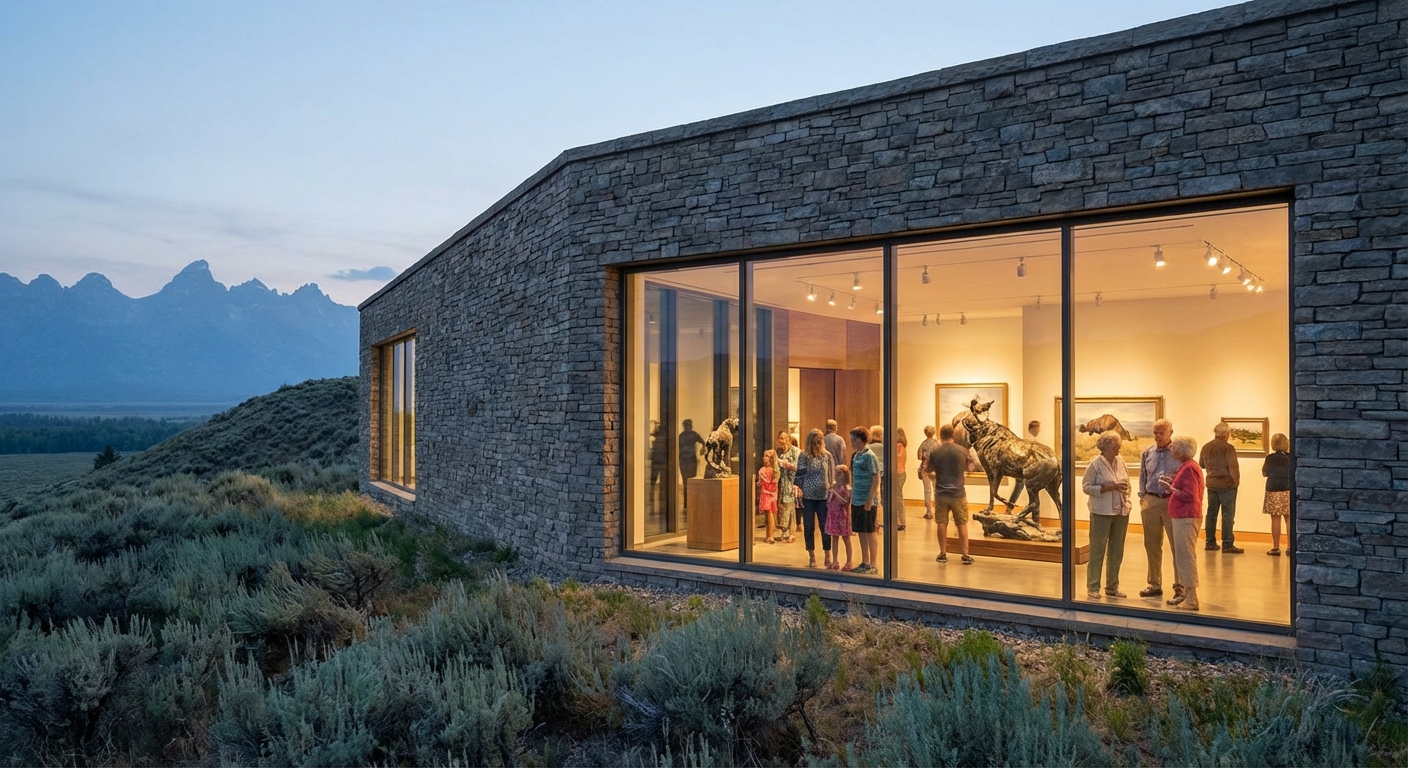
Most visitors to Jackson Hole race past a castle-like building perched above the National Elk Refuge without a second glance. They’re heading to the Tetons, to the ski slopes, to the town square with its famous antler arches. But locals know something those tourists don’t. That building holds one of the finest collections of wildlife art in North America, and it’s become a gathering place that rivals any gallery in Santa Fe or Scottsdale.
The National Museum of Wildlife Art in Jackson Hole houses over 5,000 artworks spanning 4,500 years, from ancient birdstones to contemporary installations. Located just two miles from [Grand Teton National Park](https://www.nps.gov/grte/index.htm), this architectural gem offers rotating exhibitions, educational programs, a sculpture trail overlooking the elk refuge, and the Palate Restaurant. Locals frequent it for yoga classes, film screenings, and community events that make it far more than a tourist stop.
Where art meets the wild
The National Museum of Wildlife Art sits at 2820 Rungius Road, carved into a hillside that mimics the surrounding landscape. Architects designed it to resemble a Scottish castle ruin, using native sandstone that changes color with the light. The building itself is camouflage, blending so seamlessly with East Gros Ventre Butte that elk grazing below barely notice it.
Inside, 51,000 square feet of gallery space house works from artists you’d recognize and many you won’t. Carl Rungius, the museum’s namesake artist, painted these mountains and the animals that roam them. His studio was reconstructed inside the museum, brushes still laid out as if he might return any moment.
But this isn’t a dusty archive. The permanent collection includes Georgia O’Keeffe, Andy Warhol, and Robert Bateman alongside traditional Western painters. Ancient artifacts sit near contemporary sculptures. A 2,500-year-old duck decoy shares wall space with a bronze grizzly cast last year.
How locals claimed it as their own
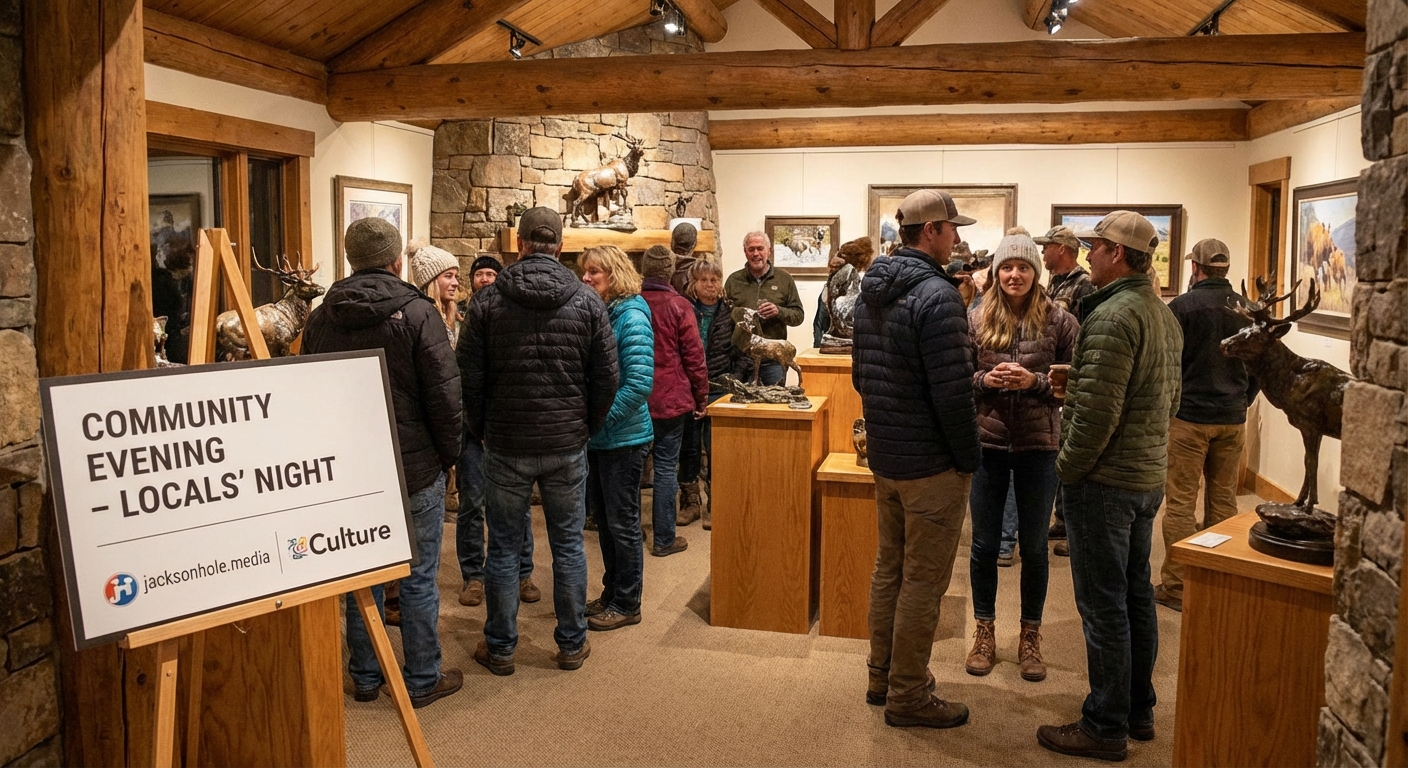
When the museum opened in 1987, it catered primarily to summer tourists. Gallery hours matched vacation schedules. Programming focused on guided tours and lecture series aimed at out-of-state visitors. Then something shifted.
The museum started hosting events that had nothing to do with quiet contemplation of oil paintings. Yoga classes on the sculpture trail. Full moon snowshoe walks. Film screenings in the auditorium. Beer tastings paired with artist talks. Suddenly, locals who’d never set foot inside were showing up with their friends on Friday nights.
The turning point came with the Children’s Discovery Gallery. Parents realized they could bring restless kids who’d touch interactive exhibits, draw their own wildlife art, and burn energy without destroying anything valuable. The museum became a rainy day destination, a birthday party venue, a place to meet other families.
“We had to choose between being a shrine or being useful. A museum that serves only tourists six months a year doesn’t survive in a town this size. We needed to be part of the community’s daily life.” — Former education director, speaking at a 2019 community forum
Planning your visit to the museum
Getting there takes ten minutes from Jackson’s town square. Head north on Highway 89 toward Yellowstone. The museum entrance appears on your right, just past the National Elk Refuge visitor center.
Admission and hours:
- Adults: $18
- Seniors (60+): $16
- Students with ID: $8
- Children 5 and under: Free
- Open daily 9 AM to 5 PM (extended summer hours until 6 PM)
- Closed Thanksgiving and Christmas
Annual memberships pay for themselves after three visits. Locals buy them not just for unlimited entry but for member previews of new exhibitions, discounts at Palate Restaurant, and invitations to artist receptions where wine flows and you can actually talk to the people who made the work on the walls.
Best times to visit
Winter mornings are magic. Snow blankets the elk refuge below. Light streams through floor-to-ceiling windows. You might have entire galleries to yourself. The museum heats its stone floors, so you can stand barefoot on warm rock while watching elk through the glass.
Summer brings crowds, but also the sculpture trail at its greenest. The outdoor path winds through sagebrush and wildflowers, past bronze animals frozen mid-stride. It’s free to walk even if you skip the indoor galleries.
Fall shoulder season (September and October) offers the best of both worlds. Aspens turn gold. Elk start bugling. Tourist numbers drop but the museum stays fully operational. Special exhibitions often debut in September to catch the last wave of summer visitors and entice locals back after a busy season.
What you’ll actually see inside
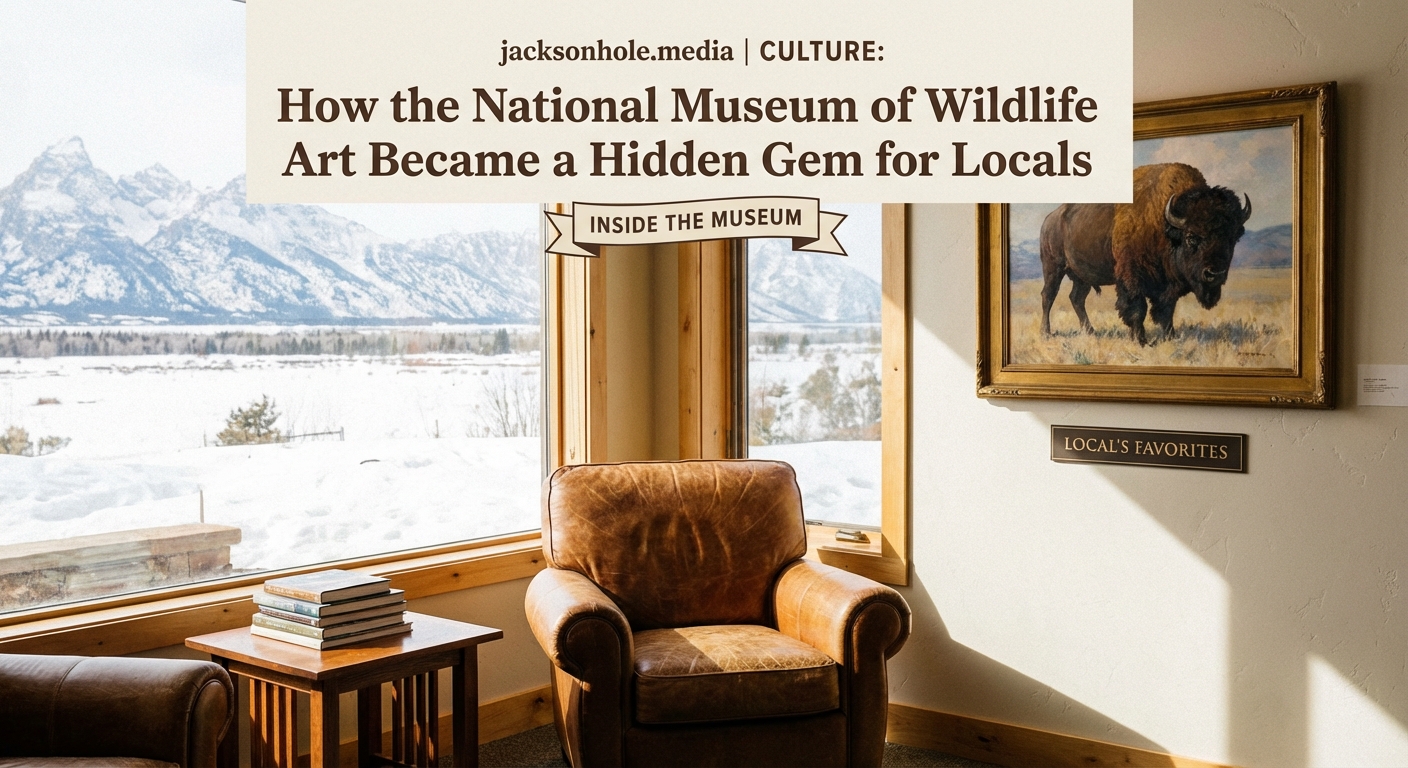
The museum organizes its permanent collection chronologically and thematically. You start with ancient art, then move through centuries of human attempts to capture animals on canvas, in bronze, through photography.
Galleries worth your time:
-
American Bison Gallery – Paintings and sculptures documenting the near-extinction and recovery of North America’s largest land mammal. Some pieces celebrate the hunt. Others mourn it. The juxtaposition makes you think.
-
Carl Rungius Collection – The largest public collection of Rungius works anywhere. His paintings of bighorn sheep and grizzlies capture muscle and movement better than most photographs.
-
Rising Sage Café Gallery – Rotating exhibitions of contemporary artists. This is where you’ll see work that challenges traditional wildlife art conventions. Recent shows have featured abstract interpretations of migration patterns and mixed-media pieces incorporating found objects from the refuge below.
-
Wildlife Film Theater – Not technically a gallery, but the 200-seat auditorium screens nature documentaries, hosts speaker series, and serves as venue for community events. Check the calendar before you visit.
The museum rotates about 10% of its collection annually, so repeat visits reveal new pieces. Staff pull works from climate-controlled storage based on themes, anniversaries, or loan requests from other institutions.
Programs that locals actually attend
The museum’s event calendar rivals any cultural center in Wyoming. These aren’t stuffy fundraisers. They’re genuine attempts to make art accessible and fun.
Monthly and seasonal offerings:
- Yoga on the Trail (summer mornings, donation-based)
- Sketching in the Galleries (supplies provided, all skill levels)
- Conservation Film Festival (October)
- Wildlife Photography workshops
- Kids’ Art Camp (summer and winter sessions)
- Sunset Series concerts (June through August)
The Palate Restaurant deserves its own mention. Chef-driven menus change seasonally, sourcing from Wyoming ranches when possible. The dining room overlooks the elk refuge through massive windows. Locals book it for special occasions, business lunches, or solo meals at the bar where you can watch chefs work.
Many Jackson residents admit they visit the restaurant more often than the galleries. That’s fine. The museum counts on restaurant revenue to fund educational programs and acquisitions. Your elk tenderloin helps buy the next Georgia O’Keeffe drawing.
Understanding the hidden collection
Only a fraction of the museum’s 5,000-piece collection hangs on walls at any given time. The rest lives in storage, cataloged and preserved for future generations or loan requests.
| Collection Category | Approximate Pieces | Public Display % | Notable Artists |
|---|---|---|---|
| American Wildlife Art | 2,100 | 15% | Rungius, Bierstadt, Remington |
| European Wildlife Art | 800 | 8% | Stubbs, Rosa Bonheur, Landseer |
| Contemporary Works | 1,200 | 12% | Kent Ullberg, Sandy Scott |
| Photography | 600 | 5% | Tom Mangelsen, Jim Brandenburg |
| Native American | 300 | 10% | Various tribal artists |
Storage tours happen occasionally for members. You’ll see climate-controlled rooms where paintings rest in sliding racks, sculptures wrapped in custom padding, works on paper filed in acid-free folders. It’s like seeing a hospital for art.
Curators rotate pieces to prevent light damage and give everything eventual display time. That painting you loved might disappear for five years, then return. The museum treats its collection as a living thing, not a static display.
Mistakes visitors make
Common errors that diminish your experience:
- Rushing through in 45 minutes (budget at least two hours)
- Skipping the sculpture trail (it’s often better than the indoor galleries)
- Visiting only in summer (winter visits are superior)
- Ignoring the Children’s Gallery if you’re childless (it’s genuinely interesting)
- Not checking the exhibition calendar (special shows are often the highlight)
- Eating before you arrive (Palate Restaurant is worth the splurge)
The biggest mistake? Assuming it’s just another Western art museum full of cowboys and Indians. The collection includes abstract expressionism, contemporary installation art, and pieces that critique the very tradition of wildlife art. You’ll find Andy Warhol’s endangered species prints near traditional oil paintings. The contrast is intentional.
How it connects to Jackson’s broader culture
The museum doesn’t exist in isolation. It’s part of a creative ecosystem that includes cowboy poetry readings, working ranches that double as art venues, and a community that values both conservation and artistic expression.
Many local artists show work here before gaining national recognition. The museum’s acquisition committee includes ranchers, guides, and business owners alongside art historians. This keeps the collection grounded in Western reality rather than romantic fantasy.
The sculpture trail overlooks the same elk refuge where thousands of animals winter each year. You can watch wildlife behavior that inspired the art you just saw indoors. That connection between subject and representation is rare in the museum world.
Getting the most from your membership
Annual memberships start at $75 for individuals, $125 for families. Benefits extend beyond free admission.
Member perks worth considering:
- 10% discount at museum store and restaurant
- Free or discounted admission to 900+ North American museums through reciprocal programs
- Invitations to exhibition previews with artist meet-and-greets
- Members-only tours of storage and conservation labs
- Priority registration for workshops and camps
- Quarterly newsletter with behind-the-scenes stories
The reciprocal admission alone justifies membership if you travel. Flash your card at museums from San Diego to Boston and skip the admission line. The National Museum of Wildlife Art participates in both NARM and ROAM programs.
Local members treat the museum as a third space between home and work. They stop by to sketch during lunch breaks. They bring visiting relatives instead of defaulting to the town square. They attend lecture series on Tuesday evenings because it beats watching television.
Why the architecture matters
The building’s design by CLB Architects wasn’t arbitrary. They studied how animals use camouflage and mimicry. The exterior sandstone came from the same quarries that supplied stone for the Grand Teton Lodge Company buildings in the 1930s.
Inside, galleries flow like a mountain trail. You climb gradually through chronological periods, each level offering new views of the valley below. Natural light filters through carefully placed windows that never directly illuminate artwork but keep you oriented to the landscape outside.
The sculpture trail continues this philosophy outdoors. Bronze animals appear to graze alongside real elk below. In winter, snow accumulates on metal backs the same way it does on living creatures. The effect is occasionally eerie, always intentional.
This attention to place makes the museum feel inevitable, as if it grew from the hillside rather than being imposed upon it. Tourists photograph the building as often as the art inside. Locals appreciate that it doesn’t scream for attention like so many contemporary museums.
What locals wish visitors knew
Talk to any Jackson resident who frequents the museum and you’ll hear similar themes. They wish tourists understood this isn’t a quick stop between Grand Teton and Yellowstone. It’s a destination worth half a day minimum.
They wish people wouldn’t skip the contemporary galleries in favor of traditional Western paintings. The modern work often provides sharper commentary on conservation, climate change, and human relationship with wilderness.
They wish visitors would time their trips to catch special exhibitions. The museum brings in traveling shows that rival anything you’d see in major cities. Recent exhibitions have featured Ansel Adams, Thomas Moran’s Yellowstone paintings, and a comprehensive survey of women wildlife artists.
Most of all, they wish people understood that supporting this museum supports wildlife conservation directly. A portion of admission fees funds field research. Artist residencies bring scientists and painters together. The museum advocates for protected lands and species recovery programs.
Making it part of your Jackson experience
First-time visitors to Jackson Hole often create itineraries that skip cultural attractions entirely. They focus on outdoor recreation, which makes sense given the landscape. But the best trips balance hiking boots with gallery time.
Consider this approach: spend mornings outside when light is best for photography and wildlife viewing. Return to town for lunch at Palate, then spend afternoon hours in climate-controlled galleries. Your legs rest. Your mind engages. You avoid the 2 PM sun that washes out mountain photographs anyway.
The museum makes a perfect bad weather backup plan. When thunderstorms roll through or wildfire smoke obscures the Tetons, you have an alternative that doesn’t feel like settling. Some of the best visits happen on days when outdoor plans fall apart.
Winter visitors especially benefit from including the museum. Ski resorts close by 4 PM. Darkness comes early. The museum stays open, warm, and welcoming. It’s a civilized end to a day on the slopes, especially if you book dinner at Palate afterward.
Where the museum fits in Jackson’s evolution
Jackson Hole has changed dramatically over the past three decades. The cost of living has pushed out many longtime residents. Tourism has exploded. Development pressures threaten the very landscape that attracts people here.
The museum represents continuity. It documents how humans have perceived and portrayed wildlife across centuries. It reminds us that our current relationship with nature is just one chapter in a long story.
Recent acquisitions focus on contemporary artists addressing climate change, habitat loss, and extinction. The museum isn’t stuck in nostalgia for a vanished West. It’s actively engaged with current conservation challenges, using art as a tool for awareness and advocacy.
This evolution keeps locals invested. They see their own concerns reflected in new exhibitions. They bring their kids to learn about ecology through art. They attend lectures by field biologists who collaborate with resident artists.
Beyond the galleries
The museum’s influence extends beyond its walls. It partners with schools throughout Teton County, bringing art education to students who might never visit independently. Mobile programs take wildlife art to rural communities across Wyoming.
The museum’s conservation initiatives fund field research on species depicted in the collection. When you admire a painting of wolves, know that admission fees helped support wolf recovery programs. Art becomes activism.
Artist residencies bring painters, sculptors, and photographers to Jackson for extended stays. They work alongside biologists in Grand Teton National Park, creating art informed by current science. These collaborations produce work that’s both beautiful and accurate, avoiding the romanticized wildlife art that dominated earlier eras.
The museum also preserves working methods and materials. Workshops teach traditional techniques like egg tempera painting and lost-wax bronze casting. These skills might otherwise disappear as older artists retire without passing knowledge to the next generation.
Why it became a hidden gem
The museum’s “hidden gem” status among locals is somewhat ironic. It’s not particularly hidden. The building is visible from the highway. Signs point the way. Yet most tourists drive past without stopping.
Locals prefer it this way. They’ve claimed the museum as their own, a refuge from summer crowds and a gathering place during long winters. They don’t actively promote it to visitors, though they’ll recommend it if asked.
This protective attitude makes sense. Jackson residents guard their favorite spots carefully. They know which trails stay empty, which restaurants locals frequent, which cultural venues remain blissfully uncrowded. The museum falls into that category of places that improve life for residents without becoming tourist circuses.
The museum’s programming reinforces this local connection. Evening events cater to people who live here year-round, not visitors passing through. The calendar acknowledges school schedules, hunting seasons, and ski resort opening dates. It’s woven into the community’s rhythm.
Where art and landscape converge
Standing in the museum’s upper galleries, you can watch the same animals that inspired the paintings around you. Elk graze below. Eagles soar past windows. The Tetons rise in the distance, unchanged from when Albert Bierstadt painted them in the 1860s.
This convergence of art and subject, past and present, indoor and outdoor experience makes the National Museum of Wildlife Art unique. You’re not looking at representations of a distant wilderness. You’re surrounded by that wilderness, and the art helps you see it more clearly.
Locals understand this instinctively. They visit the museum not to escape Jackson Hole but to understand it better. The art provides context for the landscape outside, and the landscape validates the art inside. It’s a conversation that continues with every visit, every new exhibition, every moment spent looking at animals rendered in paint or bronze or stone.
Whether you’re planning your first weekend in Jackson or you’ve lived here for decades, the National Museum of Wildlife Art offers something beyond typical tourist attractions. It’s a place where locals gather, where art meets conservation, and where the wild landscape just outside the windows reminds you why any of this matters in the first place.