
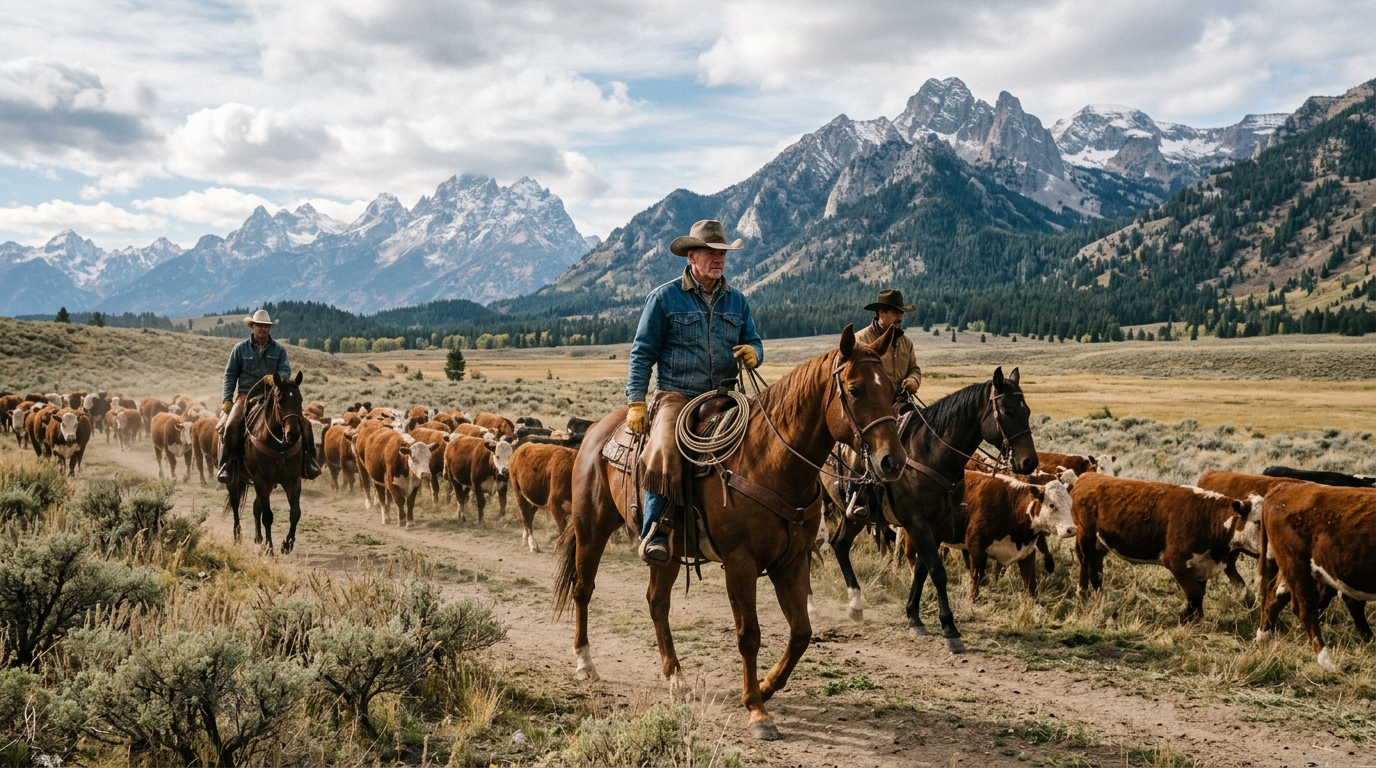
The Gros Ventre Valley stretches east from Jackson Hole, a landscape where cattle still outnumber tourists and working cowboys rise before dawn to check fence lines. These aren’t actors in period costume. They’re ranchers who depend on horseback skills, rope work, and weather instincts passed down through generations.
Working cowboys in Jackson Hole Wyoming maintain authentic ranching traditions in the Gros Ventre Valley despite modern development pressures. These horsemen manage cattle herds across thousands of acres, practice time-tested techniques like [seasonal cattle drives](https://en.wikipedia.org/wiki/Transhumance), and preserve a heritage rooted in practical skills rather than romanticized Western imagery. Their work remains essential to the region’s agricultural economy and cultural identity.
Where Jackson Hole’s Working Cowboys Still Ride
The Gros Ventre Valley remains one of the last strongholds for authentic cowboy culture in Teton County. While Jackson proper has transformed into a resort town, the valley’s eastern reaches still support active cattle operations.
Several family ranches operate year-round in this corridor. The terrain demands skilled horsemanship. Steep hillsides, river crossings, and dense timber make mechanized equipment impractical for much of the work.
Cowboys here don’t perform for cameras. They move cattle between summer and winter pastures, doctor sick animals in remote locations, and repair miles of fence that keep herds contained and predators out.
The work follows seasonal rhythms unchanged for over a century. Spring calving requires round-the-clock monitoring. Summer means moving herds to high country grazing allotments. Fall brings cattle drives back to valley floors before snow closes mountain passes.
Winter presents the hardest challenges. Cowboys break ice on water tanks, haul feed through deep snow, and check cattle during bitter cold snaps that can drop temperatures below zero for weeks.
Daily Life for Gros Ventre Valley Cowboys
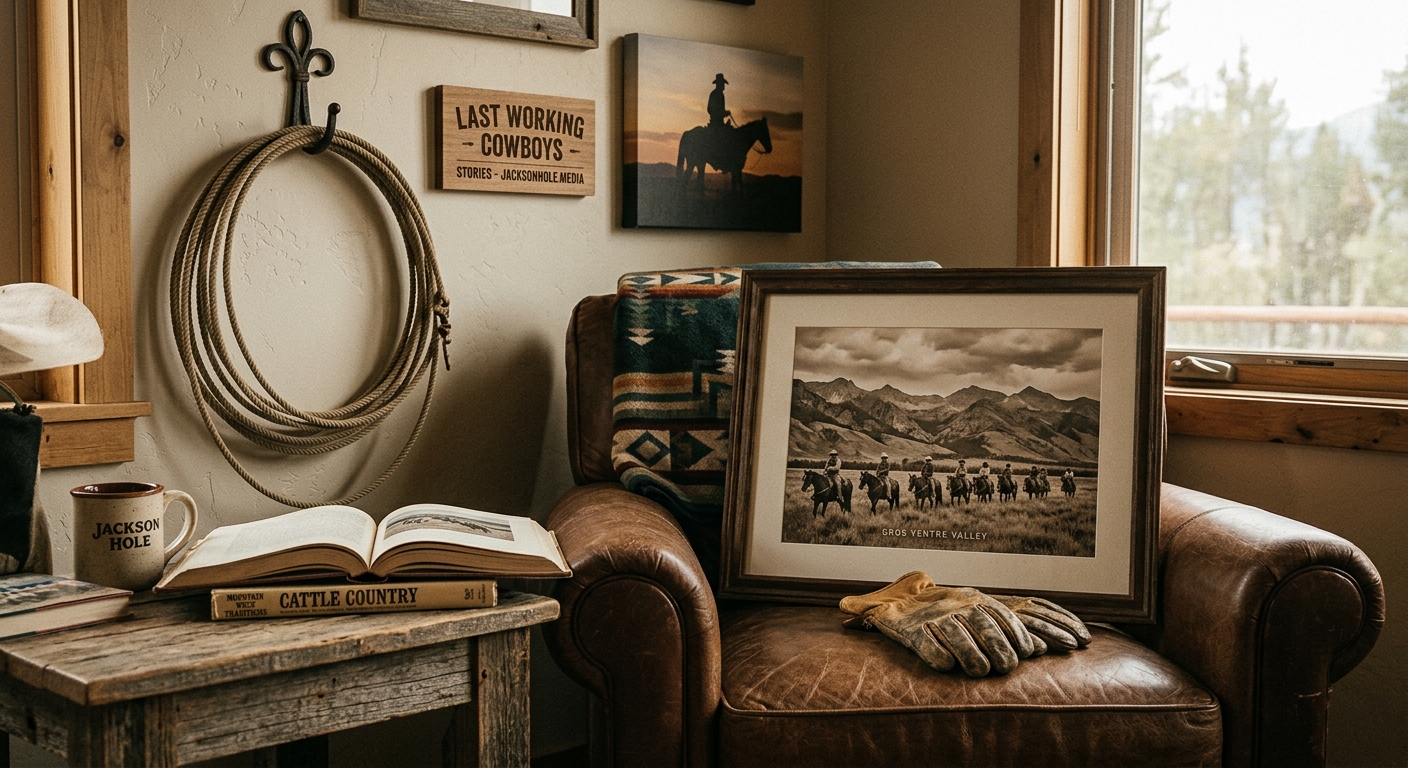
A working cowboy’s day starts around 5:00 AM, often earlier during calving season. First priority is checking livestock. Horses need feeding before riders saddle up for morning rounds.
Breakfast happens after initial chores. Most cowboys fuel up on substantial meals because lunch might not happen until mid-afternoon, depending on what the day demands.
The actual work varies dramatically by season and immediate needs:
- Riding fence lines to identify breaks or weak spots
- Moving cattle between pastures as grass gets depleted
- Treating injuries or illnesses in individual animals
- Breaking and training young horses for ranch work
- Maintaining equipment from saddles to stock trailers
- Coordinating with neighbors on shared grazing allotments
Modern cowboys use pickup trucks and ATVs for some tasks, but horses remain essential. A good ranch horse can navigate terrain no vehicle can reach, work cattle with minimal rider input, and serve as a mobile platform for roping.
Cell phones and GPS devices have changed some aspects of the work. Cowboys can now call for help if injured in remote locations. Weather apps provide advance warning of dangerous storms.
But the core skills remain unchanged. Reading cattle behavior, anticipating where a stray will run, throwing an accurate rope, these abilities still separate competent cowboys from greenhorns.
The Heritage Behind Jackson Hole’s Cowboy Culture
Ranching came to Jackson Hole in the 1880s when settlers discovered the valley’s grass could support cattle through summer months. The Gros Ventre area proved particularly valuable because its lower elevation and southern exposure meant earlier spring green-up.
Early ranchers faced brutal conditions. Harsh winters killed entire herds. Grizzly bears and wolves predated livestock. Isolation meant families went months without seeing neighbors.
Those who survived developed tough, practical approaches to ranching. They bred cattle that could withstand cold. They learned which meadows held grass latest into fall. They built relationships with Shoshone and Bannock peoples who knew the land intimately.
The dude ranch era brought changes starting in the 1920s. Wealthy visitors wanted to experience cowboy life, creating a tourist economy alongside working ranches. Some operations shifted entirely to guest services. Others maintained cattle operations while hosting paying visitors.
This dual economy continues today. Several Gros Ventre ranches offer guest experiences while running legitimate cattle operations. Visitors ride alongside working cowboys during actual ranch tasks, not staged performances.
The distinction matters to local ranchers. They take pride in authentic work, not playacting. A cowboy who can’t rope, ride, and handle cattle earns little respect regardless of his hat and boots.
How Traditional Cowboy Skills Survive Today
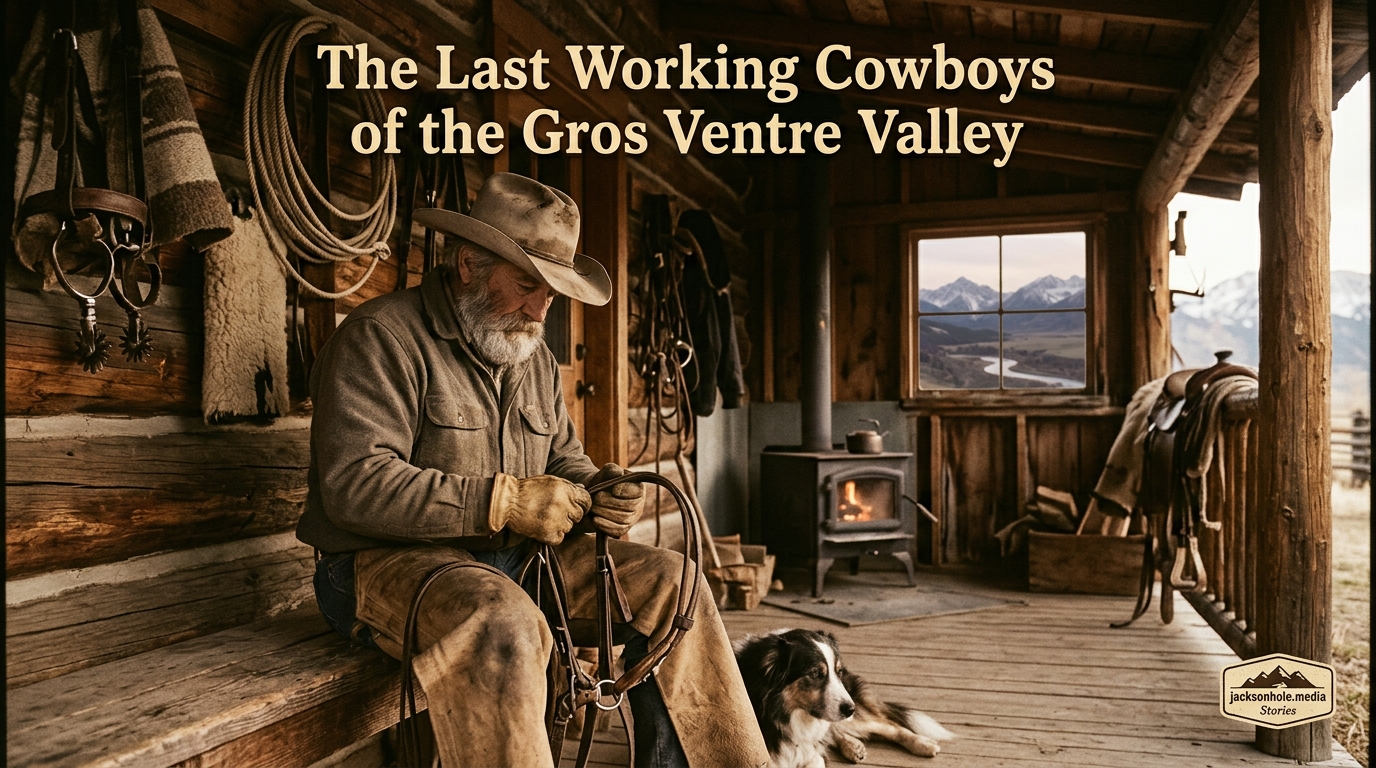
Modern ranching in Jackson Hole Wyoming requires the same fundamental abilities cowboys needed 100 years ago. Here’s how those skills get preserved and passed down:
-
Young people learn through apprenticeship rather than formal schooling. Kids grow up riding, helping with chores, and absorbing knowledge from parents and hired hands.
-
Ranches hire experienced cowboys who can teach newer hands. A good foreman spends significant time training less experienced riders in proper techniques.
-
Community events like brandings bring neighboring ranches together. These gatherings serve social functions but also allow skill sharing and informal mentoring.
-
Regional rodeos and ranch horse competitions keep traditional abilities sharp. Cowboys practice roping and riding skills in competitive settings that mirror actual ranch work.
The knowledge transfer happens through demonstration and repetition. A young cowboy learns to throw a rope by watching thousands of throws, then making thousands more under supervision.
Horse training follows similar patterns. Experienced hands show newcomers how to read a horse’s body language, when to push and when to back off, how to build trust rather than force compliance.
Cattle handling requires understanding herd dynamics. Cowboys learn to identify leaders, anticipate group movements, and position themselves to guide rather than chase livestock.
Challenges Facing Gros Ventre Valley Ranchers
Economic pressures threaten the continuation of traditional ranching in Jackson Hole. Property values have skyrocketed as wealthy buyers seek large parcels for private estates.
Many ranching families face difficult choices. The land they own is worth millions, but continuing to ranch generates modest income. Property taxes based on development potential rather than agricultural productivity create financial strain.
| Challenge | Impact on Cowboys | Current Adaptations |
|---|---|---|
| High property values | Families sell ranches for development | Conservation easements protect some land |
| Labor costs | Hard to pay competitive wages | Some ranches offer housing and benefits |
| Predator conflicts | Wolves and grizzlies kill livestock | Range riders and guard dogs protect herds |
| Climate variability | Droughts and extreme weather stress cattle | Diversified operations spread risk |
| Regulatory complexity | Grazing permits and environmental rules add costs | Ranchers work with agencies on compliance |
Finding and keeping good cowboys presents ongoing difficulties. The work demands long hours, physical toughness, and acceptance of relatively low pay. Housing costs in Teton County make it nearly impossible for working cowboys to afford independent living.
Some ranches provide housing as part of compensation packages. Others have built bunkhouses or small cabins for employees. These arrangements help but don’t solve the broader affordability crisis.
Younger generations face particular challenges. Many ranch kids love the lifestyle but recognize the financial realities. They pursue education and careers that can support families, leaving fewer people to carry on ranching traditions.
“A good cowboy is worth his weight in gold, but we can’t pay gold prices. We survive by finding people who love this life enough to accept what we can offer. That pool gets smaller every year.” — Third-generation Gros Ventre rancher
What Visitors Should Know About Real Cowboy Culture
Tourists often arrive in Jackson Hole with expectations shaped by movies and television. The reality of working cowboy culture differs significantly from those portrayals.
Real cowboys wear practical gear, not costume pieces. Their hats protect from sun and rain. Their boots have functional heels that prevent feet from slipping through stirrups. Their clothing prioritizes durability over style.
Language and behavior reflect practical concerns rather than swagger. Cowboys discuss cattle health, grass conditions, and equipment maintenance. They save dramatic gestures for situations that require them, like turning a charging cow or stopping a runaway horse.
The work involves plenty of unglamorous tasks. Mucking stalls, fixing fence, and processing paperwork occupy as much time as horseback riding. Cowboys spend hours maintaining equipment because breakdowns in remote locations can prove dangerous.
Respect for the land and animals runs deep. Good cowboys understand that healthy range and well-treated livestock form the foundation of sustainable operations. They notice subtle changes in plant communities and animal behavior that indicate problems.
Several Gros Ventre ranches welcome visitors who want authentic experiences:
- Working cattle drives where guests help move herds
- Branding events that include roping and marking calves
- Trail rides that serve actual ranch purposes like checking fence
- Educational programs about range management and cowboy skills
These experiences cost more than typical tourist activities but provide genuine insight into cowboy culture. Participants should expect physical work, early mornings, and unpredictable conditions.
The Future of Cowboys in Jackson Hole Wyoming
The long-term survival of working cowboy culture in the Gros Ventre Valley depends on several factors. Economic viability remains the central challenge. Ranches must generate enough income to sustain operations and compensate employees.
Some operations have diversified revenue streams. They combine cattle ranching with guest services, hunting leases, or conservation programs that pay for habitat protection. These mixed models allow ranching to continue even when cattle prices alone wouldn’t support the operation.
Conservation easements have protected significant acreage from development. These legal agreements restrict future subdivision while allowing continued agricultural use. Landowners receive tax benefits or direct payments in exchange for permanent development restrictions.
Younger ranchers bring new approaches while respecting traditional methods. They use social media to market beef directly to consumers. They adopt rotational grazing systems that improve range health. They collaborate with wildlife managers on coexistence strategies.
Educational initiatives help preserve cowboy skills even as the number of working ranches declines. Youth programs teach horsemanship and cattle handling. Community colleges offer ranch management courses. Mentorship programs connect experienced cowboys with people entering the profession.
The cultural value of maintaining authentic cowboy heritage extends beyond economics. Jackson Hole’s identity remains tied to its ranching past. Residents and visitors alike recognize that something important gets lost when working landscapes become exclusive playgrounds.
Keeping Saddles in the Gros Ventre
The cowboys of Jackson Hole Wyoming represent more than picturesque nostalgia. They maintain living traditions rooted in practical skills, environmental knowledge, and hard physical work. Their presence keeps the Gros Ventre Valley connected to its ranching heritage even as development pressure mounts.
Supporting these working landscapes means recognizing their value beyond real estate potential. It means buying beef from local ranchers, respecting private property, and understanding that functional ranches require space and tolerance for activities like cattle drives on public roads. The future of cowboy culture in Jackson Hole depends on communities choosing to preserve it.