
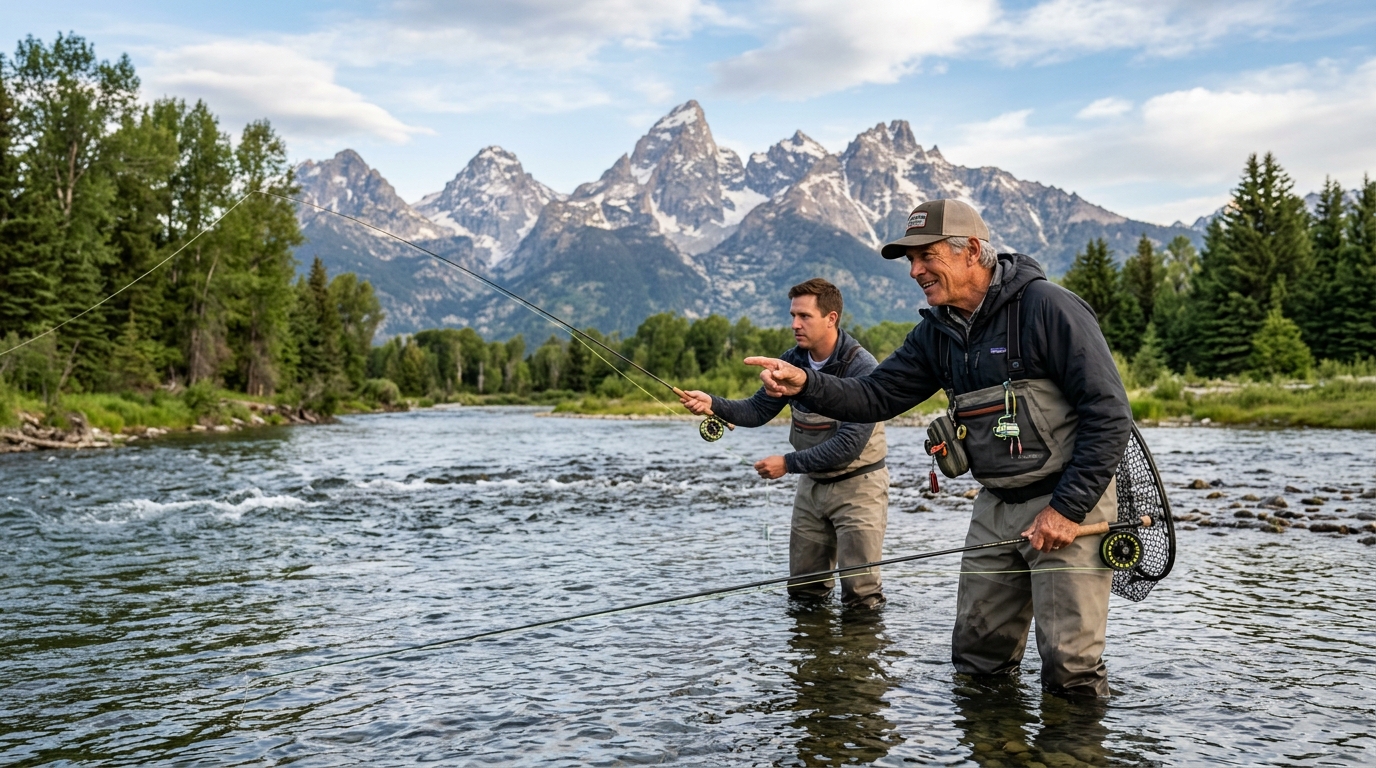
The Snake River cuts through Jackson Hole with a personality that changes by the mile. Some stretches run flat and glassy, perfect for spotting rising cutthroat trout. Others churn through whitewater that demands respect and a steady oar. If you’re planning a guided trip here, understanding what separates an average day on the water from an unforgettable one starts with knowing what your guide brings to the table.
A skilled Snake River fly fishing guide combines local water knowledge, adaptive teaching methods, and safety expertise to transform your fishing trip. The best guides read river conditions in real time, adjust techniques for your skill level, and prioritize conservation while helping you land native cutthroat and brown trout in one of Wyoming’s most dynamic fisheries.
What Makes the Snake River Different From Other Fisheries
The Snake River system around Jackson Hole isn’t a single character. It’s a collection of personalities shaped by snowmelt, dam releases, and geology.
The South Fork flows out of Palisades Reservoir with cold, clear water that stays fishable even during peak runoff. Brown trout and cutthroat thrive here, and the consistent flows make it a favorite for guides working with first-time fly fishers.
Below Jackson Lake Dam, the main stem changes hourly based on irrigation releases. Water levels can rise six inches in an afternoon. Temperature swings affect insect hatches, and fish move between feeding lanes as conditions shift.
Guides who know this river don’t just memorize good spots. They read the water like a language, noticing subtle changes in current speed, surface texture, and color that tell them where trout are holding right now, not where they were yesterday.
How to Choose a Snake River Fly Fishing Guide
Not all guide services operate the same way. Some focus on high-volume trips with rotating staff. Others employ guides who’ve spent decades on these waters and can tell you stories about specific boulders where trophy browns hide.
Start by asking about guide tenure. A guide who’s worked the Snake for ten seasons knows how spring runoff affects different stretches, which back eddies produce during Salmonfly hatches, and where to find solitude when the river gets crowded.
Check their teaching style. Some guides prefer to do most of the rowing and casting while you watch. Others hand you the rod immediately and coach you through every step. If you’re new to fly fishing, you want someone patient who can break down casting mechanics without making you feel rushed.
Ask about boat types. Drift boats offer stability and room for gear. Rafts handle whitewater better but sacrifice some fishing efficiency. The right choice depends on which section you’re floating and your comfort level with moving water.
Licensing and insurance matter more than most people realize. Wyoming requires commercial guides to hold specific permits, and reputable outfitters carry liability coverage that protects you if something goes wrong.
“The best guides I’ve fished with on the Snake never stop watching the water. They’re reading currents, checking hatch activity, and adjusting the plan before I even notice conditions have changed. That awareness is what you’re really paying for.” — Local angler with 20+ years on Jackson Hole rivers
What Happens on a Typical Guided Float Trip
Most Snake River float trips follow a rhythm that balances fishing time with river travel and breaks.
Morning preparation:
- Meet at the shop or boat ramp between 6:30 and 8:00 a.m., depending on the season and target hatch.
- Your guide rigs rods, explains the day’s plan, and goes over safety protocols for the specific stretch you’re floating.
- Launch and begin fishing productive water within the first half mile.
Mid-trip adjustments:
Your guide watches your casting, suggests technique tweaks, and changes flies based on what fish are showing interest in. If a hatch starts, they’ll swap out your rig completely to match emerging insects.
Lunch typically happens on a gravel bar or shaded bank. Most guides pack sandwiches, fruit, and plenty of water. This break gives your casting arm a rest and lets you ask questions about the river, local wildlife, or anything else on your mind.
Afternoon focus:
As the day warms, fish behavior changes. Trout often move to deeper runs or shaded banks. Your guide adjusts the float plan, targeting water that produces during afternoon conditions.
The takeout usually happens between 3:00 and 5:00 p.m. Your guide loads the boat, cleans gear, and often offers to help you book another trip if you’re interested.
Reading Water Like a Professional Guide
Professional guides don’t just see water. They see structure, temperature gradients, and feeding lanes that most people miss.
Key features guides look for:
- Seams where fast current meets slow water, creating natural feeding zones
- Boulders that create pockets of calm water where trout rest between feeding bursts
- Undercut banks that provide shade and protection from predators
- Depth changes where fish can move up or down depending on conditions
- Foam lines that concentrate drifting insects and attract feeding trout
Guides also watch for surface activity. A subtle dimple might indicate a trout sipping mayflies just below the film. Splashy rises often mean fish are chasing caddisflies. No visible rises doesn’t mean no fish; it just means they’re feeding subsurface on nymphs.
Common Mistakes That Waste Your Guided Trip
Even experienced anglers make errors that limit their success on guided trips.
| Mistake | Why It Hurts | Better Approach |
|---|---|---|
| Arriving unprepared | Wastes fishing time while guide explains basics | Research fly fishing fundamentals before your trip |
| Ignoring guide advice | Misses local knowledge that took years to develop | Trust the guide’s fly selection and technique suggestions |
| Focusing only on big fish | Creates frustration and overlooks great fishing | Appreciate every fish and learn from each hookup |
| Poor communication | Guide can’t adjust to your needs or preferences | Speak up about comfort level, goals, and concerns |
| Skipping the pre-trip call | Leads to mismatched expectations | Discuss skill level and trip goals before launch day |
The biggest mistake is treating your guide like a servant instead of a teacher. Guides want you to catch fish, but they also want you to learn something that improves your fishing for years to come.
Seasonal Patterns That Affect Your Trip
The Snake River fishes year-round, but each season demands different tactics and produces different results.
Spring (April through June):
Runoff dominates late May and early June. Water runs high and off-color, pushing guides toward tailwaters and spring creeks with clearer conditions. Early spring offers excellent dry fly fishing before runoff hits.
Summer (July through September):
Prime season brings consistent hatches, warm weather, and crowded boat ramps. Salmonflies emerge in late June, creating spectacular surface action. Terrestrial patterns like hoppers and beetles work well from mid-July onward.
Fall (October through November):
Cooler temperatures trigger brown trout spawning runs. Fish become more aggressive, and fall colors make for stunning scenery. Streamer fishing picks up as trout bulk up for winter.
Winter (December through March):
Only the most dedicated anglers fish winter, but those who do often find solitude and willing fish. Guides focus on midday hours when water temperatures peak and insect activity increases.
Conservation Practices That Matter
Responsible guides practice and teach conservation methods that protect the Snake River fishery for future generations.
Barbless hooks reduce injury to fish and make catch-and-release easier. Most guides crimp barbs on all flies before the trip starts.
Proper fish handling means wet hands, minimal air exposure, and supporting the fish horizontally. Never squeeze the body or hold fish vertically by the jaw.
Native cutthroat trout deserve special care. These fish evolved in Snake River tributaries and face pressure from non-native species. Guides who prioritize cutthroat conservation help maintain genetic diversity and population health.
Trash stays in the boat. Every wrapper, bottle, and piece of fishing line gets packed out. Many guides carry extra bags to pick up trash left by others.
What Equipment Your Guide Provides
Most full-service guide operations include everything you need for a successful day on the water.
Standard gear provided:
- High-quality fly rods matched to the fishing conditions
- Reels with appropriate line weight and backing
- Leaders, tippet, and a full selection of proven fly patterns
- Waders and boots in your size
- Life jackets and safety equipment
- Lunch, snacks, and beverages
What you should bring:
- Sunglasses with polarized lenses for spotting fish
- Sunscreen and lip balm rated SPF 30 or higher
- A hat with a brim to protect your face and neck
- Layers for changing weather conditions
- A camera if you want photos beyond what your guide takes
- Any prescription medications you might need
Some guides offer photography packages or GoPro footage of your trip. Ask about these options when booking if documentation matters to you.
Learning From Guides Who Changed Careers
Jackson Hole attracts people who left traditional careers to work on the water. These guides bring unique perspectives shaped by their previous lives.
Former teachers often excel at breaking down complex casting mechanics into simple steps. They recognize learning styles and adapt their instruction accordingly.
Ex-corporate professionals understand client service and often run their guide businesses with impressive organization and attention to detail.
People who grew up fishing these waters offer generational knowledge passed down from parents and grandparents. They know stories about the river that you won’t find in guidebooks.
Career changers who moved to Jackson Hole for the lifestyle, much like the last working cowboys of the Gros Ventre Valley, share a common thread of choosing place and passion over conventional success metrics.
Advanced Techniques Guides Teach on the Water
Experienced guides don’t just put you on fish. They teach skills that improve your fishing everywhere.
Mending techniques:
Proper line mending keeps your fly drifting naturally. Guides teach upstream mends to slow your drift, downstream mends to speed it up, and stack mends for complex currents.
Reading rises:
Different rise forms indicate different insects and feeding behaviors. Guides help you identify sipping rises versus splashy takes, then match your presentation to what fish are doing.
Streamer fishing:
Swinging and stripping streamers requires different timing than dry fly fishing. Guides coach you on retrieve speeds, angles, and when to set the hook on aggressive strikes.
Indicator nymphing:
Setting depth, detecting subtle takes, and managing slack line all require practice. Guides provide real-time feedback that accelerates your learning curve.
Weather Considerations That Change Everything
Mountain weather affects Snake River fishing in ways that surprise visitors from flatter regions.
Afternoon thunderstorms build over the Tetons almost daily during summer. Lightning poses real danger on open water, and responsible guides monitor weather apps and radar throughout the day.
Wind makes casting difficult and can blow boats off course. Guides adjust plans to fish protected sections when wind picks up, and they teach casting techniques that work in breezy conditions.
Temperature swings of 40 degrees between morning and afternoon are normal. Layering becomes essential, and guides carry extra fleece and rain gear for clients who underestimate mountain weather.
Barometric pressure changes affect fish behavior. Falling pressure before a storm often triggers feeding activity. Rising pressure after a front passes can slow fishing until conditions stabilize.
Building Skills Beyond Your First Trip
A single guided trip plants seeds for a lifetime of fly fishing improvement.
Take notes during your float. Write down fly patterns that worked, techniques your guide taught, and spots that produced fish. These notes become invaluable when you return or fish similar water elsewhere.
Practice casting between trips. Muscle memory develops through repetition, and even 20 minutes in a park improves your presentation on the water.
Join a local fly fishing club if you have one near home. The community knowledge and shared experiences accelerate learning faster than fishing alone.
Consider booking trips with different guides. Each guide has unique strengths and teaching styles. Fishing with multiple guides exposes you to diverse approaches and techniques.
Why Local Knowledge Beats Guidebook Information
Printed guides and online resources provide general information, but they can’t adapt to daily conditions the way a human guide can.
Guidebooks might list a productive stretch of river, but they won’t tell you that yesterday’s rainstorm muddied the water and pushed fish into tributaries. Your guide makes that call in real time.
Online forums share fly patterns that work, but they rarely mention that the Pale Morning Dun hatch is two weeks late this year because of cold spring temperatures. Your guide adjusts the fly box accordingly.
Maps show boat ramps and access points, but they don’t explain that the upper ramp is closed for repairs and you need to launch three miles downstream. Your guide handles logistics so you can focus on fishing.
The Economics of Hiring a Guide
Guided fly fishing trips represent a significant investment, and understanding the value helps you make informed decisions.
Full-day float trips on the Snake River typically run between $500 and $700 for two anglers. This includes guide expertise, boat operation, all fishing gear, lunch, and often transportation from your hotel.
Half-day trips cost less but provide fewer fishing hours and less opportunity to experience different water types. Most guides recommend full days for first-time visitors who want comprehensive river exposure.
Private trips cost more than shared trips but offer personalized instruction and flexible pacing. If you’re traveling with family or friends who fish at different skill levels, private trips often provide better value.
Tipping conventions suggest 15 to 20 percent for good service, paid directly to your guide at the end of the trip. Guides work seasonally and rely on tips as significant income.
Safety Protocols That Professional Guides Follow
River safety goes beyond wearing a life jacket. Professional guides implement systems that minimize risk throughout your trip.
Pre-trip safety talks cover what to do if you fall out of the boat, how to avoid hook injuries, and emergency communication procedures. These briefings might seem excessive, but they prepare you for unlikely scenarios that require immediate action.
Guides position themselves to handle boat control in challenging water while keeping clients safe and fishing effectively. This often means the guide rows through rapids while clients reel in and secure their rods.
First aid kits, throw ropes, and communication devices are standard equipment on every boat. Guides train in swift water rescue and wilderness first aid through courses required for their permits.
Float plans filed with the outfitter ensure someone knows your location and expected return time. If you don’t check in, the outfitter initiates contact and, if necessary, search procedures.
Connecting With Jackson Hole’s Fishing Community
The culture around fly fishing in Jackson Hole extends beyond catching trout. It includes conservation efforts, artistic expression, and community storytelling.
Local fly shops serve as gathering places where anglers share reports, swap flies, and plan trips. Spending time in these shops connects you with the community and provides current fishing information.
Conservation organizations like the Snake River Fund work to protect and restore fisheries. Many guides volunteer time and donate trip packages to fundraising auctions that support habitat improvement projects.
The intersection of outdoor lifestyle and creative culture shows up in unexpected places, from cowboy poetry gatherings that celebrate Western traditions to wildlife watching opportunities that rival any fishing trip.
When Your Guide Becomes Your Teacher
The relationship between angler and guide often evolves beyond a single transaction.
Guides who genuinely care about teaching create moments where everything clicks. Your casting loop tightens. You start reading water independently. You hook and land a fish without assistance.
These breakthrough moments happen because good guides recognize when to offer instruction and when to step back and let you figure things out. They balance structure with freedom, creating conditions for learning without micromanaging every cast.
The best guides celebrate your successes authentically. They understand that a 12-inch cutthroat caught on a fly you selected and presented correctly matters more than a 20-inch brown they hooked and handed you the rod to land.
Making Your Next Trip Even Better
Each guided trip builds on previous experiences if you approach them with intention.
Review photos and notes from past trips before booking your next float. Identify patterns in what worked and what didn’t. Share these observations with your guide during the pre-trip call.
Set specific learning goals. Maybe you want to improve your roll cast for tight quarters. Perhaps you want to learn how to tie on your own flies and change tippet. Clear goals help guides structure instruction.
Fish different seasons to experience the full cycle of Snake River conditions. A summer hopper trip feels completely different from a fall streamer float or a spring dry fly morning.
Consider progression trips where you tackle more challenging water or techniques as your skills improve. Guides appreciate clients who want to grow and often suggest appropriate next steps.
Why the Snake River Creates Lifelong Anglers
Something about this river system hooks people beyond the fish they catch.
Maybe it’s the Teton backdrop that makes every cast feel like it’s happening in a postcard. Maybe it’s the variety of water that keeps every trip different. Maybe it’s the guides who share their knowledge generously and make you feel like you’re fishing with a friend.
The Snake River around Jackson Hole offers accessible fishing for beginners and challenging water for experts. It supports healthy populations of native and wild trout. It flows through landscapes that remind you why you started fishing in the first place.
A great Snake River fly fishing guide doesn’t just help you catch fish today. They give you skills, knowledge, and inspiration that improve every fishing trip for the rest of your life. They show you how to read water, present flies naturally, and respect the resource that makes it all possible.
Whether you’re planning your first guided trip or your fiftieth, the Snake River and the people who know it best offer experiences that stick with you long after you’ve dried your waders and put away your rod.