
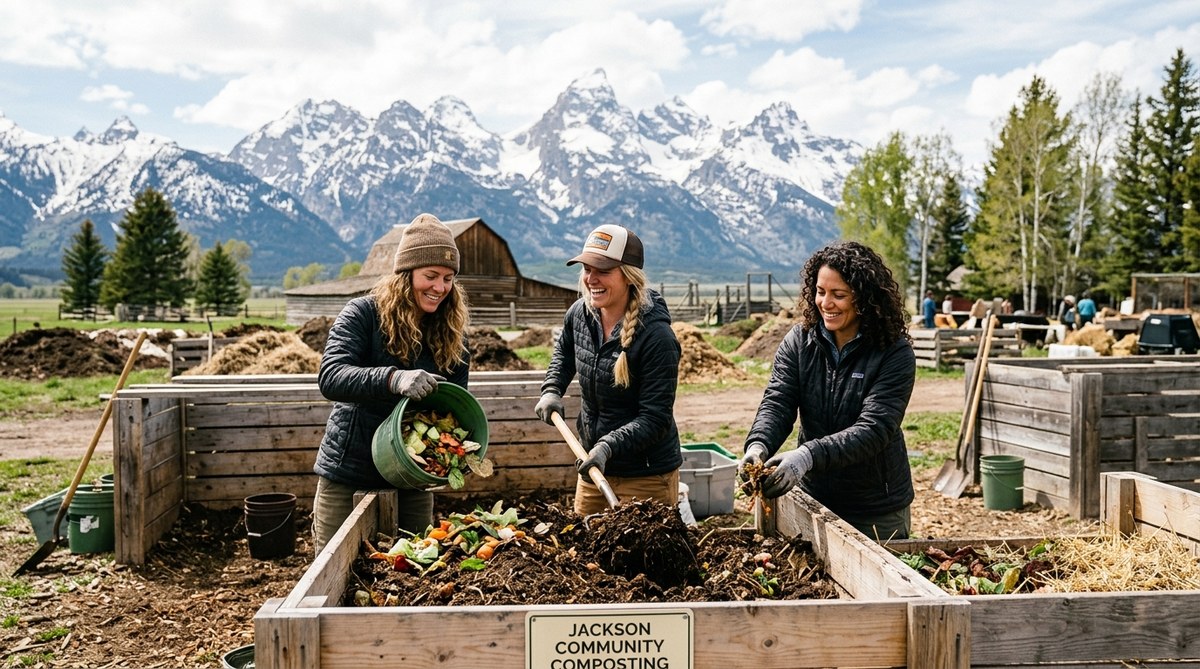
Jackson’s beautiful mountain town has long been a place where nature shapes daily life. Recently, a group of passionate residents, led by three local moms, turned this love for the land into an innovative community effort. They built Jackson’s first community composting program, giving residents a way to reduce waste while enriching local soils. This initiative reflects a broader shift toward sustainable living and community resilience in Jackson. It’s a story of ingenuity, teamwork, and a shared commitment to protecting the environment.
Jackson’s first community composting program was created by local moms who saw a need for sustainable waste solutions. Their efforts transformed how the town handles food scraps and yard waste, fostering stronger community bonds and healthier soils. This story highlights the power of grassroots initiatives to bring lasting change in Jackson’s environmental landscape.
The origins of Jackson’s first community composting effort
Jackson’s stunning natural environment inspires residents to live sustainably. Yet, managing organic waste has always been a challenge in this mountain town. Recognizing this, three women — who are deeply involved in their community and passionate about the environment — decided to take action. Their goal was to create a system that would divert food and yard waste from landfills and turn it into valuable compost.
They began by researching existing composting methods and connecting with local environmental groups. Their conversations revealed a common desire: a simple, accessible way for everyone to contribute to waste reduction. With this, they envisioned a community-driven program that would serve residents and local businesses alike. Their idea gained momentum when they rallied neighborhood support and secured small grants to start the pilot.
How the community composting program was built from the ground up
The process of establishing Jackson’s first community composting program involved several key steps:
-
Engaging the community: The moms held informational meetings at local schools, town halls, and community centers. They explained the benefits of composting and how everyone could participate. Their friendly approach encouraged neighbors to get involved.
-
Setting up collection points: They identified strategic locations around town for food waste and yard debris drop-off. These stations were equipped with easy-to-use bins and clear signage.
-
Partnering with local experts: They collaborated with composting specialists to ensure the process was environmentally sound and efficient. This partnership helped them develop protocols for compost collection, processing, and distribution.
-
Creating educational resources: To foster ongoing participation, they produced pamphlets, online guides, and workshops. These materials demystified composting and provided tips for reducing waste at home.
-
Launching the pilot program: With everything in place, they began collecting organic waste from participating residents and businesses. Volunteers monitored the process, ensuring smooth operations and gathering feedback for improvements.
-
Scaling and sustaining: As participation grew, the program expanded to include more drop-off sites and outreach events. Funding was secured through local grants and community donations, ensuring the program’s longevity.
Practical steps for starting your own community composting project
Interested in bringing a similar initiative to your town? Here are some practical steps to get started:
-
Identify local champions: Find passionate residents who care about sustainability. Look for community organizers, environmental enthusiasts, or parents eager to make a difference.
-
Build partnerships: Connect with local waste management agencies, environmental groups, and composting experts to gain support and technical guidance.
-
Secure funding and resources: Seek grants, sponsorships, or donations to cover bins, signage, and educational materials.
-
Engage your community: Host informational meetings, distribute flyers, and use social media to spread the word.
-
Establish collection points: Choose accessible locations and set up user-friendly bins with clear instructions.
-
Monitor and adapt: Collect feedback, track participation, and make improvements to your program.
Sample process flow for a community composting program:
- Residents bring food scraps and yard waste to designated drop-off sites.
- Volunteers or staff collect and transport waste to a composting site.
- Organic material is processed into rich soil over several months.
- The finished compost is shared with community gardens, parks, or sold locally.
| Technique | Common Mistake | Solution |
|---|---|---|
| Clear signage | Vague instructions lead to contamination | Use simple, visual instructions at collection points |
| Regular monitoring | Infrequent checks cause issues | Schedule routine site visits and feedback sessions |
| Community engagement | Lack of outreach causes low participation | Host workshops and update residents regularly |
An expert on sustainable waste management notes, “Community composting programs thrive when residents see tangible benefits and feel involved in the process. Education and accessibility are key.”
Benefits of a community composting program in Jackson
Implementing a community composting initiative offers numerous advantages:
- Reduces landfill waste: Diverts organic material from landfills, decreasing methane emissions.
- Enriches soils locally: Produces nutrient-rich compost that supports gardens and landscaping.
- Builds community bonds: Encourages neighbors to work together toward a common goal.
- Saves money: Cuts waste disposal costs for residents and the town.
- Increases environmental awareness: Educates the community about sustainable practices.
Participation also fosters a sense of ownership and pride. Residents feel empowered knowing they contribute to Jackson’s environmental health. This grassroots effort exemplifies how small actions can lead to meaningful change.
How to keep the momentum going
Sustaining a community composting program requires ongoing effort. Regular outreach keeps residents engaged and informed. Hosting seasonal events, like composting workshops or garden days, maintains enthusiasm. Sharing success stories and progress reports helps illustrate the impact.
Involving local schools and youth groups can inspire the next generation of environmental stewards. Additionally, partnering with local businesses to accept food scraps or sponsor collection sites boosts program visibility and support.
Jackson’s composting future and community resilience
The story of the three moms behind Jackson’s first community composting program is just beginning. Their initiative demonstrates how determined residents can shape a more sustainable future. As participation grows, the town can develop a comprehensive waste management system that minimizes environmental impact and bolsters local resilience.
Looking ahead, Jackson may expand its composting efforts to include neighborhood-specific programs or even a community composting facility. These developments could serve as models for other mountain towns seeking sustainable solutions.
Your turn to make a difference
Every community has the potential to create a composting program that benefits the environment and the people. Start by talking with neighbors, gathering support, and sharing your ideas. Small steps lead to big change when driven by shared passion.
With a bit of planning and community spirit, you can help Jackson build a healthier, more sustainable future — one compost bin at a time.
Connecting the land and community through composting
The journey of building Jackson’s first community composting program shows the power of local action. It reminds us that caring for the environment is a collective effort. By turning food scraps into soil, residents are nurturing not just their gardens but also their community bonds.
Whether you’re inspired to start your own composting project or support existing efforts, remember that change begins with a simple idea. Together, Jackson is proving that a community united around sustainability can thrive amid the mountains and beyond.