
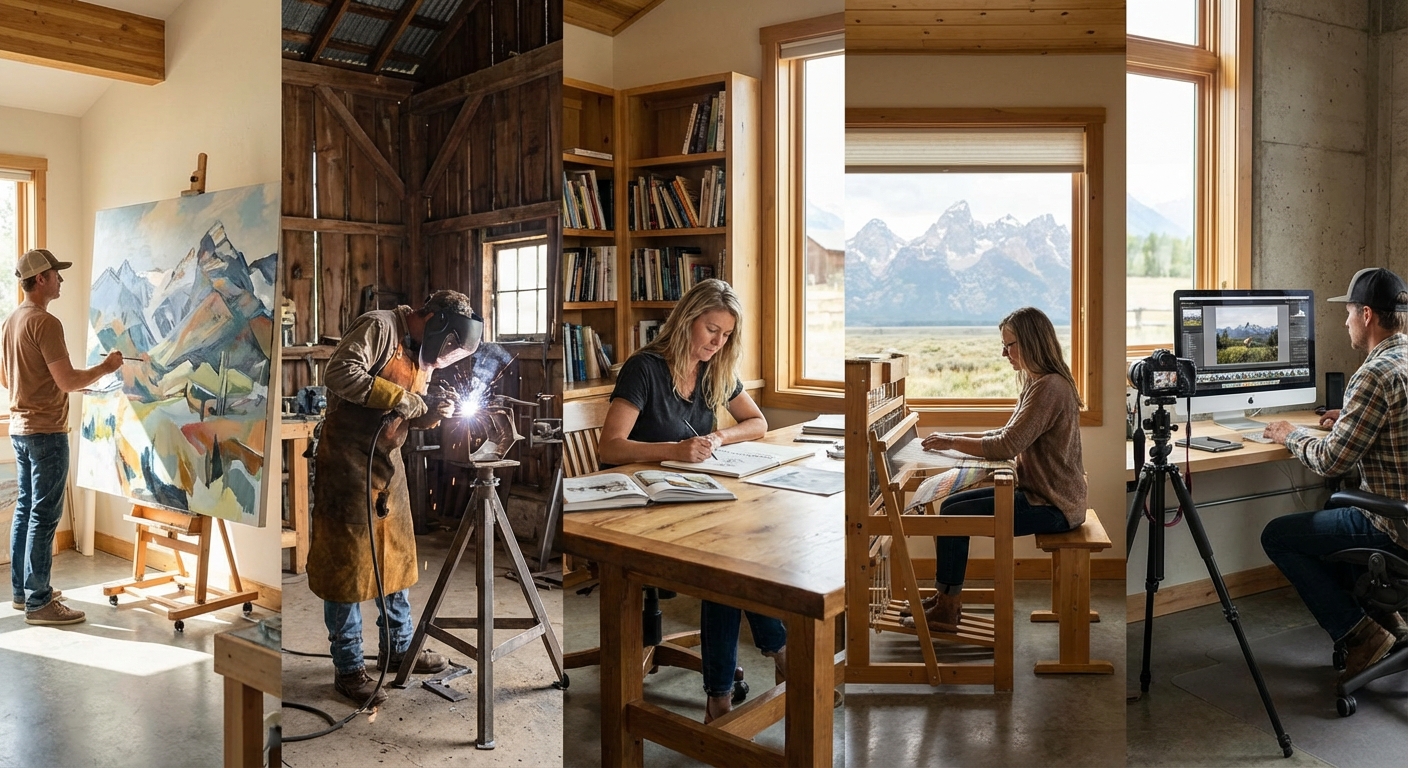
The Teton Range doesn’t just attract skiers and wildlife photographers. It pulls in painters, sculptors, and mixed-media artists who see something raw and unfinished in the landscape. They arrive for a season and stay for decades, building studios in converted barns, log cabins, and repurposed industrial spaces. These Jackson Hole artists aren’t copying the romanticized West of the 19th century. They’re painting the version they see today: ranchers navigating climate change, wildlife corridors squeezed by development, and a community wrestling with its own identity.
Jackson Hole’s contemporary art scene blends traditional Western themes with modern perspectives. Local artists work from studios scattered across the valley, creating paintings, sculptures, and installations that reflect current environmental and cultural tensions. Galleries, studio tours, and community events offer collectors and visitors direct access to this evolving movement, making the region a hub for authentic Western art.
What Makes Jackson Hole a Magnet for Working Artists
The valley offers something most art hubs can’t: daily proximity to the subject matter.
Artists here wake up to elk herds crossing their driveways. They sketch at the same watering holes the last working cowboys of the Gros Ventre Valley use to rest their horses. The light changes every hour, casting shadows that shift from purple to gold across the Tetons. That immediacy shows up in the work.
But it’s not just the scenery. Jackson Hole has built an infrastructure that supports professional artists. The town hosts year-round gallery walks, artist residencies, and collector events. The National Museum of Wildlife Art anchors the cultural scene, offering exhibition opportunities and educational programs. Local galleries like Visions West Contemporary and Astoria Fine Art represent living artists, not just estates.
Housing costs remain a challenge. Many artists work second jobs or rent studio space collaboratively to afford living here. Some split their time between Jackson and more affordable towns, returning for the summer season when tourism peaks and sales increase.
The Studios Where the Work Happens
Most Jackson Hole artists work in unconventional spaces.
A painter might rent a garage in Wilson, insulating it themselves and installing north-facing windows for consistent light. A sculptor could lease a warehouse bay in Alpine, sharing the space with a furniture maker and a ceramicist. These aren’t polished white-cube environments. They’re functional workshops where the smell of oil paint mixes with sawdust and the hum of ventilation fans.
Studio tours, often organized during the Fall Arts Festival, give visitors a behind-the-scenes look. You’ll see unfinished canvases stacked against walls, reference photos pinned to corkboards, and palettes scraped clean at the end of each day. The artists who open their doors tend to be generous with their time, explaining techniques and answering questions about materials.
Some studios double as retail spaces, allowing collectors to purchase work directly. This cuts out the gallery commission and builds relationships between buyers and makers. It also means you might negotiate price, discuss custom commissions, or arrange payment plans.
How Contemporary Western Art Differs from the Traditional Genre
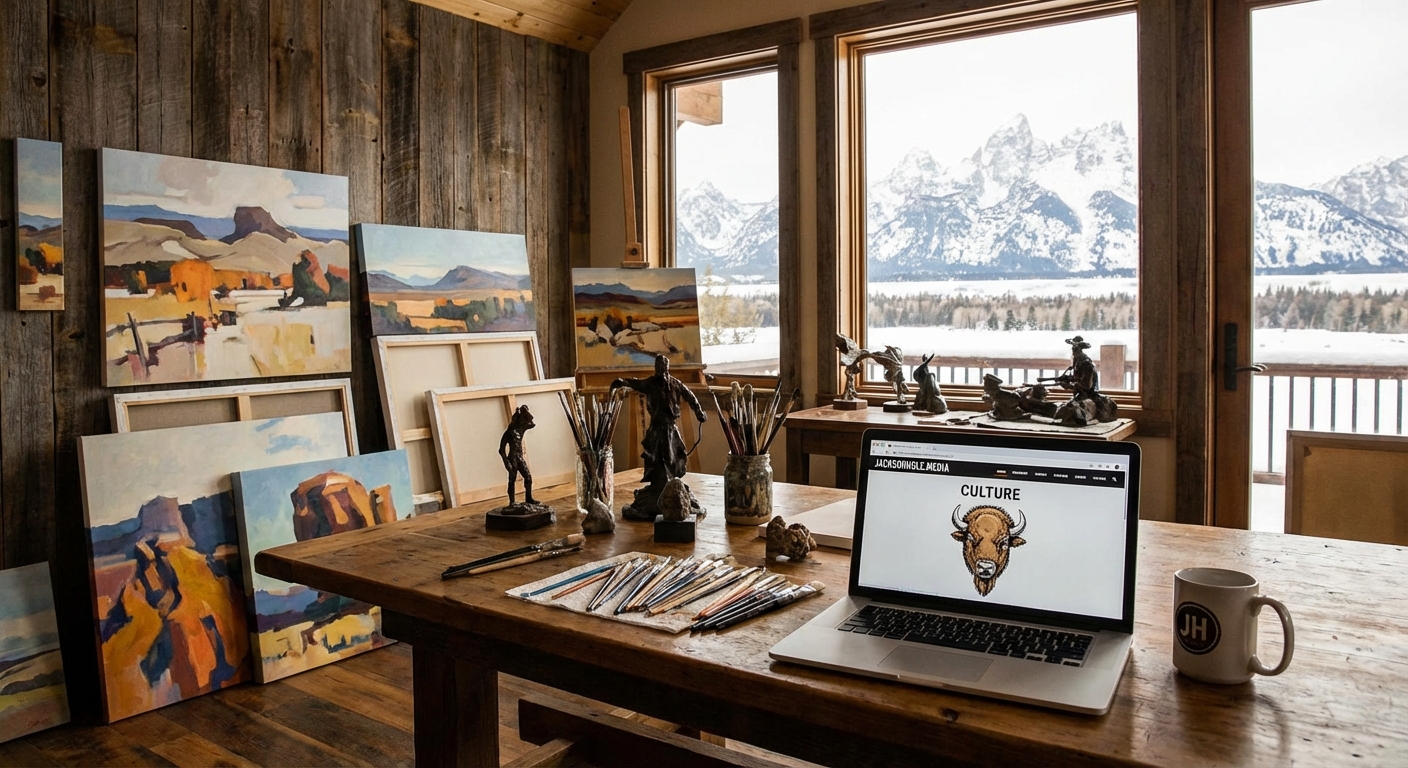
Western art carries a lot of baggage.
For decades, it meant idealized cowboys, noble Native Americans frozen in time, and landscapes devoid of power lines or highways. Collectors expected a specific aesthetic: warm earth tones, dramatic skies, and subjects that evoked nostalgia for a West that never quite existed.
Jackson Hole artists are pushing back against that formula. They’re painting the West as it is now, not as it was imagined in the 1880s. That means addressing topics like:
- Wildfire smoke obscuring mountain views
- Subdivisions encroaching on wildlife habitat
- Indigenous perspectives on land use and conservation
- The tension between tourism economies and local livelihoods
- Climate impacts on snowpack, rivers, and ecosystems
The work still features recognizable Western imagery. You’ll see horses, ranches, and wide-open spaces. But the context has shifted. A painting of a rancher might show them checking a smartphone or installing solar panels. A sculpture of a bison could incorporate reclaimed metal or commentary on Yellowstone’s management policies.
This approach doesn’t always sell easily. Some collectors want the comfort of traditional Western art. But a growing segment, especially younger buyers and institutions, are hungry for work that reflects contemporary realities.
Finding and Supporting Jackson Hole Artists
Meeting artists in person makes a difference.
Gallery walks happen on the third Thursday of each month during the summer. Participating galleries stay open late, often serving wine and snacks while artists mingle with visitors. It’s a low-pressure way to see new work, ask questions, and get a feel for different styles.
The Fall Arts Festival, held each September, is the biggest event on the calendar. Over a dozen galleries coordinate openings, studio tours, and panel discussions. Collectors fly in from across the country. Artists debut new series. Sales during this week can fund an entire year of studio work.
If you’re serious about purchasing, here’s how to approach it:
- Visit multiple galleries and studios to understand the range of work being produced.
- Ask about the artist’s process, materials, and how they price their pieces.
- Request a certificate of authenticity and discuss framing or shipping logistics.
- Consider starting with smaller works or prints before committing to large-scale pieces.
- Follow artists on social media to stay updated on new releases and studio sales.
Many Jackson Hole artists also accept commissions. If you want a specific scene, size, or color palette, they’ll work with you to create something custom. Expect to pay a deposit upfront and wait several months for completion, depending on the artist’s schedule.
What Collectors Should Know Before Buying
Not all Western art appreciates in value.
Buying from living artists means you’re investing in their career trajectory, not an established market. Some artists will gain recognition, land museum shows, and see their prices climb. Others will remain regional favorites with steady but modest sales.
If you’re purchasing purely for enjoyment, that doesn’t matter. But if you’re hoping for financial return, do your homework. Look at:
- Exhibition history: Has the artist shown in reputable galleries or museums?
- Critical reception: Do art writers and curators take their work seriously?
- Representation: Are they signed with a gallery that actively promotes them?
- Consistency: Do they produce a cohesive body of work, or jump between styles?
Provenance matters, even for contemporary pieces. Keep all receipts, certificates, and correspondence. Document the condition of the work when you receive it. If the artist becomes well-known, that paper trail will be essential.
The Role of Community and Collaboration
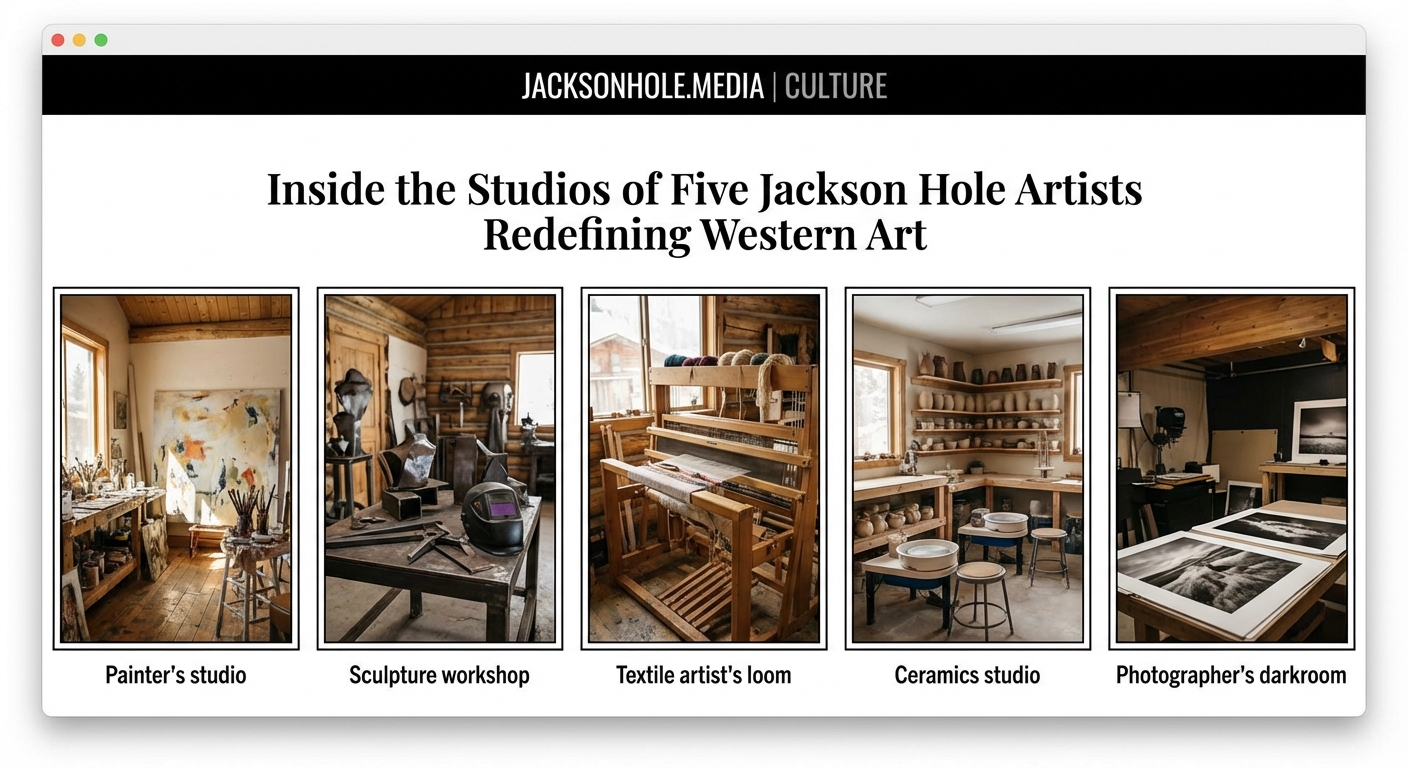
Jackson Hole artists don’t work in isolation.
Informal critique groups meet regularly, offering feedback on works in progress. Artists share studio space, equipment, and technical knowledge. When someone lands a big commission or gallery show, others pitch in to help with framing, installation, or promotion.
This collaborative spirit extends to other creative communities. Visual artists often partner with writers, musicians, and performers. You might see a painter creating backdrops for a theater production, or a sculptor contributing to a public installation during a music festival.
The town’s small size reinforces these connections. You’ll run into the same people at the post office, the grocery store, and the ultimate first-timer’s weekend in Jackson Hole events. That familiarity builds trust and makes collaboration easier.
“The best part of working here isn’t the mountains. It’s the other artists who understand what you’re trying to do and push you to get better.” — Local painter and longtime Jackson resident
How Visitors Can Engage Beyond Buying Art
You don’t need to purchase a painting to support the scene.
Attend openings and events. Follow artists on social media and share their work. Write reviews or post photos from gallery visits. These small actions increase visibility and help artists reach new audiences.
Some galleries and studios offer workshops or demonstrations. You might spend an afternoon learning plein air painting techniques, trying your hand at bronze casting, or watching a printmaker pull editions. These experiences deepen your appreciation for the craft and often lead to purchases down the line.
Volunteering with arts organizations also makes an impact. The Jackson Hole Public Art organization, for example, relies on community members to help with installations, fundraising, and event coordination. Your time directly supports projects that make art accessible to everyone, not just collectors.
Common Mistakes When Collecting Western Art
Buying on impulse rarely ends well.
You see a painting at a gallery, fall in love with it, and hand over your credit card before considering where it will hang or whether it fits your collection. A week later, you realize the colors clash with your living room or the scale is all wrong.
Take photos of pieces you’re interested in. Bring them home and see how they look in different spaces. Most galleries will hold a piece for a few days while you decide. Some even offer trial periods, letting you hang the work at home before committing.
Another mistake: assuming all Western art is the same. The category includes everything from hyperrealistic wildlife paintings to abstract interpretations of sagebrush. Don’t lump it all together. Spend time understanding the nuances between artists, styles, and approaches.
Here’s a breakdown of common pitfalls and how to avoid them:
| Mistake | Why It Happens | How to Avoid It |
|---|---|---|
| Buying without research | Emotional response to a piece without context | Visit multiple galleries, ask about the artist’s background, compare prices |
| Ignoring condition issues | Assuming new work is flawless | Inspect for damage, ask about materials and longevity, request condition reports |
| Overpaying at auctions | Competitive bidding without a price ceiling | Set a maximum bid beforehand, research comparable sales, attend previews |
| Skipping framing considerations | Focusing only on the artwork itself | Budget for professional framing, ask the gallery for recommendations |
| Not verifying authenticity | Trusting verbal assurances alone | Request signed certificates, check for gallery stamps or labels, document provenance |
Why Jackson Hole’s Art Scene Keeps Growing
Tourism plays a role, but it’s not the whole story.
Yes, visitors buy art. They walk into galleries after a morning hike, fall for a painting of the Tetons, and ship it home. That revenue supports artists and galleries alike. But the scene would exist even without tourists.
Local collectors are serious and knowledgeable. They attend every opening, build relationships with artists, and purchase work consistently. Many have been collecting for decades, assembling museum-quality collections in their homes and ranches.
The arrival of new wealth has also changed the market. Tech entrepreneurs, finance executives, and other high-net-worth individuals have relocated to Jackson Hole in recent years, bringing sophisticated tastes and substantial budgets. They’re commissioning large-scale works, funding public art projects, and endowing arts organizations.
This influx of money creates opportunities but also raises concerns. Rising costs can price out working artists, and the pressure to produce commercially viable work can stifle experimentation. Some artists worry the scene is becoming too focused on luxury buyers and losing its scrappy, independent character.
The Future of Western Art in the Valley
Younger artists are arriving with different perspectives.
They’re less interested in romantic depictions of the past and more focused on urgent contemporary issues. Climate change, Indigenous rights, and economic inequality show up in their work. They use social media to build audiences, bypassing traditional gallery systems. They collaborate across disciplines, blending visual art with performance, video, and digital media.
This generational shift is healthy. It keeps the scene from calcifying into a predictable formula. It also creates tension with older collectors and galleries who prefer traditional approaches. Navigating that tension will shape the next decade of Jackson Hole’s art community.
Educational programs are expanding. The Art Association of Jackson Hole offers classes for all ages and skill levels. The National Museum of Wildlife Art runs youth programs and artist talks. These initiatives build the next generation of artists and collectors, ensuring the scene remains vibrant.
Public art is also growing. Murals, sculptures, and installations are appearing in unexpected places: parking lots, trail heads, and public buildings. This work reaches people who might never step into a gallery, broadening the audience for Western art.
Where Landscape Meets Livelihood
The artists working in Jackson Hole aren’t chasing trends or trying to please coastal critics.
They’re making work rooted in place, informed by daily life in a valley where nature and culture collide. They’re documenting a changing West, one canvas and sculpture at a time. Whether you’re a serious collector or someone who just appreciates good art, spending time with their work offers a deeper understanding of what this place means and where it’s headed.
The studios are open. The galleries are waiting. The conversations are worth having.