
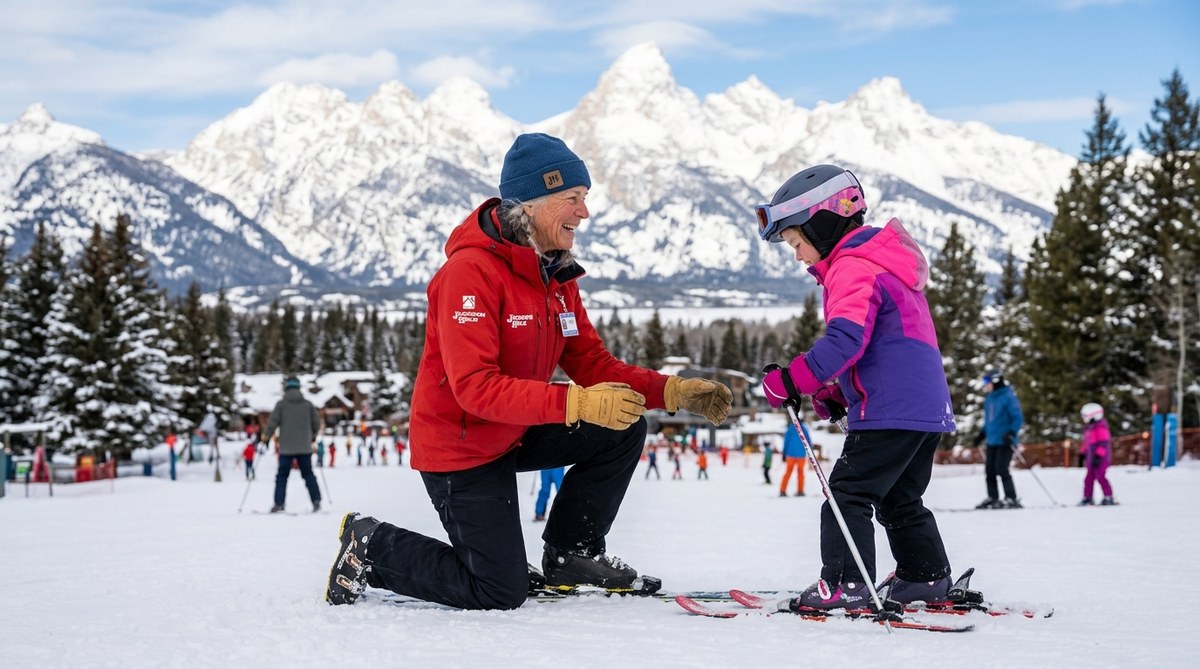
The snow crunches under boots every morning at Jackson Hole Mountain Resort. At the base of the bunny slope, a silver haired instructor clicks into bindings with the same quiet confidence he has carried for decades. He is 70 years old. He has been teaching skiing since before most of his students were born. And he still chooses to spend his days with first timers, people who are nervous, wobbly, and often older than the typical ski school crowd. His choice sends a clear message to anyone who has wondered if age is a wall they cannot climb: it is not. The question “can you learn to ski at 70” gets a different answer every season. But on this mountain, the answer is a steady yes.
Skiing at 70 is not a fantasy. It is a realistic goal that requires the right expectations, proper gear, professional instruction, and a focus on strength and balance training. The 70-year-old instructor at Jackson Hole proves that age is less about the number of birthdays and more about the willingness to start fresh. With smart preparation, anyone can safely enjoy the sport later in life.
What a 70-Year-Old Instructor Knows About Starting Late
The instructor who works the bunny slope at 70 understands something that younger teachers often miss: fear looks different at different ages. For a 30-year-old learning to ski, the worry is usually about looking foolish. For a 70-year-old, the worry is about falling, getting hurt, and being stuck. So he keeps things slow. He builds trust before he teaches turns.
He tells every new student the same thing: “Your body knows how to balance. It has been balancing you for seven decades. We just need to teach it to do that on snow.” That reframe changes everything. Instead of feeling like a beginner, older students feel like experienced bodies learning a new movement.
“I had a 68-year-old student last season who had never been on snow. She told me she was terrified. By the end of the first lesson, she was making wedge turns and laughing. She came back every week. That is why I am still here.” — Jackson Hole ski instructor, age 70
The Physical Reality of Learning to Ski at 70
Let us be honest. There are real physical changes that come with age. Joints are stiffer. Reaction times are slightly slower. Balance can be less automatic. But none of these things make skiing impossible. They just make it different.
What Changes After 60
- Muscle mass declines gradually, especially in the legs and core.
- Bone density can decrease, raising the risk of fractures.
- Flexibility drops without regular stretching.
- Recovery time from fatigue or minor strains increases.
These are not dealbreakers. They are variables you can address with preparation.
5 Steps to Start Skiing at 70
If you are ready to try, here is a practical process that the instructor recommends to every older beginner.
- Get a medical check up before you book anything. Tell your doctor you plan to ski. Ask about your joints, your heart, and any medications that might affect balance or stamina.
- Strengthen your legs and core for at least 8 weeks before your first lesson. Focus on squats, lunges, and planks. Even 15 minutes a day makes a difference.
- Rent gear at a reputable shop and ask for boots that are softer flex and skis that are shorter and easier to turn. Do not buy equipment until you know what you like.
- Book a private lesson with an instructor who has experience teaching older adults. Group lessons move at a pace designed for younger bodies.
- Set a realistic goal for your first day. Success is standing up, making a wedge turn, and stopping. Not skiing from the top of the mountain.
Common Mistakes and Better Approaches
A table can help clarify the differences between what many older beginners try versus what works better.
| Common Mistake | Why It Hurts Progress | Better Approach |
|---|---|---|
| Pushing yourself to keep up with younger friends | Increases fear, fatigue, and injury risk | Ski at your own pace. Meet up for lunch and après ski instead. |
| Skipping the warm up | Cold muscles strain easily | Do 5 minutes of leg swings, shoulder rolls, and light squats before putting on skis. |
| Using rental boots that are too tight | Causes foot pain and discouragement | Tell the shop you need a comfort fit. Your feet will swell as you ski. |
| Trying to learn from a partner or YouTube | Bad habits form that are hard to unlearn | Spend money on a professional lesson. It saves time and frustration. |
| Skiing all day without breaks | Fatigue leads to falls | Take a break every 60 minutes. Hydrate and eat a snack. |
Gear Choices That Make a Difference at 70
Equipment matters more at 70 than at 20. The right gear can turn a frustrating day into a joyful one. Focus on these three items.
Boots. The most important piece. Look for a softer flex rating (70 or lower). Have a bootfitter adjust them if you can. Painful boots ruin everything.
Skis. Shorter skis (around 150 to 160 cm depending on your height) are easier to pivot and control. A wider waist (85 to 95 mm) gives stability without being too heavy.
Poles. Adjustable poles let you find the right length for your stance. Proper pole length helps with balance and timing.
Helmet and pads. A helmet is non negotiable. Many older beginners also wear padded shorts or knee guards. There is no shame in extra protection.
Building Confidence Before the Snow Flies
Confidence on the slopes starts long before you step onto the chairlift. If you live near Jackson Hole, local resources like the community fitness center offer balance and strength classes specifically for older adults. Many alumni of those classes end up trying skiing.
For those outside the valley, look for SilverSneakers or similar programs. Yoga and tai chi are excellent for the kind of balance that skiing requires. Even walking on uneven terrain helps your body learn to adjust.
The instructor we talked to often suggests standing on one leg while brushing your teeth. “If you can do that for 30 seconds without holding onto the counter, you are ready for the bunny slope,” he says.
How the Body Adapts Over Time
Skiing at 70 does not look like skiing at 40. That is fine. The body learns at a slower pace, but it does learn. After a few lessons, most older skiers develop good muscle memory for the wedge (snowplow) turn. With practice, they move to parallel turns on gentler terrain.
The real win is not about mastering steep black runs. It is about being outside in winter, moving your body, and feeling the mountain air. It is about earning a hot chocolate at the base lodge after a morning of trying.
Many skiers who start in their late 60s or early 70s report that the sport gives them a sense of purpose during the cold months. It keeps them active when they might otherwise stay indoors. It also connects them with a community of other winter enthusiasts.
Why This Mountain Makes It Work
Jackson Hole is known for steep terrain and expert skiers. But the resort has invested heavily in beginner facilities. The ski school is filled with instructors who truly enjoy teaching first timers. The gentle slopes near the base are wide and forgiving. And the village offers plenty of places to rest, eat, and recover between runs.
The culture here supports learning at any age. You see grandparents skiing with grandchildren. You see retired couples taking lessons together. You see people in their 70s and 80s gliding down green runs with big smiles.
A Final Word on the Mental Side
The biggest barrier for most 70-year-olds is not their knees or their lungs. It is the voice inside their head that says “you are too old for this.” That voice is wrong.
The instructor we spoke with says he sees that voice every day. He sees it in the hesitation before a student clicks into the binding. He sees it in the way they grip his arm on the magic carpet. And he sees it fade. The voice gets quieter after the first successful turn. By the third lesson, it is gone.
Learning to ski at 70 is not about proving anything to anyone. It is about adding a new joy to your life. It is about moving through winter instead of hiding from it. It is about being a beginner again, which is something every human deserves to feel, regardless of the number on their birthday cake.
The Real Secret of the Bunny Slope
The bunny slope is not just for kids. It is the place where every skier, regardless of age, learns to fall and get back up. The 70-year-old instructor knows this better than anyone. He does not teach on the bunny slope because it is easy. He teaches there because it is honest. Every student starts the same way. Snow does not care how old you are.
So if you have been wondering “can you learn to ski at 70,” the answer is yes. Come to Jackson Hole. Rent some gear. Take a deep breath. The instructor with gray hair and steady hands will be waiting for you at the bottom of the magic carpet. He has been waiting for you all along.