
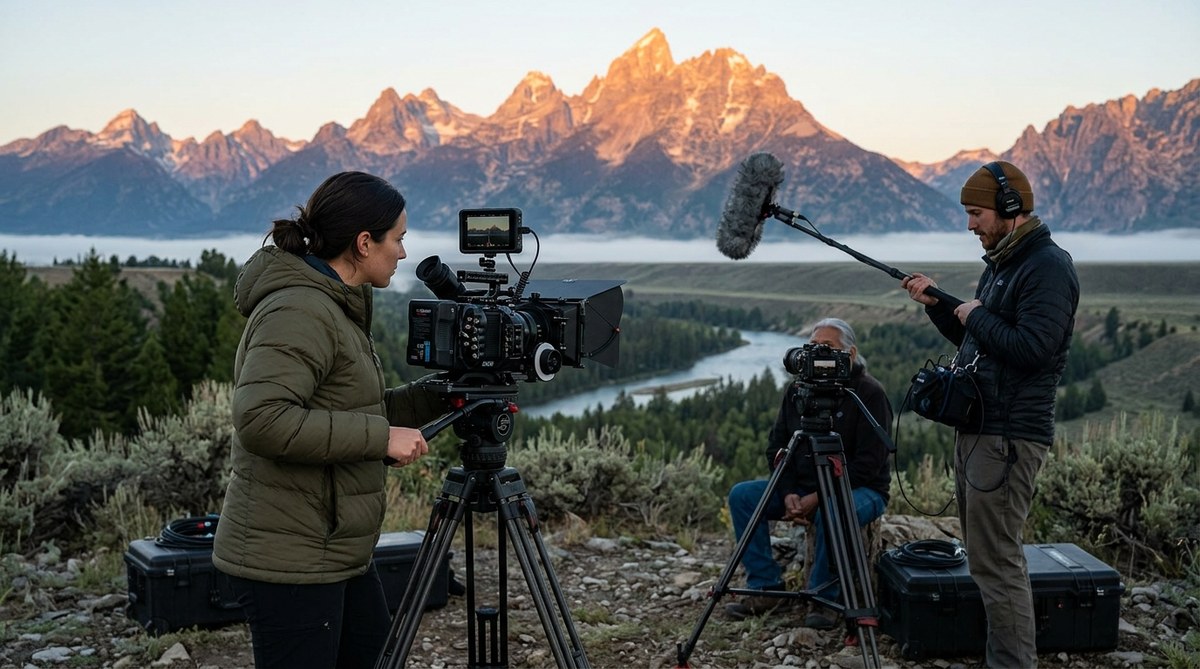
There’s a new wave of storytellers in Jackson Hole, and they’re not making postcard movies. They’re camping in the Gros Ventre with cowboys who still rope by hand. They’re freezing on Teton Pass with ski patrollers who carry rescue gear instead of ski selfies. They’re sitting in dusty kitchens while a sourdough starter that’s older than the town is passed down one more time. These filmmakers are capturing the raw, unpolished soul of the valley — the parts that never make it onto a travel brochure.
Jackson Hole filmmakers are shifting away from glossy tourism content and toward intimate, character-driven storytelling. By focusing on overlooked residents like ranch hands, patrollers, and artists, they’re building a new archive of local culture. For aspiring filmmakers, the best entry point is to pick one untold story and earn the trust of its subject — not to chase production value first.
Why Jackson Hole’s Storytelling Scene Is Booming
Jackson Hole has always been a backdrop for big nature films. Think Yellowstone documentaries and ski movies with helicopter shots. But in the last few years, a shift has happened. Local filmmakers have realized that the most compelling stories here aren’t about the Tetons themselves. They’re about the people who live in their shadow.
The valley’s tiny population holds a rare density of characters. You have former Wall Street traders who now tie flies on the Snake River. You have fourth-generation ranchers, climate scientists, circus performers, and chefs who run secret supper clubs in the woods. Each of them carries a narrative that would feel fictional if you pitched it to Hollywood.
That’s exactly what the new Jackson Hole filmmakers are chasing. Instead of renting a helicopter, they’re spending months inside a single community. Instead of writing a script, they’re listening. The result is a growing library of films that feel personal, honest, and deeply local.
The Filmmakers Behind the Camera: Local Faces, Global Reach
Who are these filmmakers? Many of them moved to Jackson Hole for the winters and stayed for the summers. They worked as lift operators, baristas, and raft guides before picking up a camera. Others grew up here, went to film school in Los Angeles or New York, and came back because they saw that the best material was waiting at home.
Take, for example, the team that documented the last working cowboys of the Gros Ventre Valley. They spent three seasons with those families, riding along during calving season and listening to stories around wood stoves. The result is a film that feels more like a conversation than a documentary. That kind of access doesn’t come from a press credential. It comes from showing up again and again, not as a tourist but as a neighbor.
Similarly, the filmmaker who captured the life of a ski patroller on Teton Pass didn’t just interview the patrollers. He did a full season of overnight shifts with them, sleeping in the patrol hut and carrying an avalanche probe. The trust he earned shows in every frame.
How They Find the Stories No One Else Is Telling
You can’t find these stories through a Google search. Jackson Hole filmmakers rely on relationships and serendipity. A tip from a bartender about a rancher who still uses mules. A mention at the post office about a woman who has tracked every moose birth in Grand Teton for 30 years. That story became a short film that she’s documented every moose birth in Grand Teton for 30 years — a quiet masterpiece about dedication and place.
The process is slow. Filmmakers here often spend weeks just building rapport before they even take out a camera. They attend community events, volunteer on ranches, and become part of the fabric their subjects live in.
“The best advice I ever got was to stop treating my subjects like sources and start treating them like friends,” says one veteran local filmmaker. “Once they trust you, they forget the camera is there. That’s when the real story emerges.”
The Gear and the Grit: What It Takes to Film Here
Filming in Jackson Hole is physically demanding. Altitude, cold, and unpredictable weather are constant challenges. A gimbal that works in Los Angeles can freeze up on a ridge at 10,000 feet. Sound recording is especially hard: wind howls through the valley, and even a light breeze can ruin a dialogue track.
Local filmmakers have adapted by using smaller, more durable rigs. Many shoot with mirrorless cameras that are easy to pack on a horse or a pair of skis. Audio gets the highest priority — they use blimps, dead cats, and lavaliers that can handle the elements.
But the biggest gear challenge isn’t technical. It’s logistical. Getting to a remote cabin in winter might require snowshoes, a sled, and two days of travel. Filmmakers here have to be as much expedition planners as directors.
Three Common Mistakes Local Filmmakers Make (And How to Avoid Them)
| Mistake | How to Fix It |
|---|---|
| Relying on wide landscape shots to carry the film | Focus on tight, intimate moments. A close-up of a calloused hand tightening a cinch tells more story than a sunset. |
| Ignoring sound design until post-production | Record room tone and wild sound on location. Bad audio kills the emotional impact of even the best visuals. |
| Treating locals as “colorful characters” instead of full humans | Spend time off-camera. Learn about their lives outside the frame. Your film will reflect that respect. |
How to Start Your Own Journey as a Jackson Hole Filmmaker
If you’re an aspiring filmmaker looking to tell stories in this valley, here’s a practical path:
-
Pick one person or community. Don’t try to make a “documentary about Jackson Hole.” That’s too broad. Choose a single subject — a trapper, a baker, a wildlife biologist — and commit to following them for at least six months.
-
Build the relationship before you build the storyboard. Share meals, help with chores, be a human first. Ask permission before filming anything. And always give your subject the right to veto footage they’re uncomfortable with.
-
Invest in audio above everything else. Use a consumer-grade camera with a professional microphone and windscreen. Clear dialogue will make your film watchable. Clear skin won’t matter if nobody can hear what’s being said.
For inspiration, look at projects like why a Jackson Hole trapper still lives off the grid in 2026. That filmmaker started with a single afternoon of conversation and ended with a year-long collaboration. It was the trust, not the budget, that made the film work.
What’s Next for Film in Jackson Hole
The local film scene is growing beyond short docs. A few filmmakers are now working on feature-length projects about the valley’s Basque community, the craft beer revolution in Teton Valley, and the hidden swimming holes only year-round residents know. There’s also a push for more collaborative screening events where filmmakers can show rough cuts and get feedback from the community.
Jackson Hole Media plans to highlight more of these films through our ongoing series, connecting viewers with the real voices of the valley. If you’re working on a project, we want to hear from you.
Your Story is Waiting
Jackson Hole filmmakers are proving that the best stories aren’t the ones you see from a scenic overlook. They’re the ones you find when you walk through a ranch gate, sit down at a kitchen table, and ask someone about their life. The mountains will always be here. But the stories? They disappear if nobody records them.
So if you’re holding a camera and wondering what to shoot, stop looking at the horizon. Look at the person standing next to you. Listen to what they’re saying. Then press record. That’s how you capture Jackson Hole’s untold stories.