
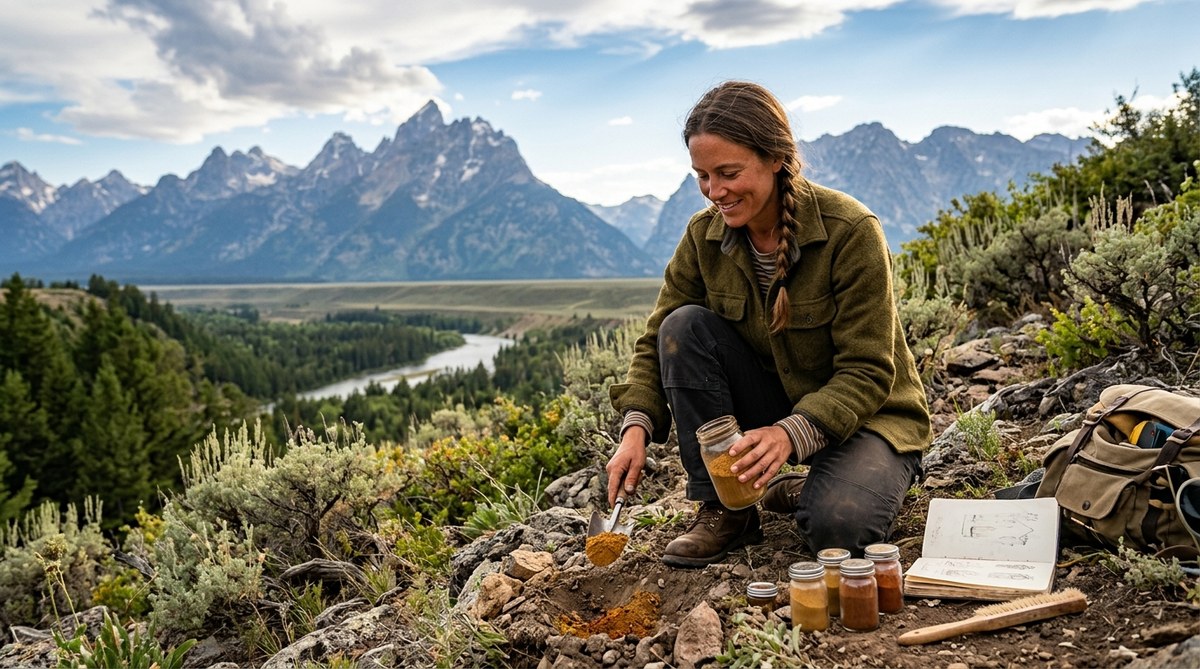
The first time you see a landscape painted with dirt from that same landscape, something shifts. The mountains in the frame are not just a representation. They are literally made of the place. Crushed stone from a creek bed becomes the shadow on a granite face. Rust from an old mining claim becomes the red of a sunset. Clay from a glacial moraine becomes the deep blue of fading light.
For one Jackson Hole artist, this is not a gimmick. It is the only way to paint.
Foraging pigments from the Teton Wilderness transforms art into a direct conversation with the land. This profile covers how the artist gathers rocks, clay, and minerals; processes them into paint; and why this practice connects deeply to conservation and local culture. You will learn the basic methods for recognizing pigment-rich materials and understand why this ancient practice is finding new relevance in 2026.
The Artist Who Digs for Color
Her studio sits at the edge of a gravel road that turns to mud every spring. On the counter are jars of powder in colors that seem impossible. Bright yellow ochre. Soft pink. A green that looks like the Snake River in July.
She does not buy these colors.
She finds them.
She walks the edges of meadows where the soil is exposed after a rain. She checks creek beds where water has washed away the topsoil. She visits abandoned mining claims where the ground is stained with mineral deposits. She calls this “reading the earth.”
“It is a slow way to work,” she says. “But I am in no rush.”
Her method is deceptively simple. She finds a rock or a piece of clay that has good color. She breaks it down. She grinds it with a mortar and pestle until it becomes a fine powder. Then she mixes that powder with a binder to make paint.
The results are stunning. Her paintings have a texture and depth that synthetic paints cannot match. The colors shift depending on the light. They hold the history of the place.
How Foraged Pigments Actually Work
Making paint from the ground is not complicated, but it takes patience. Here is the basic process she follows:
-
Identify the source. She looks for rocks or clay that leave a streak of color when rubbed on a rough surface. Red, yellow, brown, and even green streaks are all possible.
-
Break and grind. She uses a hammer to break the material into smaller pieces. Then she grinds it with a mortar and pestle or a simple stone slab. The goal is a powder as fine as flour.
-
Wash and settle. For some materials, she mixes the powder with water. The heavier sediment sinks. She pours off the water and keeps the fine pigment that settles on top.
-
Test and bind. She mixes a small amount of powder with a binder like gum arabic (a plant resin) or egg yolk. This creates a working paint. She tests it on paper to see how the color dries.
-
Store and label. She keeps the dry pigment in glass jars. She labels each one with the location where she found it.
This is not a factory process. Every batch is different. That is the point.
The Colors of the Teton Wilderness
The Teton range holds a surprising variety of pigments. The artist has cataloged dozens of colors from the area. Here are some of the most common sources she uses:
- Iron rich clay: Produces deep reds, oranges, and warm browns.
- Weathered volcanic ash: Creates soft greens and muted yellows.
- Manganese deposits: Give dark browns and near blacks.
- Limestone with copper traces: Can yield pale blues and greens.
- Rusty old machinery: She has permission to collect rust from abandoned mining equipment for a unique burnt orange.
Each color carries the story of where it came from. A painting made with these pigments includes millions of tiny particles of the actual landscape.
A Practical Guide and Common Mistakes
Not everything that looks colorful will make good paint. The table below shows what works and what does not.
| Technique | What Works | Common Mistake |
|---|---|---|
| Finding pigment | Look for stained soil, rusted metal, or clay banks after rain. | Grabbing colorful rocks that are too hard to grind. |
| Grinding | Use a mortar and pestle. Grind until the powder feels like baby powder. | Stopping too early. Coarse pigment makes muddy paint. |
| Washing | Let pigment settle in water. Pour off the dirt. | Skipping this step. Unwashed pigment can contain grit that ruins brushes. |
| Binding | Start with gum arabic. It is easy to find and works well. | Using too much binder. A little goes a long way. |
| Testing | Paint a small swatch and let it dry fully. | Judging color when it is wet. Dry color is always different. |
The artist offers one piece of advice for anyone trying this at home.
“Do not get attached to the color you see in the rock. The dry powder will surprise you. The wet paint will surprise you again. The final dried color is the only one that matters. Trust the process, not your first impression.”
Why This Practice Matters in 2026
Jackson Hole has a complicated relationship with tourism and development. The valley is beautiful, and that beauty draws millions of visitors each year. But the pressure of that popularity changes the town.
The artist sees her work as a small act of resistance.
She does not order materials from a catalog. She does not contribute to the supply chain of synthetic paints that rely on petroleum. She walks the same ground that elk and bears walk. She takes only what she needs. She leaves the rest.
In a town where $10 million homes sit next to trailers, her art offers a different value system. It says that the most precious resource is not the view. It is the relationship to the land.
This approach fits naturally with other efforts to preserve the culture and character of the valley. Local ranchers, guides, and conservationists all work to keep something authentic alive. The artist is part of that same story. You can read about the last working cowboys of the Gros Ventre Valley or learn how a former Wall Street trader now guides fly fishing trips on the Snake River. Each person is finding their own way to stay connected to the land.
How to See Foraged Pigment Art
If you want to experience this art for yourself, the best way is to see it in person. The artist shows her work at small galleries around the valley. She also opens her studio by appointment.
She recommends looking at the paintings in different light. Morning light brings out the warm tones. Overcast days make the cool colors glow. The pigment catches the light in a way that digital photos struggle to capture.
She also teaches workshops. A small group of students will walk into the field, find pigment, and grind it together. By the end of the day, everyone has a small painting made from the dirt they collected.
“It is a good reminder,” she says, “that art does not have to come from a store. It can come from the ground under your feet.”
For more profiles of people shaping the culture of this valley, see our story on the barista who knows everyone’s story in downtown Jackson and our guide to where locals actually eat: 15 Jackson Hole restaurants off the tourist trail.
Making Your Own Connection to the Land
You do not need to be a professional artist to try this. The next time you hike a trail in the Tetons, look at the dirt. Really look. Notice the colors. Pick up a rock that leaves a red streak on your hand. Rub some clay between your fingers.
That color is older than you. It has been in that ground for thousands of years. With a little work, you can turn it into paint.
The artist hopes that more people will try. Not because the world needs more paintings, but because the world needs more people who pay attention to the ground they walk on. In a fast moving world, grinding a rock into pigment is a way to slow down. It is a way to belong to a place.
That is what foraged pigment art offers. Not just a painting. A piece of the actual Teton Wilderness, transformed by human hands, ready to hang on your wall.
Go find your own color. The mountains are waiting.