
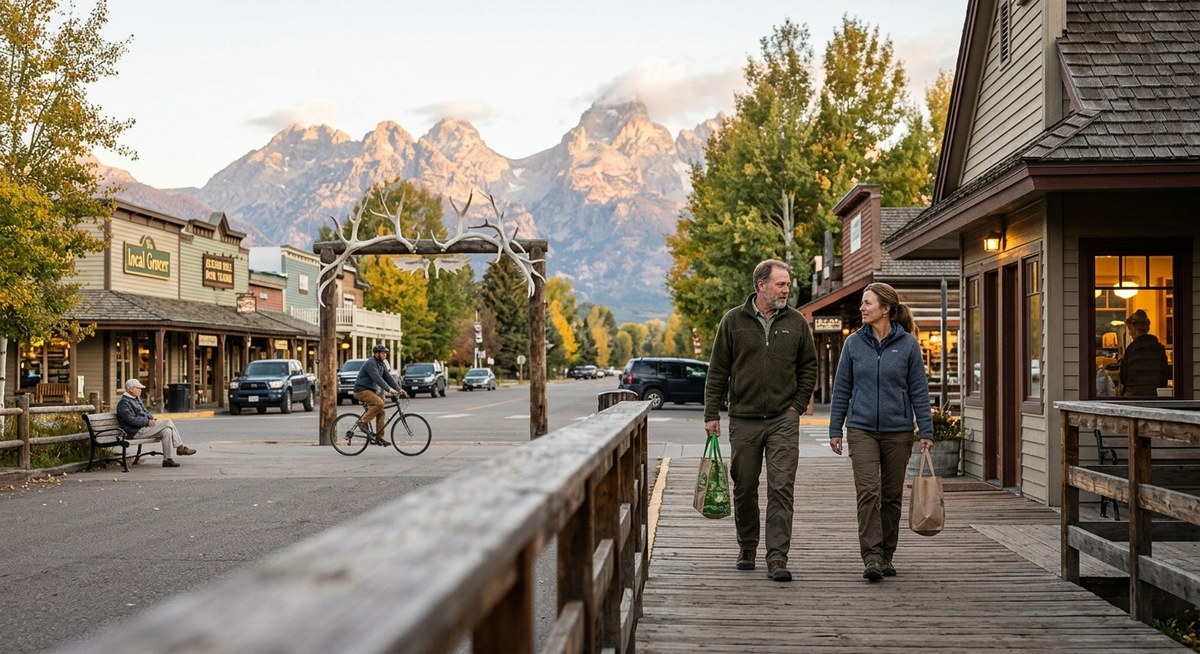
The first time you see Jackson Hole in July, it feels like a carnival. Town Square is packed with families taking photos of the elk antler arches. The bike paths are a steady stream of rental cruisers. Restaurants have wait times that stretch past an hour. It is alive and exciting, but it is also unmistakably busy.
Then you come back in November.
The difference is startling. You can hear the wind move through the cottonwoods. You can walk into any restaurant and get a table by the window. The Tetons do not look any smaller, but the valley feels twice as wide. This is the Jackson Hole that locals protect with a quiet kind of pride. This is what the valley becomes when the tourists leave.
When the last tour bus leaves and the summer crowds thin out, Jackson Hole transforms into something else entirely. This is the valley that locals know best. Quiet trails, empty tables at favorite diners, and wildlife reclaiming the landscape. From November to May, the real character of this mountain community emerges. Strip away the peak season frenzy and you find a slower, more authentic version of Jackson Hole. One truly worth experiencing at least once.
The Shoulder Season Is the Sweet Spot
Jackson Hole runs on a seasonal clock. Summer peaks from June through August. Winter surges from late December through February. In between, there are two glorious windows when the valley exhales.
Spring shoulder season runs from mid-April through May. The ski resorts are winding down. The national park roads are still partially closed. The elk have moved to higher ground. And the streets of Jackson feel almost sleepy.
Fall shoulder season runs from late September through October. The aspen trees turn gold. The summer crowds have gone home. The winter crowd has not arrived yet. You get crisp mornings, warm afternoons, and mile-wide smiles from locals who finally have their town back.
These windows are not secret. But they are underrated. Most visitors plan around school breaks and holiday weekends. If you can bend your schedule, the shoulder seasons offer a version of Jackson Hole that feels generous and calm.
Where Locals Go When the Town Goes Quiet
Year-round residents have their own map of the valley. It does not include the tram line at Jackson Hole Mountain Resort in February. It does not include the bumper-to-bumper traffic on Highway 22 during peak leaf season.
Instead, that map looks like this.
- The Putt-Putt Golf Course in winter. When the snow falls, the locals bring cross-country skis and fat-tire bikes to the flat expanse of the course. No lines, no fees, just open space.
- The back side of Snow King. Most tourists ski the front face. Locals know the north-facing slopes hold snow longer and draw fewer people.
- The dirt roads of the Gros Ventre. When the park is packed, the Bureau of Land Management land east of town offers solitude and wildlife sightings without the crowds.
- The Cache Creek trail system after 4 PM. On a summer afternoon, the trailhead can be busy. But by late afternoon, most day hikers are heading back to town. That is when locals take over.
For a deeper look at the people who keep this community running, read about the last working cowboys of the Gros Ventre Valley. Their daily routines define the real rhythm of this place.
What Changes When the Crowds Thin
The difference between peak season and off-season is not just about fewer people. The entire energy of the valley shifts. Here is a side-by-side look at what changes.
| Experience | Peak Season (July or February) | Off-Season (May or October) |
|---|---|---|
| Breakfast wait | 45 minutes at any popular spot | Walk right in |
| Trail traffic | 50+ cars at most popular trailheads | 5 to 10 cars |
| Wildlife visibility | Animals are skittish and stay far from roads | Elk and moose graze closer to settled areas |
| Gas station lines | 10 minute wait at the pump | Pull right up |
| Hotel rates | $400+ per night for mid-range | $150 to $250 per night |
| Town Square atmosphere | Shoulder-to-shoulder foot traffic | Kids playing tag on the grass |
| Local mood | Stressed and overworked | Relaxed and chatty |
The table tells the story. Fewer visitors means lower prices, easier access, and a town that has time to be friendly. Bartenders will actually talk to you. Shop owners will tell you where they fish. The whole place softens.
“The best advice I can give anyone is to come in May. The weather is hit or miss, but the valley feels like it belongs to you. I took my first vacation in three years last May. I stayed in my own town and saw it for the first time.”
- Sam, bartender at a local Jackson watering hole for 12 years*
How to Plan Your Off-Season Trip
Visiting Jackson Hole without tourists takes some planning. The shoulder seasons come with trade-offs. Some restaurants close for a few weeks between seasons. Some hotels use the downtime for renovations. A few trails might still be muddy or snowed in.
Here is a practical process for making it work.
-
Pick your window. Late May is safer for hiking. Late September offers the best fall color. Early October is quieter but some services may be limited. Check the best shoulder season activities to match your preferences.
-
Call ahead. Do not assume every restaurant and tour operator is open. Call or check social media. Many places post their seasonal closure dates online.
-
Pack for four seasons. A May morning can be 35 degrees. By afternoon it might hit 70. Bring layers, rain gear, and sunscreen. The sun at 6,200 feet does not care what month it is.
-
Book lodging early for the edges of the window. Late September is becoming more popular as word spreads. Reserve rooms at least a month in advance if you target fall colors.
-
Plan around the mud. May in the Tetons means mud season on lower trails. Bring waterproof boots and accept that you might turn around early. The hike is still worth it.
-
Lean into local events. The off-season is when community gatherings happen. The fall arts festival, the rodeo finale, and various fundraisers fill the calendar. These events are open to visitors and offer a genuine look at valley culture.
For a sense of how the valley comes together in these quieter months, check out why Jackson Hole locals start their day before sunrise. It explains the mindset that shapes this community year-round.
Where to Eat When the Tourists Are Gone
The restaurant scene in Jackson shifts during the off-season. Some places close for a month. Others pivot their menus toward comfort food that suits the colder weather.
A few reliable spots stay open and remain deeply local.
- The Bunnery. Open year-round. The sourdough pancakes do not care what season it is. Go on a weekday morning and you will hear more local gossip than tour chatter.
- Pinky G’s Pizzeria. A favorite among ski bums and guides. The pies are thin, the beer is cold, and the staff remembers your name if you come more than twice.
- Sidewinders Tavern. Open every day. The nachos are massive. The patio is quiet in the off-season. It is where service industry people go after their shifts.
- The Bird. A newer addition that has become a local staple. Southern-inspired menu with a Wyoming twist. The fried chicken sandwich is worth the drive from anywhere in the valley.
For a complete list of under-the-radar dining, check out where locals actually eat at 15 Jackson Hole restaurants off the tourist trail.
Wildlife Shows Up in a Different Way
When the valley gets quiet, the animals take notice. Elk move into areas they avoid during peak season. Moose wander through town more often. The bison herd on the National Elk Refuge is visible from the highway without a crowd of parked cars blocking the view.
Spring is especially good for bear viewing. The grizzlies come out of hibernation hungry. They forage in the open meadows of Grand Teton National Park before the summer vegetation dries out. Fall brings the elk rut, a dramatic display of bugling and antler clashing that draws wildlife photographers from around the world.
But here is the thing. Without the crowds, you do not have to fight for a viewing spot. You can pull over, turn off the engine, and watch without someone honking behind you.
For a deep look at one person who has spent decades tracking these patterns, read about the woman who has documented every moose birth in Grand Teton for 30 years. Her work reveals just how much the animals adapt to human presence.
The Hidden Spots Only Locals Share
Every valley has secrets. Jackson Hole has more than most.
There are swimming holes along the Snake River that require a short hike and a willingness to ignore the “no trespassing” signs that locals have learned to interpret loosely. There are fishing access points that do not appear on any map. There is a hot spring near Astoria that gets crowded in summer but sits empty on a snowy November afternoon.
The best way to find these spots is to make a friend at a bar. But for a starting point, check out the secret swimming holes only year-round residents know about.
One caveat. Please respect these places. Locals share them because they trust you to leave no trace. Do not post exact coordinates on social media. Do not leave trash. Do not play music on a speaker. The reason these spots stay hidden is that people treat them with care.
The Real Cost of Quiet
There is a reason Jackson Hole without tourists feels so good. It costs something.
For locals, the cost is economic. The shoulder seasons mean fewer shifts, smaller tips, and tighter budgets. Many people in the service industry work two or three jobs to make ends meet. The quiet of November comes with financial anxiety for a lot of families.
For visitors, the cost is mostly about weather and convenience. You might hit a rainy week in May. You might find your favorite restaurant closed for remodeling. You might need to drive slower on snowy roads.
But the trade is worth it. You get space. You get time. You get a version of Jackson Hole that feels like a real place rather than a theme park.
For an honest look at what it takes to live here year-round, read the story of the art of working three jobs in a resort town. It puts the off-season experience into perspective.
Why the Off-Season Matters More Than Ever
Tourism numbers in Jackson Hole have climbed steadily for years. 2025 broke records. 2026 is on track to do the same. The valley is wrestling with how to manage growth without losing its soul.
The off-season offers a counterbalance. It reminds everyone why this place matters in the first place. It gives the land a rest and the people a break. It lets the real Jackson Hole breathe.
When you visit during a quiet month, you become part of that balance. You are not adding to the pressure. You are spreading demand across the calendar. That helps everyone.
And you get a better trip for it. You get empty trails and easy reservations and conversations with people who are not burned out. You get to see the Tetons without a crowd in your peripheral vision.
The Quiet Version Is Worth the Trip
Jackson Hole without tourists is not a downgrade. It is a different experience entirely. One that asks for a bit more flexibility and returns a lot more depth.
The valley has always been bigger than its peak season reputation. The real Jackson Hole exists in the spaces between the crowds. In the wet spring mornings when the clouds hang low over the Gros Ventre. In the golden October afternoons when the elk bugle from the hillsides. In the quiet November evenings when the only light on Town Square comes from the antler arches and the stars.
Come see that version. You will leave understanding why the people who live here stay.
The first time you see Jackson Hole in July, it feels like a carnival. Town Square is packed with families taking photos of the elk antler arches. The bike paths are a steady stream of rental cruisers. Restaurants have wait times that stretch past an hour. It is alive and exciting, but it is also unmistakably busy.
Then you come back in November.
The difference is startling. You can hear the wind move through the cottonwoods. You can walk into any restaurant and get a table by the window. The Tetons do not look any smaller, but the valley feels twice as wide. This is the Jackson Hole that locals protect with a quiet kind of pride. This is what the valley becomes when the tourists leave.
When the last tour bus leaves and the summer crowds thin out, Jackson Hole transforms into something else entirely. This is the valley that locals know best. Quiet trails, empty tables at favorite diners, and wildlife reclaiming the landscape. From November to May, the real character of this mountain community emerges. Strip away the peak season frenzy and you find a slower, more authentic version of Jackson Hole. One truly worth experiencing at least once.
The Shoulder Season Is the Sweet Spot
Jackson Hole runs on a seasonal clock. Summer peaks from June through August. Winter surges from late December through February. In between, there are two glorious windows when the valley exhales.
Spring shoulder season runs from mid-April through May. The ski resorts are winding down. The national park roads are still partially closed. The elk have moved to higher ground. And the streets of Jackson feel almost sleepy.
Fall shoulder season runs from late September through October. The aspen trees turn gold. The summer crowds have gone home. The winter crowd has not arrived yet. You get crisp mornings, warm afternoons, and mile-wide smiles from locals who finally have their town back.
These windows are not secret. But they are underrated. Most visitors plan around school breaks and holiday weekends. If you can bend your schedule, the shoulder seasons offer a version of Jackson Hole that feels generous and calm.
Where Locals Go When the Town Goes Quiet
Year-round residents have their own map of the valley. It does not include the tram line at Jackson Hole Mountain Resort in February. It does not include the bumper-to-bumper traffic on Highway 22 during peak leaf season.
Instead, that map looks like this.
- The Putt-Putt Golf Course in winter. When the snow falls, the locals bring cross-country skis and fat-tire bikes to the flat expanse of the course. No lines, no fees, just open space.
- The back side of Snow King. Most tourists ski the front face. Locals know the north-facing slopes hold snow longer and draw fewer people.
- The dirt roads of the Gros Ventre. When the park is packed, the Bureau of Land Management land east of town offers solitude and wildlife sightings without the crowds.
- The Cache Creek trail system after 4 PM. On a summer afternoon, the trailhead can be busy. But by late afternoon, most day hikers are heading back to town. That is when locals take over.
For a deeper look at the people who keep this community running, read about the last working cowboys of the Gros Ventre Valley. Their daily routines define the real rhythm of this place.
What Changes When the Crowds Thin
The difference between peak season and off-season is not just about fewer people. The entire energy of the valley shifts. Here is a side-by-side look at what changes.
| Experience | Peak Season (July or February) | Off-Season (May or October) |
|---|---|---|
| Breakfast wait | 45 minutes at any popular spot | Walk right in |
| Trail traffic | 50+ cars at most popular trailheads | 5 to 10 cars |
| Wildlife visibility | Animals are skittish and stay far from roads | Elk and moose graze closer to settled areas |
| Gas station lines | 10 minute wait at the pump | Pull right up |
| Hotel rates | $400+ per night for mid-range | $150 to $250 per night |
| Town Square atmosphere | Shoulder-to-shoulder foot traffic | Kids playing tag on the grass |
| Local mood | Stressed and overworked | Relaxed and chatty |
The table tells the story. Fewer visitors means lower prices, easier access, and a town that has time to be friendly. Bartenders will actually talk to you. Shop owners will tell you where they fish. The whole place softens.
“The best advice I can give anyone is to come in May. The weather is hit or miss, but the valley feels like it belongs to you. I took my first vacation in three years last May. I stayed in my own town and saw it for the first time.”
- Sam, bartender at a local Jackson watering hole for 12 years*
How to Plan Your Off-Season Trip
Visiting Jackson Hole without tourists takes some planning. The shoulder seasons come with trade-offs. Some restaurants close for a few weeks between seasons. Some hotels use the downtime for renovations. A few trails might still be muddy or snowed in.
Here is a practical process for making it work.
-
Pick your window. Late May is safer for hiking. Late September offers the best fall color. Early October is quieter but some services may be limited. Check the best shoulder season activities to match your preferences.
-
Call ahead. Do not assume every restaurant and tour operator is open. Call or check social media. Many places post their seasonal closure dates online.
-
Pack for four seasons. A May morning can be 35 degrees. By afternoon it might hit 70. Bring layers, rain gear, and sunscreen. The sun at 6,200 feet does not care what month it is.
-
Book lodging early for the edges of the window. Late September is becoming more popular as word spreads. Reserve rooms at least a month in advance if you target fall colors.
-
Plan around the mud. May in the Tetons means mud season on lower trails. Bring waterproof boots and accept that you might turn around early. The hike is still worth it.
-
Lean into local events. The off-season is when community gatherings happen. The fall arts festival, the rodeo finale, and various fundraisers fill the calendar. These events are open to visitors and offer a genuine look at valley culture.
For a sense of how the valley comes together in these quieter months, check out why Jackson Hole locals start their day before sunrise. It explains the mindset that shapes this community year-round.
Where to Eat When the Tourists Are Gone
The restaurant scene in Jackson shifts during the off-season. Some places close for a month. Others pivot their menus toward comfort food that suits the colder weather.
A few reliable spots stay open and remain deeply local.
- The Bunnery. Open year-round. The sourdough pancakes do not care what season it is. Go on a weekday morning and you will hear more local gossip than tour chatter.
- Pinky G’s Pizzeria. A favorite among ski bums and guides. The pies are thin, the beer is cold, and the staff remembers your name if you come more than twice.
- Sidewinders Tavern. Open every day. The nachos are massive. The patio is quiet in the off-season. It is where service industry people go after their shifts.
- The Bird. A newer addition that has become a local staple. Southern-inspired menu with a Wyoming twist. The fried chicken sandwich is worth the drive from anywhere in the valley.
For a complete list of under-the-radar dining, check out where locals actually eat at 15 Jackson Hole restaurants off the tourist trail.
Wildlife Shows Up in a Different Way
When the valley gets quiet, the animals take notice. Elk move into areas they avoid during peak season. Moose wander through town more often. The bison herd on the National Elk Refuge is visible from the highway without a crowd of parked cars blocking the view.
Spring is especially good for bear viewing. The grizzlies come out of hibernation hungry. They forage in the open meadows of Grand Teton National Park before the summer vegetation dries out. Fall brings the elk rut, a dramatic display of bugling and antler clashing that draws wildlife photographers from around the world.
But here is the thing. Without the crowds, you do not have to fight for a viewing spot. You can pull over, turn off the engine, and watch without someone honking behind you.
For a deep look at one person who has spent decades tracking these patterns, read about the woman who has documented every moose birth in Grand Teton for 30 years. Her work reveals just how much the animals adapt to human presence.
The Hidden Spots Only Locals Share
Every valley has secrets. Jackson Hole has more than most.
There are swimming holes along the Snake River that require a short hike and a willingness to ignore the no trespassing signs that locals have learned to interpret loosely. There are fishing access points that do not appear on any map. There is a hot spring near Astoria that gets crowded in summer but sits empty on a snowy November afternoon.
The best way to find these spots is to make a friend at a bar. But for a starting point, check out the secret swimming holes only year-round residents know about.
One caveat. Please respect these places. Locals share them because they trust you to leave no trace. Do not post exact coordinates on social media. Do not leave trash. Do not play music on a speaker. The reason these spots stay hidden is that people treat them with care.
The Real Cost of Quiet
There is a reason Jackson Hole without tourists feels so good. It costs something.
For locals, the cost is economic. The shoulder seasons mean fewer shifts, smaller tips, and tighter budgets. Many people in the service industry work two or three jobs to make ends meet. The quiet of November comes with financial anxiety for a lot of families.
For visitors, the cost is mostly about weather and convenience. You might hit a rainy week in May. You might find your favorite restaurant closed for remodeling. You might need to drive slower on snowy roads.
But the trade is worth it. You get space. You get time. You get a version of Jackson Hole that feels like a real place rather than a theme park.
For an honest look at what it takes to live here year-round, read about the art of working three jobs in a resort town. It puts the off-season experience into perspective.
Why the Off-Season Matters More Than Ever
Tourism numbers in Jackson Hole have climbed steadily for years. 2025 broke records. 2026 is on track to do the same. The valley is wrestling with how to manage growth without losing its soul.
The off-season offers a counterbalance. It reminds everyone why this place matters in the first place. It gives the land a rest and the people a break. It lets the real Jackson Hole breathe.
When you visit during a quiet month, you become part of that balance. You are not adding to the pressure. You are spreading demand across the calendar. That helps everyone.
And you get a better trip for it. You get empty trails and easy reservations and conversations with people who are not burned out. You get to see the Tetons without a crowd in your peripheral vision.
The Quiet Version Is Worth the Trip
Jackson Hole without tourists is not a downgrade. It is a different experience entirely. One that asks for a bit more flexibility and returns a lot more depth.
The valley has always been bigger than its peak season reputation. The real Jackson Hole exists in the spaces between the crowds. In the wet spring mornings when the clouds hang low over the Gros Ventre. In the golden October afternoons when the elk bugle from the hillsides. In the quiet November evenings when the only light on Town Square comes from the antler arches and the stars.
Come see that version. You will leave understanding why the people who live here stay.