
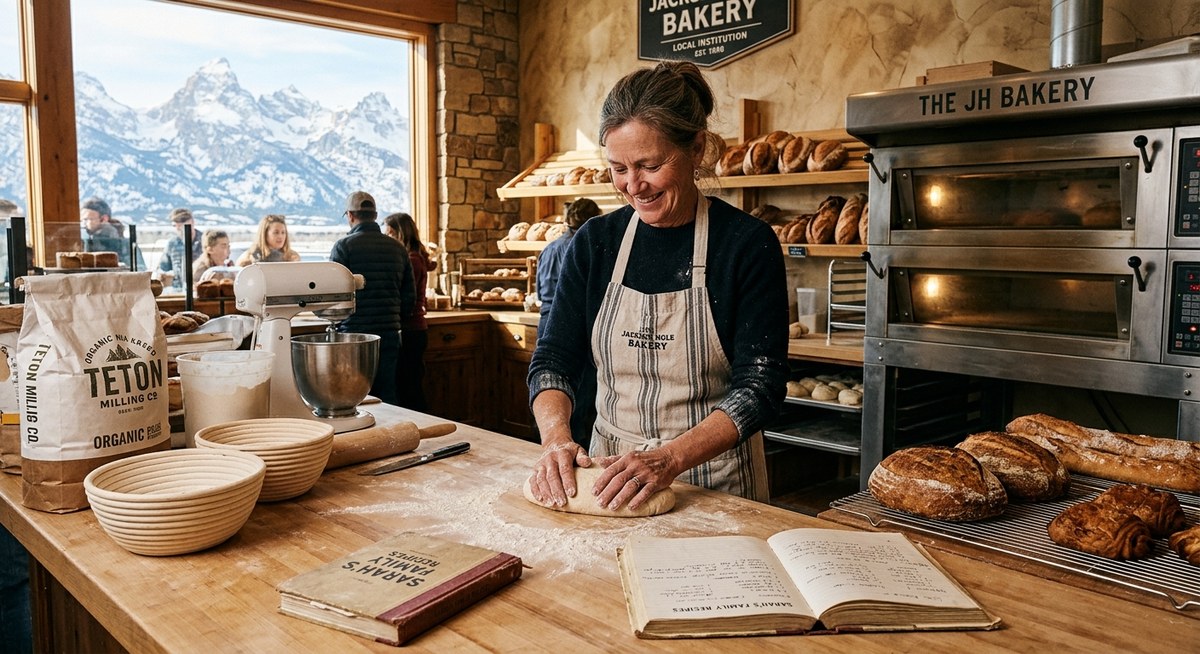
The morning light spills through the windows of the bakery just as the first batch of sourdough comes out of the oven. The smell hits you before you even open the door. It is warm, yeasty, and faintly sweet. For the people of Jackson Hole, this aroma is the smell of home.
It did not start that way. It started with a single recipe, handwritten on a stained index card, tucked inside a suitcase that traveled from a small kitchen in the Midwest to the shadow of the Tetons. That recipe, a simple family heirloom for a honey oat loaf, became the foundation of something much larger. It became a local institution.
One Jackson Hole baker proved that a single family recipe, when paired with genuine community connection and stubborn consistency, can outlast every trend. This is not a story about rapid expansion or venture capital. It is a story about showing up before dawn, knowing your customers by name, and letting the quality of your work speak for itself. The recipe never changed. The community did.
The Recipe That Refused to Fade
The baker, whose name you will not find on a billboard, arrived in Jackson Hole in the late 1990s. She had no business plan. She had no investors. She had a worn-out KitchenAid mixer and a deep conviction that her grandmother’s bread was worth sharing.
She started small. Really small. She rented a corner of a commercial kitchen during the off hours. She baked at 3 a.m. while the ski patrol was still asleep. She sold her loaves at the local farmers market on Saturday mornings. The first week, she sold eight loaves. The second week, she sold twelve. By the end of the first summer, she was selling out before noon.
What was the secret? It was not a gimmick. It was not a trendy ingredient. It was the recipe. Her grandmother had developed it over decades, adjusting the hydration of the dough for different altitudes, tweaking the fermentation time for different seasons. The baker brought that same obsessive attention to Jackson Hole. She tested the local water. She sourced flour from a mill in Montana. She refused to cut corners.
“The recipe is the easy part,” she told us during a quiet moment between batches. “The hard part is trusting it. Trusting that if you just make it the same way every single time, people will notice. They will come back. They will bring their friends. They will tell their kids.”
How a Bakery Becomes a Local Institution
It is tempting to think that a bakery becomes a local institution because of its location or its decor or its Instagram presence. Those things help. But they are not the foundation.
A local institution is built on three things. The first is consistency. The second is community. The third is time.
1. Consistency Above All Else
The baker did not change her recipe for the tourists. She did not add a gluten-free line just because it was popular. She did not launch a pumpkin spice loaf in October because everyone else did. She made the same honey oat loaf every single day, the same way her grandmother made it. Tourists loved it. Locals depended on it.
2. Community as a Business Strategy
She learned everyone’s name. She asked about their kids. She remembered that one regular preferred the crust a little darker and that another needed their loaf sliced thin for sandwiches. She sponsored the local soccer team. She donated day-old bread to the food bank. She became part of the fabric of the town.
3. The Long Game
She did not try to open a second location. She did not franchise. She did not take outside money. She simply stayed. Year after year, through ski seasons and summer rushes, through economic downturns and pandemics, she kept baking. That is what makes an institution. Not growth. Endurance.
The Mistakes That Almost Broke the Dream
The path was not smooth. There were moments when the baker almost gave up. Here are the three biggest mistakes she made, and how she fixed them.
| Mistake | What Happened | How She Fixed It |
|---|---|---|
| Saying yes to every wholesale order | She nearly burned out fulfilling orders for 15 different cafes and hotels. The quality dropped. | She cut her wholesale accounts to three. She focused on her retail shop and the farmers market. |
| Hiring for speed instead of skill | She hired a baker who could work fast but did not care about the dough. The bread suffered. | She slowed down hiring. She trained every new baker herself for two full weeks. |
| Ignoring the online community | She thought social media was a waste of time. She missed connecting with a generation of new locals. | She hired a part-time community manager who simply shared real photos of the baking process. No filters. |
Each mistake taught her something valuable. The lesson was always the same: stay true to the recipe, stay true to the people, and do not try to be everything to everyone.
What You Can Learn From This Jackson Hole Baker
You do not need to open a bakery to apply these lessons. Whether you are a chef, a guide, an artist, or a shopkeeper, the principles are the same.
Here are the practical steps that any small business owner can take:
- Identify your core offering. What is the one thing you do better than anyone else? For this baker, it was the honey oat loaf. For you, it might be a guide service, a piece of art, or a customer experience. Name it. Protect it.
- Build routines around quality. Do not leave quality to chance. Write down your process. Follow it every time. If you cut corners, your customers will notice.
- Invest in relationships, not marketing. A billboard will bring people through the door once. A genuine conversation will bring them back for years. Spend your energy on the people who already love what you do.
- Say no more often than you say yes. Every new product, every new partnership, every new location is a risk. The baker said no to a lot of money. She said yes to her sanity and her standards.
- Be patient enough to be boring. The most successful local institutions are not exciting. They are reliable. They show up. They do the work. They outlast the trends.
The Hidden Cost of Success in a Resort Town
There is a darker side to this story. As the bakery grew in popularity, the baker faced a challenge that every Jackson Hole business owner knows well: the cost of staying.
Rent in Jackson Hole has climbed every year. In 2026, commercial space in the town square is nearly impossible to afford for a small operation. The baker has watched beloved restaurants close. She has seen friends move away because they could not find housing for their staff.
She has had to get creative. She owns her building now, bought it back in 2012 when prices were still within reach. She rents the upstairs apartment to her lead baker at a below-market rate. She pays her team a living wage, even when it cuts into her own profit. She knows that a local institution is only as strong as the people who run it.
This is a reality that many Jackson Hole businesses face. It is a story we have told before, in pieces like what it really costs to live in Jackson Hole in 2026 and the art of working three jobs in a resort town. The baker’s success is not just a story about bread. It is a story about survival.
How the Recipe Changed the Town
You cannot walk through the farmers market on a Saturday morning without seeing someone carrying a brown paper bag with the bakery’s logo. It is a simple logo. Just a wheat stalk and the word “Honeycomb.” No fancy typography. No tagline.
The honey oat loaf has become a staple at holiday dinners. It shows up at potlucks and picnics. It is the bread that Jackson Hole parents send their kids to college with, frozen and wrapped in foil. It is the bread that reminds them of home.
The baker never planned for that. She just wanted to bake bread that tasted like her grandmother’s. But that is exactly what makes a local institution. It becomes part of the story of the place. It becomes part of the story of the people who live there.
If you want to understand what makes Jackson Hole tick, you can read about the last working cowboys of the Gros Ventre Valley or the barista who knows everyone’s story in downtown Jackson. Or you can just walk into this bakery, buy a loaf of honey oat bread, and taste it for yourself.
The Future of the Loaf
The baker is in her late fifties now. Her hands are strong from decades of kneading. She does not move as fast as she used to. But she still arrives at 3 a.m. She still mixes the dough herself. She still pulls the first batch out of the oven and breathes in that familiar smell.
She has started training her daughter. The daughter grew up in the bakery. She knows the recipe by heart. She knows the customers by name. She knows that the real work is not in the baking. It is in the showing up.
The bakery will survive. The recipe will survive. And generations from now, someone will walk through that door, buy a loaf of honey oat bread, and taste a story that started in a small kitchen in the Midwest and found its home in the shadow of the Tetons.
The Lesson in Every Loaf
The next time you bite into a piece of bread from a local bakery, think about what went into it. Not just the flour and the water and the salt. But the years. The early mornings. The stubborn refusal to compromise.
That is what a local institution is. It is not a building. It is not a brand. It is a promise. A promise that someone will be there at 3 a.m., mixing the dough the same way they did thirty years ago, because they know you are counting on them.
So go find your local institution. Buy a loaf. Say thank you. And maybe, if you are lucky, ask for the recipe. You might not get it. But you will get a story worth telling.