
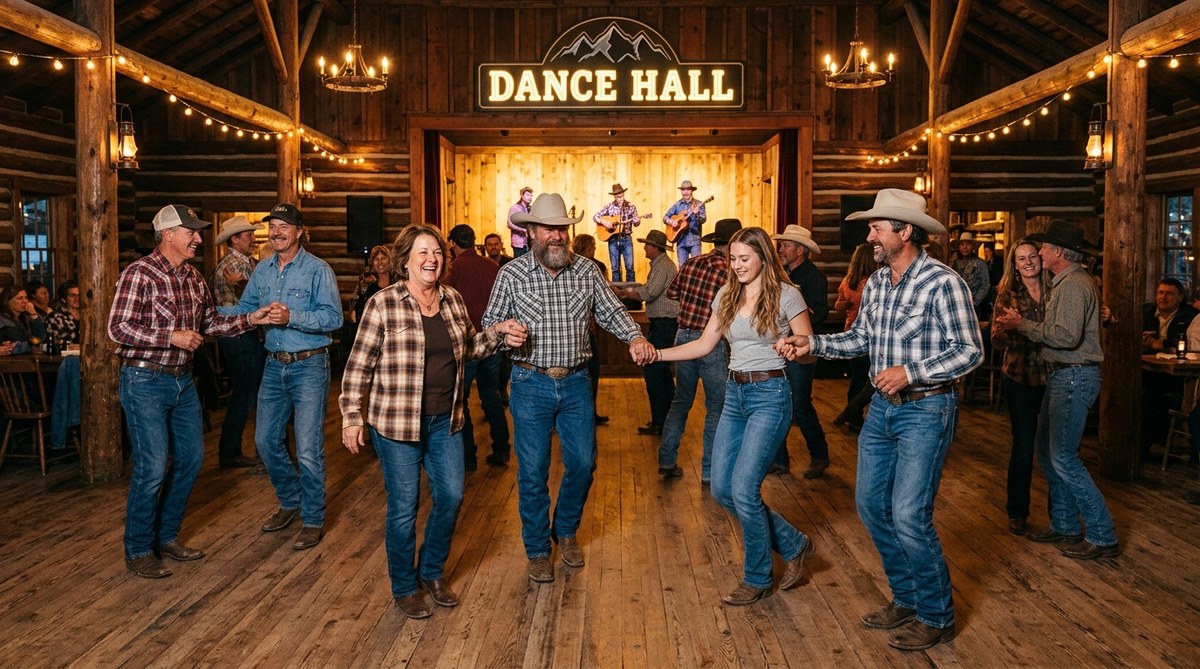
The dust on Highway 22 has a way of settling into the stories of this valley. For decades, the old wooden dance hall just west of Wilson was where those stories came alive. Locals call it the Stagecoach Barn, though its official name is the Wilson Dance Pavilion. It held square dances, wedding receptions, and late night bluegrass sets under a ceiling that had seen more boot scuffs than most floors in Teton County. Then, in late 2023, a developer from out of state made an offer that would have turned the property into a private residence. The sale seemed all but done. But a handful of locals refused to let the last public dance hall in the valley disappear.
The Wilson Dance Pavilion was saved in 2024 when a community coalition raised $2.1 million in six months. The group secured a conservation easement, transferred ownership to a nonprofit, and launched a renovation fund. The hall now operates year round with live music, dance classes, and community events. It remains the only public dance venue in Jackson Hole.
The Night the Hall Almost Went Dark
The Wilson Dance Pavilion was built in 1947 by a group of Basque sheepherders who wanted a place to gather after long seasons in the high country. Over time, it became the unofficial living room for the entire valley. Families celebrated graduations there. Ski bums held end of season parties. The Tuesday night contradance tradition started in the 1970s and never stopped. By 2023, the building was showing its age. The foundation sagged in one corner. The roof had been patched more times than anyone could count. Still, it held.
Then the developer's letter arrived. The owner, an elderly woman whose father had been one of the original builders, was ready to sell. She had no local heirs. The offer was $1.8 million. It would have closed in March 2024. For the first time in 77 years, the dance floor would go silent.
A Handful of People Who Refused to Let Go
The rescue effort started with four people. Sarah Kincaid, a former ranger at the National Museum of Wildlife Art, had been dancing at the pavilion since she moved to Jackson in 1998. Tom Reyes, a retired contractor whose grandfather helped pour the concrete foundation, knew every nail in the building. Lena Chu, a local event planner, had organized the annual Wilson Harvest Dance for a decade. And Mark Talbott, a biologist who studied moose in the Gros Ventre drainage, was the quiet force who kept the books.
They met at a coffee shop in December 2023. Over cold brew and a stack of napkins, they sketched out a plan. They would form a 501(c)(3) called Friends of the Wilson Dance Pavilion. They would raise the full purchase price in six months. And they would convince the seller to accept a lower offer if they could move fast.
Three Steps That Turned the Tide
-
Secure a bridge loan. The group applied to the Wyoming Community Foundation and received a $300,000 matching grant. That gave them credibility. Two local banks offered a short term loan against pledges.
-
Negotiate a conservation easement. The developer backed out when the county planning department flagged the property for historic designation. The seller agreed to reduce the price to $1.5 million in exchange for a tax benefit through the easement.
-
Launch a tiered fundraising campaign. They targeted major donors first, then opened public donations. By May 2024, they had $2.1 million. The extra funds covered immediate repairs and a year of operating costs.
How the Community Showed Up
- Local musicians held benefit concerts at the pavilion itself. Bands donated 100% of door sales.
- Restaurants in Wilson and Jackson ran "Dine for the Dance Hall" nights. The Wort Hotel, for example, gave a portion of Silver Dollar Bar receipts for three weeks.
- Construction supply companies donated lumber, shingles, and paint.
- A retired architect from New York, now living in Kelly, drew up the renovation plans for free.
- School kids collected spare change. One elementary class raised $340 in pennies.
The table below shows how the restoration costs compared to what a new building would have required.
| Expense Category | Restoration Cost | New Build Estimate |
|---|---|---|
| Foundation repair | $85,000 | $120,000 |
| Roof replacement | $72,000 | $95,000 |
| Electrical and plumbing | $38,000 | $210,000 |
| Interior finishes | $55,000 | $175,000 |
| Seismic retrofit | $42,000 | Not applicable |
| Total | $292,000 | $600,000 |
Numbers tell part of the story. The rest is about the people who put those dollars to work.
What the Locals Said
"We lost the old movie theater in town. We lost the bowling alley. We almost lost this dance hall. But here's the thing about Jackson Hole: when something matters enough, we don't just complain about it. We roll up our sleeves. We write checks. We show up on Saturday mornings with hammers."
* Sarah Kincaid, board president of Friends of the Wilson Dance Pavilion
The restoration crew included a mix of volunteers and paid tradespeople. Tom Reyes supervised the work. He told me that the best moment came when they pulled up a section of flooring and found a handwritten note from 1952. It read: "Thank you for the dances. M. and J." They preserved the note and placed it behind a glass frame near the entrance.
Where the Dance Hall Stands Today
As of summer 2026, the Wilson Dance Pavilion is fully operational. The contradance series runs every Tuesday from June through September. A new monthly concert series features local acts and touring musicians. The building now has insulation, which means winter events are comfortable for the first time ever. The nonprofit board has hired a part time events coordinator and established a maintenance fund.
But the real change is intangible. Walk in on a Saturday night and you will see the same cross generational crowd that has defined this place for decades. Retired ranchers waltz alongside young families. Ski patrollers in patched Carhartts share the floor with painters and poets. The wood still creaks in all the right places. The air still smells of pine and old varnish.
This story is not unique in its details. Similar preservation efforts have saved barns in Vermont, grange halls in Oregon, and opera houses in Montana. But it is specific to this valley. It happened because people who live here decided that a wooden building with a worn out floor was worth more than any private residence could ever be.
The dance hall will never make anyone rich. It will never appear on a national list of top venues. But it will keep doing what it has always done: hold space for joy, for heartbreak, for the moments that stitch a community together. Next Tuesday, the caller will step up to the microphone. The fiddle player will tune her strings. And someone will sweep the floor one last time before the dancers arrive. That is what saving a historic dance hall really means.
For more stories about the people who keep Jackson Hole's culture alive, read about the local artisans reviving Western craft traditions or learn how the cowboy poetry scene is having a renaissance. If you are new to the valley and wondering how to plug in, explore how newcomers are finding community. The dance hall is a good place to start.