
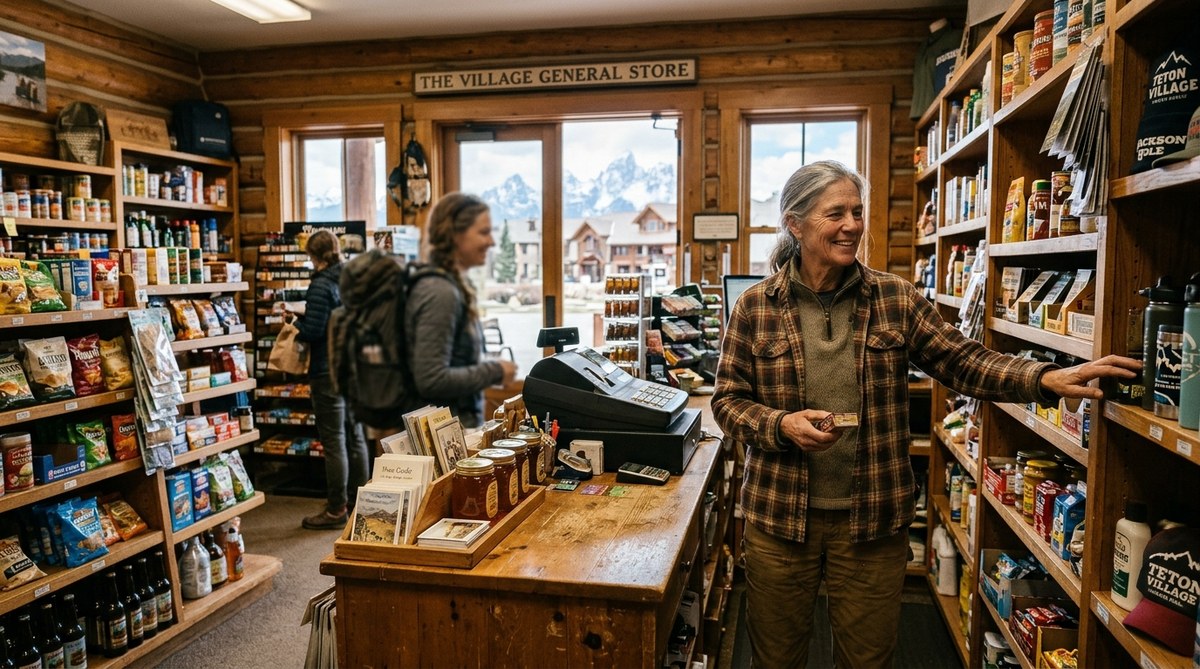
No one walks into the Teton Village general store looking for a luxury handbag. They walk in because they forgot sunscreen, their kid needs a snack before the next chairlift ride, or they ran out of coffee filters at the condo. For a place that sees more ski boots than dress shoes, this small store holds an outsized role in the daily rhythm of the village. It is the closest thing to a town square in a resort that was designed for tourists, not residents. Running it means balancing the needs of hungry skiers, thirsty hikers, and a local workforce that depends on it for basics like milk and eggs. Here is what that actually looks like.
The Teton Village general store is more than a place to grab groceries. It is a lifeline for locals, a pit stop for visitors, and a business that survives on razor-thin margins. Success depends on mastering seasonal demand, managing a tiny storage space, and knowing every customer by name. This guide breaks down the daily operations, the biggest challenges, and why this store matters more than you think.
The Weight of Being the Only One
When you are the only general store in Teton Village, there is no backup. If the power goes out and the refrigerators fail, you cannot send people down the road to another shop. The nearest full grocery store is in Jackson, a 20 minute drive that feels much longer after a long day on the slopes. That monopoly comes with pressure.
The store has to stock for two completely different crowds. In winter, the demand leans toward high calorie snacks, beer, and emergency gear like hand warmers. In summer, the mix shifts to hiking provisions, sunscreen, and picnic supplies. Getting the balance wrong means either wasted inventory or angry customers.
The store owners I spoke with call it a constant puzzle. They track what sells by the hour, not by the month. A sunny Saturday in February might sell out of instant soup packets by noon. A rainy Tuesday in July might see a run on playing cards and board games. You have to think like a meteorologist and a party planner at the same time.
The Daily Grind: A Numbered Look at the Routine
Running a store this small requires a specific kind of rhythm. Here is how a typical day breaks down:
- Morning restock and rotation. The delivery truck arrives before most guests wake up. Perishables get checked, old stock gets moved to the front, and anything near its sell by date gets marked down or donated. This takes about two hours on a good day.
- Midday surge management. From 11 a.m. to 2 p.m., the store becomes a chaotic relay. Skiers come in for snacks between runs. Families grab lunch supplies. The staff has to keep the line moving while also answering questions about trail conditions and restaurant recommendations.
- Afternoon cleanup and prep. By 3 p.m., the shelves look like a tornado hit them. Staff restocks the high traffic items, mops the floors, and checks the coolers. They also place the next day’s order based on what sold out.
- Evening wind down. The last hour before closing is quieter. Locals stop by for dinner ingredients. The staff does a final count, balances the register, and locks up knowing they will do it all again tomorrow.
What You Will Actually Find Inside
The inventory is a study in contradiction. You can buy a $8 bag of trail mix right next to a $3 can of beans. The selection is not curated for aesthetics. It is curated for survival.
- Emergency essentials: Sunscreen, pain relievers, bandages, phone chargers, and disposable razors.
- Food staples: Bread, milk, eggs, peanut butter, canned soup, and frozen pizzas.
- Local goods: A small shelf of Wyoming made jams, honey, and hot sauce.
- Gear and repair items: Duct tape, shoe laces, headlamps, and basic first aid kits.
- Drinks and snacks: The predictable mix of soda, energy drinks, chips, and candy bars, plus a few local craft beers.
The store does not try to be a gourmet market. It tries to be the place that saves your trip when you realize you forgot something. That is a humble mission, but an essential one.
The Biggest Mistakes New Owners Make
Running a store in a resort town is not the same as running one in a regular neighborhood. The seasonality changes everything. Here is a table that outlines the common pitfalls and how the current team avoids them.
| Mistake | Why It Hurts | The Fix Used Here |
|---|---|---|
| Overstocking slow movers | Ties up cash and fills limited shelf space. | Track sales data by week and adjust orders immediately. |
| Ignoring the local workforce | Tourists buy snacks, but locals buy dinner. | Keep a small but reliable section of cooking basics. |
| Underpricing high demand items | Sounds good, but margins are already thin. | Price competitively, not cheaply. Locals understand. |
| Failing to plan for weather shifts | A sudden storm changes what people need. | Keep a surplus of batteries, water, and shelf stable food. |
“You cannot treat this like a normal convenience store. If you do, you will be out of business in two years. You have to treat it like a community center that happens to sell groceries.” — A former manager of the Teton Village general store
How Seasonality Dictates Everything
The store does not have the luxury of steady sales. It rides a wave that peaks during Christmas week, President’s Day weekend, and the entire month of July. The rest of the year is a slow burn.
Spring is the hardest season. The ski crowd leaves, and the summer crowd has not arrived yet. The store runs on a skeleton crew. Orders get smaller. The staff focuses on deep cleaning and repairs. It is a time for catching up on paperwork and hoping the shoulder season passes without a major breakdown.
Fall is similar, but with a different energy. Locals stock up for hunting season. The store becomes a hub for people heading into the backcountry. They buy jerky, instant meals, and gas canisters. The staff gets to know the regulars by name again after a busy summer.
Why the Store Matters More Than You Think
For a visitor, the Teton Village general store is a convenience. For a local, it is a necessity. Many of the people who work in the village live in employee housing that lacks full kitchens. They rely on the store for their daily meals. Without it, they would have to drive to Jackson for every grocery run, which is not realistic for someone working a double shift.
The store also functions as an informal information desk. People ask the cashier about trail closures, restaurant hours, and where to find a lost glove. The staff has to be part concierge, part therapist, and part inventory specialist. It is a job that requires patience and a good memory.
This kind of place is rare in a resort town. Most businesses cater to the tourist dollar with high margins and curated experiences. The general store does the opposite. It serves the people who keep the resort running, and it does so without fanfare.
What It Takes to Keep the Doors Open
The financial reality is sobering. Rent in Teton Village is high. The store operates on a margin that would make a corporate executive wince. The owners have to be creative.
They rely on a mix of revenue streams. The biggest is beer and snacks, but they also make money on emergency items that people pay a premium for because they have no other choice. A forgotten tube of sunscreen might cost $12. That is not gouging. That is the price of convenience in a remote location.
The store also benefits from loyalty. Locals will choose to buy a slightly more expensive loaf of bread there instead of driving to Jackson, because they want the store to survive. That kind of goodwill is hard to quantify, but it is real.
For a deeper look at the people who make these kinds of places work, read our story on the last working cowboys of the Gros Ventre Valley. Their world is different, but the same thread of stubborn independence runs through both.
The Future of the Only Store in Town
The store faces the same pressures as every small business in Jackson Hole. Rising costs, a tight labor market, and the constant threat of being replaced by a chain. But for now, it holds on.
The owners are experimenting with small changes. They are adding more local products. They are testing a small grab and go section with prepared sandwiches. They are trying to make the store feel less like a pit stop and more like a destination.
Whether those changes work depends on the same thing that has always kept the store alive: the people who walk through the door. If you are planning a trip to Teton Village, stop in. Buy a bag of chips. Ask the cashier how their day is going. It matters more than you know.
A Final Word on Supporting Places Like This
The Teton Village general store is not going to win any design awards. It is not a boutique. It is a working store for a working town. The next time you are in the village and need something small, skip the hotel gift shop and walk over to the general store. Spend a few dollars. Say hello.
That transaction is not just about buying a snack. It is about keeping a thread of local life alive in a place that could easily become just another resort. If you want to understand what it really means to live in Jackson Hole, start by understanding the places that make it possible. The general store is one of them.
For more stories about the people and places that define this valley, check out our piece on what it really costs to live in Jackson Hole in 2026. It puts the challenges of a place like this into a wider context.