
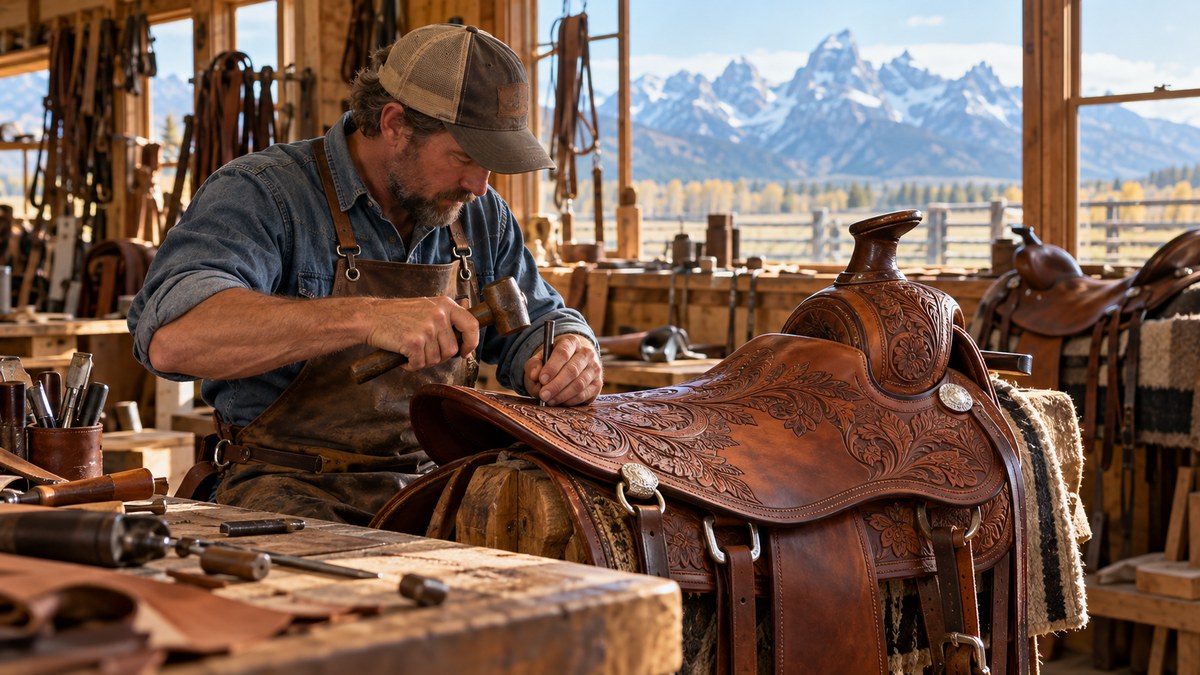
The smell of fresh leather and wood smoke hangs in the air. Inside a modest workshop tucked off a gravel lane in Moose, Wyoming, a third generation saddlemaker runs her fingers along a skirting of Hermann Oak. She is checking for thickness. She is listening to the bend. This is not a performance. This is how the Jackson Hole saddle tradition has survived for more than a century: one careful stitch at a time.
The Jackson Hole saddle tradition lives on because a small group of dedicated locals refuse to let machine made tack replace the feel of a hand built tree. Their workshops are open to visitors who want to watch rawhide being stretched, wool lining being trimmed, and brass hardware being polished. This article introduces the people doing the work and shows you how to experience this craft firsthand.
The People Behind the Leather
Walk into any working ranch in the Gros Ventre Valley and you will see saddles that have been passed down through three generations. The owners know the name of the person who built them. That personal connection is the heart of the Jackson Hole saddle tradition.
Take Elara Voss, for example. She moved to Jackson Hole in 2018 after apprenticing with a master saddlemaker in Montana. Her shop is a narrow building with a dirt floor and a wood stove. She builds about ten saddles a year. Each one takes between 200 and 300 hours of labor. “I do not use a stitching machine,” she says. “The hand stitching compresses the leather fibers in a way that a machine cannot match. That is what gives a saddle its memory.”
Then there is the father son team at Teton Saddle Works. Ron and his son Caleb have been building custom trees for twenty seven years. Ron learned from his uncle, who learned from a saddlemaker in Dubois back in the 1950s. Their shop smells like cedar shavings and boiled linseed oil. They shape the tree, wrap the fork with rawhide, and let it cure for weeks before the leather work even begins.
What Makes a Handmade Saddle Different
A machine made saddle can be produced in a single day. It uses synthetic materials, foam padding, and stamped leather. It costs less. It also breaks down faster. A hand built saddle, on the other hand, uses wool felt, pure cotton lining, and vegetable tanned leather that will last forty years or more if cared for properly.
Here is a breakdown of the key differences:
| Feature | Machine Made Saddle | Handmade Saddle |
|---|---|---|
| Tree material | Pressed wood or plastic | Hand carved pine or Douglas fir |
| Rawhide wrap | None or synthetic | Genuine rawhide, hand wet |
| Leather quality | Chrome tanned, corrected grain | Vegetable tanned, full grain |
| Stitching | Lockstitch machine | Hand saddle stitch |
| Fit adjustment | Fixed | Custom to horse and rider |
| Typical lifespan | 5 to 10 years | 25 to 50 years |
The Jackson Hole saddle tradition emphasizes fit above all else. A saddlemaker will measure the horse’s back, the rider’s seat bones, and the length of the rider’s leg. They will ask about the type of riding: roping, trail, reining, or ranch work. Then they build the tree to match those exact measurements. No two saddles are identical.
The Process in Six Steps
Building a saddle from scratch is a slow, deliberate craft. Here is how a saddlemaker in Jackson Hole approaches the work:
- Shape the tree. The foundation is carved from pine or fir. The fork, cantle, and bars are assembled with wooden pegs and hide glue. No metal fasteners are used.
- Wrap with rawhide. Strips of rawhide are soaked in water, stretched over the tree, and stitched into place. As the rawhide dries, it shrinks and locks the joints together. This creates a frame that will hold its shape for decades.
- Build the seat. Wool felt is layered and shaped to the rider’s measurements. The seat is covered with a single piece of leather that is stretched and nailed while still damp.
- Add the rigging. The cinch straps, latigo carriers, and flank cinch are attached using hand sewn leather loops. The placement of the rigging determines how the saddle balances on the horse.
- Cut and stitch the leather. The fenders, jockeys, and skirts are cut from one hide to ensure consistent grain. Every seam is hand stitched with waxed linen thread. A typical saddle has about 1,200 stitches.
- Finish and oil. The saddle is rubbed with neatsfoot oil, then left to cure in a warm room for two weeks. The final step is a light buffing with beeswax.
Common Mistakes Beginners Make
If you are thinking about ordering a custom saddle or trying to restore an old one, it helps to know what can go wrong. These are the most frequent errors that saddlemakers in Jackson Hole see:
- Buying a saddle that is too small for the horse’s withers. This causes pressure points and back pain.
- Using saddle soap too often. It strips the natural oils from the leather. A damp cloth and occasional conditioning with pure neatsfoot oil is better.
- Storing a saddle in a hot attic or a damp basement. Temperature swings cause the tree to warp and the leather to crack.
- Tightening the cinch too much on a new saddle. The wool lining needs time to settle. Tighten gradually over the first few rides.
- Ignoring the fit of the stirrups. Stirrup leathers that are too long or too short can cause knee and hip strain for the rider.
“A saddle is a relationship between a person and a horse,” says Ron from Teton Saddle Works. “If you rush the fit, you will spend years fighting it. Take the time to get it right on the front end, and that saddle will carry you through a lifetime of trails.”
Where to See the Craft in Person
You do not need to buy a custom saddle to appreciate the Jackson Hole saddle tradition. Several local workshops welcome visitors who want to watch the process. Call ahead to confirm hours, because these are working studios, not retail stores.
- Teton Saddle Works (off Highway 22 near Kelly). Ron and Caleb give informal tours on weekday mornings. You can see trees in various stages of rawhide wrap and smell the leather curing.
- Elara Voss Leather (behind the Moose post office). Elara prefers appointments. She will show you her stitching horse, her collection of antique hand tools, and the rawhide she has stretched across a dozen trees.
- The Wyoming Leather Collective (a cooperative in downtown Jackson). This space features work from five local saddlemakers and leatherworkers. They rotate demonstrations every Saturday during the summer and fall.
If you want a deeper look at the history of the craft, read about the last working cowboys of the Gros Ventre Valley. Their daily work depends on the quality of their gear.
How to Care for a Handmade Saddle
Owning a handmade saddle means becoming a steward of a piece of functional art. The leather will dry out if neglected. The wool lining will collect sweat and dirt. A little maintenance goes a long way.
- Wipe down the saddle after every ride. Use a dry cloth to remove dust and sweat.
- Condition the leather twice a year. Apply a thin coat of neatsfoot oil or a beeswax based conditioner. Let it soak in overnight.
- Store the saddle on a wooden rack. Never hang it by the horn. The weight of the saddle can pull the tree out of alignment.
- Check the rigging annually. The leather straps that hold the cinch can stretch. A saddlemaker can replace them without rebuilding the whole saddle.
- Keep it away from direct heat. A saddle left next to a wood stove will dry out and crack within a season.
For a broader view of the culture that supports these crafts, spend some time with inside the Teton County rodeo, where rodeo culture meets modern Jackson Hole. You will see the saddles in action and understand why fit matters so much.
The Future of the Tradition
The Jackson Hole saddle tradition is not frozen in time. Younger saddlemakers are experimenting with different tree designs for endurance riding and packing. They are using lighter rigging and deeper seats. The materials and methods stay the same, but the saddles are adapting to how people ride today.
Caleb from Teton Saddle Works puts it this way: “My dad built saddles for ranch hands who spent twelve hours a day in the saddle. I build saddles for people who ride on weekends, for trail guides, for competitors. The work is the same. The customer is different. That keeps the craft alive.”
If you want to support the tradition, the best thing you can do is buy from a local maker. Even if you cannot afford a full custom saddle right now, you can purchase a pair of hand stitched reins, a leather headstall, or a simple belt. Every piece keeps the skills sharp and the workshops open.
How to Start Your Own Saddle Journey
Maybe you are a traveler who wants to bring home something more meaningful than a T-shirt. Maybe you are a rider who has been saving for years. Either way, here is a practical path forward.
- Visit a workshop first. Watch a saddlemaker stitch a fender. Ask questions about the leather. Feel the weight of a finished saddle.
- Order a fitting. Most saddlemakers will measure your horse for a small fee. This gives you a custom pattern that you can use later.
- Save for the deposit. Custom saddles start around three thousand dollars for a basic working model. A fully tooled show saddle can cost eight thousand or more.
- Be patient. You will wait six to twelve months for your saddle. That is normal. The saddlemaker will send you photos of the progress.
- Plan a pickup trip. Come back to Jackson Hole when the saddle is finished. Ride it on the trails where the leather was cut. That connection between place and object is part of the tradition.
For another perspective on how local artisans are keeping Western skills alive, read about the ranch hand who became Jackson Hole’s most unexpected artist. His story shows that the line between work and art is thin in this valley.
The Weight of a Well Made Saddle
A handmade saddle is heavy. A typical ranch saddle weighs about forty pounds. That is not a flaw. It is a sign of solid materials. The tree is thick. The leather is dense. The rigging is substantial. When you lift a cheap saddle and then lift a custom saddle, you feel the difference in your arms.
That weight also carries history. Every saddlemaker in Jackson Hole can tell you about the tools they inherited, the mentors who taught them, and the horses that taught them humility. The Jackson Hole saddle tradition is not just about leather and thread. It is about passing down knowledge that cannot be written in a manual. It is about watching someone’s hands and learning how to feel the right tension in a stitch.
A Tradition Worth Preserving
The next time you drive through Moose or Kelly, look for the small workshops with sawdust on the porch and rawhide strips hanging from the rafters. Those are the places where the Jackson Hole saddle tradition is still alive. The people inside are not making saddles for tourists. They are making saddles for the working life of the West. If you take the time to stop, they will likely invite you in. They will show you the tools. They will let you hold a piece of leather that has been curing for six months. And you will understand why this craft matters.
So go ahead. Schedule that visit. Bring your curiosity and leave your schedule at the door. The saddlemakers of Jackson Hole are waiting to share their work with you.