
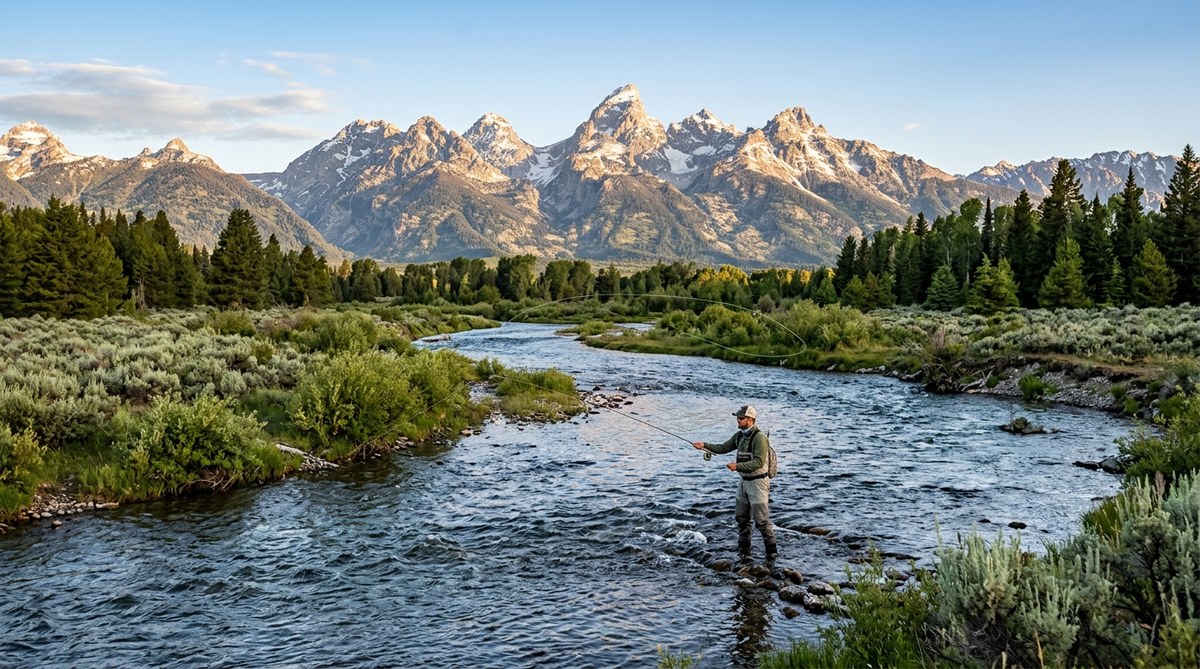
The Snake River moves through Jackson Hole like a living, breathing thread of silver. It carves through sagebrush flats, bends around cottonwood groves, and spills past the base of the Tetons in a way that feels almost intentional, as if the river itself wants to show off the scenery. For fly anglers, that combination of beauty and world class trout water is borderline addictive. But here is the honest truth. The Snake can also be intimidating. It is big water. It changes fast. And not every stretch of river fishes the same way. That is why we put together this guide.
We spend more time on this river than we care to admit. We watch the hatches, track the flows, and swap stories with guides who have forgotten more about cutthroat trout than most of us will ever learn. This list of five essential Snake River fly fishing spots for 2026 comes straight from that local knowledge. Whether you are a seasoned angler or someone loading up a drift boat for the first time, these locations will put you on fish.
The Snake River offers five distinct fly fishing experiences, each with its own rhythm, hatch, and access style. From the wade friendly waters near Moose Head Island to the remote canyon stretches below West Table, these spots cover every skill level and season. Matching your location to the right conditions is the single most important decision you will make all day.
Moose Head Island: The Wade Fisher’s Best Friend
Moose Head Island sits just downstream from the Moose Visitor Center in Grand Teton National Park. It is one of the few places on the Snake where wade anglers can genuinely work the water without needing a boat. The river splits around the island, creating slower, braided channels that hold cutthroat trout year round.
The access here is straightforward. Park at the Moose Visitor Center lot, walk the path toward the river, and you will find a gravel bar that opens up into a wide, wadeable section. Go early. By 9 a.m. during peak summer months, the parking lot fills up with hikers and wildlife watchers, not just anglers.
The best time to fish Moose Head Island is late June through September. The salmonfly hatch typically peaks in early July, followed by golden stoneflies and then a reliable PMD emergence that carries through August. If you are throwing dry flies, this is your spot.
“Moose Head is where I send people who tell me they have never caught a cutthroat on a dry fly,” says Jake Hollister, a local guide with two decades on the Snake. “The water is slower here. The fish have time to look at your presentation. It teaches you patience.”
One warning. The current can pick up unexpectedly when the dam upstream releases water. Always check the flow gauge before you wade in. A sudden rise from 4,000 to 6,000 cubic feet per second can turn a pleasant wade into a dangerous situation.
For a deeper look at the people who spend their lives on this river, read why a former Wall Street trader now guides fly fishing trips on the Snake River. His perspective on reading water will change the way you fish.
Schwabacher’s Landing: The Postcard Stretch
Schwabacher’s Landing is arguably the most photographed piece of water in Grand Teton National Park. The iconic reflection of the Tetons in the slow moving channel makes it a sunrise destination for photographers. But after the light show ends, the fishing begins.
This stretch is best fished from a drift boat, though experienced wade anglers can work the edges if they are careful. The river here is broader and shallower than up near Moose Head, with long seams that hold feeding trout during a hatch.
The access road is unpaved and can get rough after rain. A high clearance vehicle helps, though sedans make it with caution. There is a boat ramp at the landing, and float trips from Schwabacher’s down to Deadman’s Bar or Cottonwood Creek are classic Snake River floats.
The hatch schedule here runs a bit later than upstream. Look for PMDs in July, but the real magic happens in September when the Trico spinner fall brings fish to the surface in biblical numbers. If you time it right, you can find yourself surrounded by rising trout with the Tetons turning gold behind them.
For a sense of what makes this place special beyond the fishing, check out she’s documented every moose birth in Grand Teton for 30 years. Her observations of the river corridor will make you pay closer attention to the banks.
Pacific Creek Confluence: Where Two Rivers Meet
The confluence of Pacific Creek and the Snake River sits just north of Moran Junction. This is a meeting of different water temperatures and nutrient loads, and trout know it. The mixing zone creates a feeding frenzy that can feel almost unfair.
Pacific Creek runs colder than the Snake. It brings in clear, oxygen rich water that attracts trout during the hottest parts of summer. When the Snake starts to warm up in July and August, fish push toward the mouth of Pacific Creek to find relief.
Access requires a short hike from the Pacific Creek Road parking area. The trail follows the creek downstream to where it meets the Snake. Wade carefully here. The bottom is a mix of cobble and gravel, but the current can grab your feet if you get too far out.
This spot fishes best from mid July through early October. Nymphing with a stonefly imitation and a dropper works consistently, but do not overlook the dry fly opportunity during the August hopper season. A well placed hopper pattern along the banks can produce explosive strikes.
One practical note. This area sees grizzly bear activity. Carry bear spray and make noise as you move through the willows. The fishing is worth the vigilance, but this is wild country. Treat it with respect.
If you want to understand how weather patterns affect fishing conditions here, our piece on how to read weather in the Tetons when your life depends on it offers insights that apply directly to planning your day on the water.
The Flatwater Below Wilson: A Local Secret
The stretch of the Snake River that runs through the town of Wilson does not get the same attention as the national park sections. That is exactly why locals like it. The Flatwater, as it is known, offers consistent fishing with far less pressure.
Put in at the Wilson Boat Ramp and float down to the Fish Creek access point. This is a short float, about three miles, but it packs in some of the most reliable dry fly fishing on the entire river. The key is the slower current. Fish have time to inspect your fly, which means you need a clean drift. No drag. No hesitation.
The summer hatch here mirrors the rest of the river, but the hopper fishing in August and September is particularly strong. Cattle graze along the banks, and the grasshoppers that tumble into the water create a food source that trout cannot resist.
This section also has a healthy population of brown trout, which is less common on the upper Snake. If you are looking to add a brown to your catch list, focus on the undercut banks and deeper runs near the takeout.
The best part? You can fish this stretch in the afternoon and still make dinner plans in town. It is accessible, productive, and criminally underrated by visitors.
For a taste of what makes the Wilson community tick, take a look at the last working cowboys of the Gros Ventre Valley. Their connection to the land runs deeper than most of us will ever know.
Snake River Canyon: The Big Water Experience
The Snake River Canyon below Jackson Lake Dam is a different world. The water here is colder, faster, and more powerful. This is not a wade fishing destination. This is drift boat or raft water, and it demands respect.
The canyon stretch runs from the dam down to the Moose area. It features deep pools, massive boulders, and trout that have seen every fly in the box. The fish here are not easy. They are educated, and they fight harder than their downstream cousins.
Fishing the canyon requires attention to detail. You need to match the hatch with precision. You need to read the current seams and place your fly with surgical accuracy. A sloppy presentation will be ignored.
The best months are June through September, with the salmonfly hatch in early July drawing the biggest crowds. If you want solitude, fish the canyon in late September when the crowds thin out but the fishing remains strong.
This is also the most physically demanding stretch. The current is unforgiving. A mistake here can flip a boat or pin an angler against a rock. Always wear a life jacket. Always carry a throw bag. And if you are new to the canyon, hire a guide for your first trip.
Here is a practical checklist for fishing the canyon:
- Check the flow rate at the Jackson Lake Dam release. Anything above 8,000 CFS is serious water.
- Bring multiple rod setups. You will need a nymphing rig, a dry fly setup, and a streamer rod.
- Pack a rain jacket. The canyon channels wind in unpredictable ways.
- Tell someone your float plan. Cell service is spotty at best.
- Carry extra flies. You will lose them to the rocks and the trees.
For a look at how the broader Jackson Hole community comes together around this river, read what happens to Jackson Hole’s wildlife when 3 million tourists show up. It puts the pressure on this river system into perspective.
Matching Your Approach to the Water
Every stretch of the Snake rewards a different technique. The table below breaks down what works where.
| Spot | Best Technique | Common Mistake | Ideal Conditions |
|---|---|---|---|
| Moose Head Island | Dry fly, dead drift | Wading too deep, spooking fish | Low light, calm surface |
| Schwabacher’s Landing | Nymphing under an indicator | Ignoring the seams near the bank | Overcast sky, light chop |
| Pacific Creek Confluence | Stonefly nymph with dropper | Fishing too far from the mixing zone | Late afternoon, warmer water |
| Flatwater Below Wilson | Hopper pattern, strip pause | Setting the hook too early | Sunny, windy afternoon |
| Snake River Canyon | Streamer, swing technique | Overpowering the cast | Overcast, slightly stained water |
How to Plan Your Trip Around the Hatches
Timing matters more than gear. You can own the most expensive rod on the market, but if you show up during a week of high water or between hatches, you will struggle.
Here is a simplified approach to planning your 2026 trip:
- Late June: Runoff is ending. Fish are hungry. Focus on nymphing in the canyon and at Pacific Creek.
- Early July: Salmonflies are hatching. Hit Moose Head Island and the canyon with large dry patterns.
- August: PMDs and hoppers. The Flatwater and Schwabacher’s Landing shine.
- September: Trico spinner fall. Early mornings on Schwabacher’s Landing are unforgettable.
- October: Streamer season. Big fish push into shallow water before winter.
The window from July through September is the most reliable for dry fly fishing. But do not discount October. The crowds are gone, the leaves are changing, and the trout are feeding aggressively before the river freezes.
If you want to experience a day in the life of the people who understand this rhythm best, read why Jackson Hole locals start their day before sunrise. It explains why the best fishing happens before most visitors have finished their coffee.
The Gear That Works on the Snake
You do not need a quiver of rods to fish the Snake well. But a few key pieces of gear will make your trip smoother.
- A 9 foot 5 weight rod is the standard for most situations. It handles dries, nymphs, and small streamers.
- A 9 foot 6 weight rod helps when the wind picks up or when you are throwing larger streamers in the canyon.
- Bring leaders in 4X and 5X. The water clarity changes with the flows, and you need to adapt.
- Polarized sunglasses are non negotiable. They reduce glare, protect your eyes, and help you see fish before they see you.
- A good pair of wading boots with felt or rubber soles with studs. The rocks in the Snake are slippery.
Reading the River Like a Local
The Snake River changes every year. High runoff in 2025 reshaped some gravel bars and carved new channels. What worked last season might not work this season. That is why learning to read the water matters more than memorizing specific spots.
Look for foam lines. Those are the seams where different currents meet, and they carry food directly to waiting trout. Look for deeper water near banks with overhanging vegetation. Look for eddies behind large rocks where fish can rest without fighting the current.
And pay attention to the birds. When you see swallows and kingfishers working a section of river, the fish are feeding too.
One of the best ways to build your river reading skills is to fish with someone who has spent years on this water. Consider booking a guided trip and treating it as a learning experience. The guides in Jackson Hole are generous with their knowledge if you show genuine interest.
For a different perspective on what it means to live in this valley year round, check out what it really costs to live in Jackson Hole in 2026. It helps explain why so many guides work multiple jobs to stay here.
Finding Your Rhythm on the River
The Snake River does not give up its secrets easily. That is what makes it worth pursuing. Every trip teaches you something. A new seam. A different drift. A hatch you have never seen before. The five spots we covered here will give you a starting point, but the real learning happens when you step into the water and start casting.
Pay attention to the details. Notice how the light hits the water at different times of day. Feel the difference in current speed between the inside and outside of a bend. Listen to the sounds of the river and the birds along the banks. The more you observe, the better you will fish.
And when you do hook into a fat Snake River cutthroat, take a moment to appreciate where you are. The Tetons rising behind you. The clean smell of sagebrush in the air. The tug of a wild fish on the end of your line. That is the reason we keep coming back.