
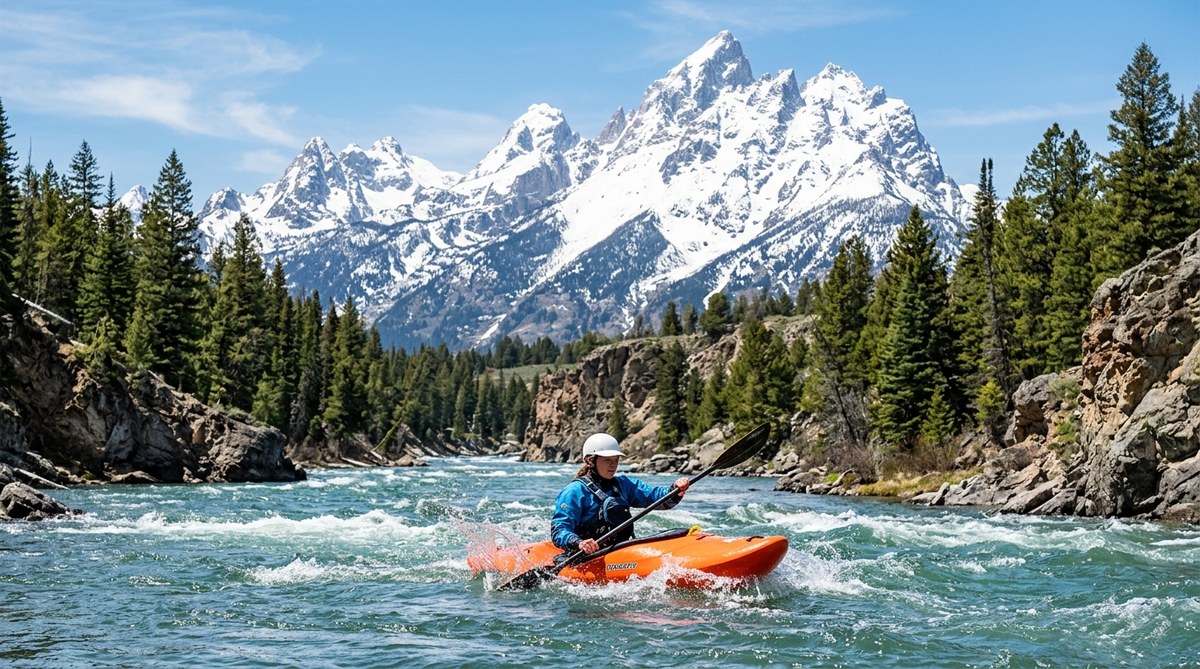
The Tetens have been generous this winter. As of early April 2026, snowpack in the Snake River headwaters sits at 112 percent of the 30-year median, according to the Natural Resources Conservation Service. For anyone who has spent a summer reading the Snake’s mood from a raft, those numbers mean something real. They mean eddy lines will hold their shape longer. They mean the wave trains at Lunch Counter will stack higher before they wash out. And they mean the window for running the river at its peak might shift by a week or two in either direction.
The 2026 snowpack in the Tetons is above average, which points to a sustained, high-volume runoff season on the Snake River. Expect peak flows to arrive in late May or early June, with Class III and IV rapids holding their form well into July. Plan your trip around the second half of June for the best balance of pushy water and stable weather.
How the 2026 Snowpack Compares to Recent Years
The Snake River above Jackson Lake is currently carrying a snow water equivalent of 28.4 inches. That is roughly 15 percent higher than the same date in 2025, and about 8 percent above the long-term average. The Upper Green Basin, which feeds the Green River and influences the Snake’s lower reaches, is sitting at 108 percent of normal.
These numbers are not record-breaking. The winter of 2011 still holds the modern benchmark for deep snow in the Tetons. But compared to the lean years of 2021 and 2022, this season feels like a return to form. The snowpack is dense and well-distributed across elevations. That matters for paddlers because a deep, even snowpack melts slower and more predictably than a shallow one that vanishes in a warm spell.
Reading the River: What Above-Average Snowpack Does to the Snake
When the snowpack runs above normal, the Snake responds in a few distinct ways. Understanding these shifts helps you decide when to launch and which sections to target.
- Extended peak flows. The river stays at or near its maximum discharge for a longer period. Instead of a sharp spike in early June followed by a rapid drop, you get a plateau that can last two to three weeks.
- Later season hold. Higher-elevation snow that lingers into July keeps the upper sections of the Snake running cooler and faster than in low-snow years. That means the Canyon stretch near the Idaho border can stay pushy well past the Fourth of July.
- More wood in the water. High runoff dislodges logs and debris that have been frozen in place all winter. Scout every rapid, especially early in the season. What was a clean line in August might have a strainer sitting in the middle of it in June.
A local guide who has run the Snake for 18 seasons put it this way:
“In a high snow year, the river is honest. It gives you exactly what you earn. The moves are there, but you have to read them at speed. The margin for error gets thinner when the water is pushing 12,000 cubic feet per second.”
The 2026 Peak Flow Forecast
The USGS gauge at the Snake River near Jackson typically records peak flows between May 25 and June 15. Based on current snowpack data and the long-range temperature outlook from NOAA, here is the projected timeline for 2026.
| Scenario | Peak Flow Window | Estimated CFS Range | Best For |
|---|---|---|---|
| Above-average melt (warm May) | May 20 to June 5 | 14,000 to 18,000 | Experienced Class IV paddlers, early-season trips |
| Average melt (normal May temps) | May 28 to June 12 | 12,000 to 15,000 | Intermediate to advanced paddlers, most commercial trips |
| Slow melt (cool, cloudy May) | June 5 to June 20 | 10,000 to 13,000 | Intermediate paddlers, families on guided trips |
| Extended high flow (deep snow lingers) | June 1 to July 1 | 9,000 to 14,000 | All skill levels, best window for mixed groups |
These numbers assume the current snowpack holds through April without an unusual early melt. If a prolonged warm spell hits the Tetons in late April, the runoff could accelerate and shift the peak earlier by a week.
Three Steps to Lock in Your 2026 Snake River Trip
If you are planning a self-supported trip or booking with a commercial outfitter, here is a practical sequence to follow.
-
Check the snowpack update on May 1. The NRCS publishes a final spring snow survey in early May. Compare the snow water equivalent in the Snake Basin to the median. If it stays above 100 percent, plan for a late-May peak. If it drops below 90 percent, expect the peak to arrive earlier and run shorter.
-
Watch the 10-day forecast starting May 15. When daytime highs in Jackson consistently hit the mid-60s, the melt accelerates. A stretch of 70-degree days in late May can push the river from 8,000 CFS to 14,000 CFS in under a week. Have your gear ready to go on short notice.
-
Book a flexible launch date. If you are running the Snake through Grand Teton National Park or the Canyon, aim for a permit window between June 10 and June 25. That range historically offers the best overlap of high water and stable weather. If you can shift your dates by a few days based on the real-time gauge readings, you will find the best conditions.
Common Mistakes Paddlers Make in High Snowpack Years
Even experienced boaters misread the river when the water is up. Here are the most frequent errors and how to avoid them.
| Mistake | Why It Happens | How to Fix It |
|---|---|---|
| Underestimating the speed of the current | The river looks wider and slower, but the actual velocity is higher. | Time your drift between two landmarks. If you cover 100 yards in under 30 seconds, the water is moving faster than it looks. |
| Running a familiar line at the wrong angle | High water pushes boats downstream faster, making eddy turns harder. | Start your ferry angle earlier. Aim for the upstream edge of eddies instead of the middle. |
| Ignoring strainers that appeared overnight | Logs shift during high flows, especially after thunderstorms. | Walk the rapid before you run it. If you cannot see the full line from the bank, scout it twice. |
| Overestimating your group’s skill level | A group that handles Class III at 8,000 CFS may struggle at 14,000 CFS. | Be honest about your crew’s experience. If anyone has not run pushy water before, drop down a class or hire a guide. |
Where to Get Reliable Data for 2026
The best sources for real-time conditions are the USGS waterwatch site for the Snake River gauge near Jackson and the NRCS snowpack reports for the Upper Snake Basin. Both update daily during the melt season. For a deeper look at how locals read the landscape, check out our story on how to read weather in the Tetons when your life depends on it. It covers the microclimate patterns that directly affect river levels.
For those who want to pair their paddling trip with a deeper understanding of the watershed, the piece on what I learned spending a year following Jackson Hole’s wildlife biologists offers a rare look at how the river ecosystem responds to snowpack variability.
What the Snowpack Means for Other Summer Activities
The same snowpack that drives the Snake’s rapids also shapes the rest of the valley’s summer. Fishing guides on the river have been watching the numbers closely. Why a former Wall Street trader now guides fly fishing trips on the Snake River highlights how these conditions affect insect hatches and fish behavior. High water makes wading harder but can push fish into predictable holding patterns along the banks.
Hikers and backpackers should note that the high snowpack means trails above 9,000 feet will shed snow later than usual. The popular routes to the base of the Tetons may not be fully clear until mid-July. If you are planning a trip that combines paddling with hiking, factor in a later start for the high country.
Tying the Snowpack Forecast to Your Summer Calendar
The 2026 snowpack is shaping up to deliver a classic Jackson Hole summer on the river. The water will be there. The question is timing. If you can stay flexible and watch the data, you will find the Snake at its best. For the paddler who reads the river carefully, this is the kind of season that creates memories worth carrying home.
So check the snow reports in early May. Watch the thermometer in late May. And when the gauge starts climbing past 10,000 CFS, grab your dry suit, pull your boat off the rack, and go meet the river on its own terms. It will be worth the wait.