
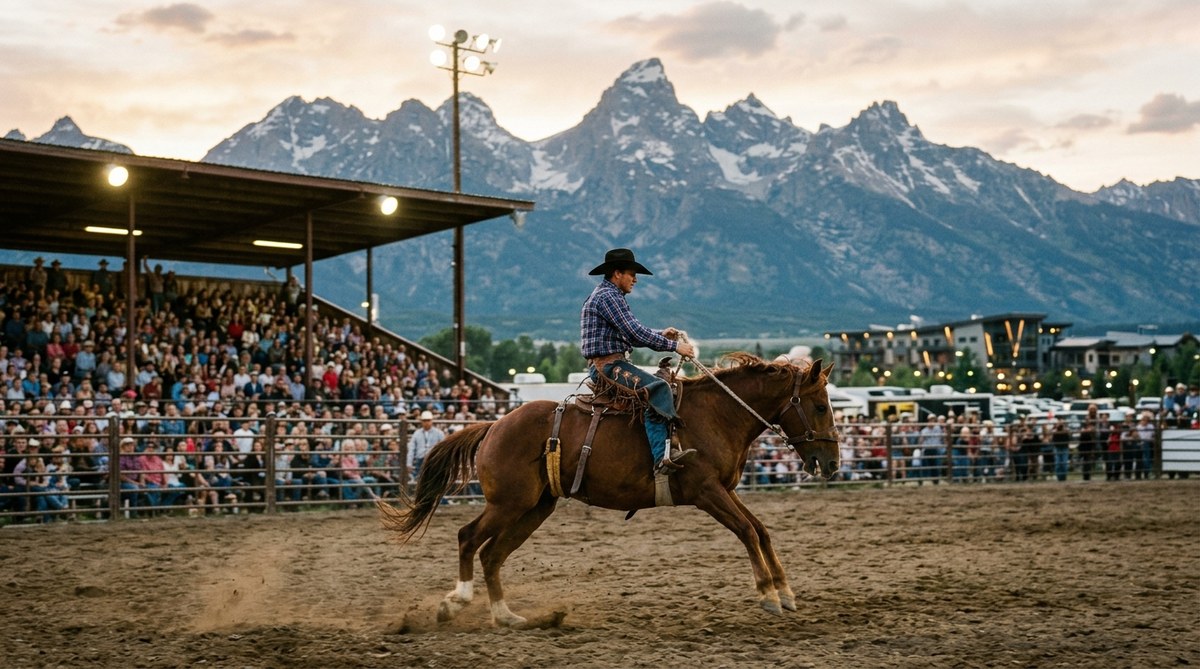
The first time you walk into the Teton County Rodeo, you feel it before you see it. The dust hangs in the summer air. The smell of pine and dirt mixes with grilled meat from the concession stand. A cowboy hat silhouette moves against the fading light of the Tetons. This is not a tourist show. This is a working community gathering that has happened every summer for decades. And in 2026, it still holds the same raw energy it did when the first grandstands went up.
The Teton County Rodeo in Jackson Hole is a genuine Western experience rooted in local ranching tradition. Unlike staged events, this rodeo features real cowboys and cowgirls competing in classic events like bronc riding and barrel racing. Visitors get a front row seat to a living culture that has shaped the valley, all while supporting the community. Plan your visit for a Wednesday night between June and August for the most authentic experience.
More Than a Show: The Heart of a Ranching Community
The Teton County Rodeo started as a simple gathering. Local ranchers wanted a place to test their skills and show off their horses. That spirit has not changed. Walk through the parking lot before the event and you will see families unloading gear from dusty pickup trucks. Kids run around in boots that have seen real work. These are not actors. These are people who live the ranching life every day.
The rodeo grounds sit just outside Jackson, with a clear view of the Teton Range. The backdrop alone is worth the ticket price. But what keeps people coming back is the authenticity. When a bronc rider gets thrown, the crowd holds its breath. When a barrel racer makes a clean turn, they cheer like family. Because for many in the stands, they are family.
This event connects the modern resort town of Jackson Hole to its roots. In a valley where luxury hotels and fine dining have grown fast, the rodeo remains a place where the old ways are honored. It is a living piece of history that you can still touch.
What to Expect at the Teton County Rodeo in 2026
If you are planning a trip to Jackson Hole this summer, the rodeo should be on your list. Here is what a typical night looks like.
The Events
The rodeo features standard professional events, but the local flavor makes them special.
- Bareback Bronc Riding: Riders hold on with one hand and try to stay on a bucking horse for eight seconds. It is raw and dangerous. The crowd loves it.
- Saddle Bronc Riding: Similar to bareback, but with a saddle. The technique is different and the horses are just as tough.
- Bull Riding: The main event for many. Riders face thousand pound animals with sharp horns. The tension is real.
- Barrel Racing: A speed event where riders guide their horses around three barrels in a cloverleaf pattern. Precision matters as much as speed.
- Team Roping: Two riders work together to catch a steer. One ropes the horns, the other ropes the back legs. Timing is everything.
- Youth Events: Young cowboys and cowgirls compete in smaller versions of the main events. This is where the next generation learns.
The Schedule
The Teton County Rodeo runs on Wednesday nights from early June through late August. Gates usually open around 6:00 PM, with the main events starting at 7:00 PM or 8:00 PM depending on daylight. Check the official Teton County Rodeo website for exact dates in 2026, as they can shift slightly each year.
The Atmosphere
Arrive early. The parking lot fills up fast, especially during peak tourist season. Bring a jacket. Even in August, the temperature drops when the sun goes behind the mountains. The concession stand sells burgers, hot dogs, and drinks. You can also find local vendors selling handmade goods.
The crowd is a mix of locals and visitors. You will hear Wyoming drawls next to New York accents. Everyone shares the same excitement. The announcer keeps the energy high with jokes and play by play. Between events, there are often fun contests for kids, like a stick horse race or a boot scramble.
A Step by Step Guide to Your Rodeo Night
Follow these steps to make the most of your visit to the Teton County Rodeo.
-
Check the schedule online before you go. Confirm the date and time. The rodeo is weather dependent. Heavy rain or lightning can cancel events. Check the Teton County Rodeo social media pages for last minute updates.
-
Buy tickets in advance if possible. Tickets often sell out, especially for popular dates in July. Online purchase guarantees your spot. You can also buy at the gate, but you risk a long line or a sold out show.
-
Arrive at least 45 minutes early. Parking is free but limited. Give yourself time to find a spot, get your tickets, and grab a seat. The best seats are in the center section, about halfway up.
-
Dress for the weather and the setting. Wear layers. A light jacket or hoodie is smart even on warm evenings. Closed toed shoes are a good idea. The ground is dusty and uneven.
-
Bring cash for concessions and vendors. Some vendors accept cards, but cash is always reliable. There is an ATM on site, but it can run out of money on busy nights.
-
Stay for the whole show. The rodeo runs about two hours. The best events are often at the end. Leaving early means missing the bull riding and the grand finale.
Rodeo Etiquette: How to Be a Good Guest
Rodeo culture has its own set of unwritten rules. Knowing them helps you fit in and shows respect for the competitors.
- Stand for the national anthem. The rodeo starts with the anthem. Hats come off. People stand still. It is a tradition that is taken seriously.
- Do not boo the riders or the animals. You can cheer for a good ride. You can gasp at a fall. But booing is not part of rodeo culture. The competitors are putting their safety on the line.
- Keep your kids close. The area around the arena is active. Horses and livestock move through the crowd areas. Hold your children’s hands and do not let them run near the chutes.
- Stay off the arena floor. Unless you are a competitor or staff, do not go into the arena. It is dangerous and disrespectful.
- Applaud the good sportsmanship. When a rider gets thrown and walks away, clap. When a cowboy helps a competitor up, cheer. Rodeo is a community, and they support each other.
The Modern Rodeo: Tradition Meets 2026
Jackson Hole has changed a lot in the last twenty years. The rodeo has changed too, but in ways that protect its core.
“The rodeo is our anchor. When everything else in this valley gets faster and more expensive, the rodeo stays the same. It reminds us why we live here.” – Tom H., Teton County Rodeo Board Member and local rancher.
One big change is in how the rodeo is run. The board has focused on animal welfare. They follow strict guidelines from the Professional Rodeo Cowboys Association (PRCA). Livestock is treated with care. Horses and bulls are athletes, not props. They are well fed and rested between events.
Another change is the crowd. More visitors come each year. The rodeo has become a must see attraction for tourists. The board has managed this growth by adding more seats and improving parking. But they have been careful not to make it feel like a theme park. The announcer still tells stories about local families. The concession stand still serves the same burgers it did twenty years ago.
The rodeo also supports local charities. A portion of ticket sales goes to youth programs and community groups. When you buy a ticket, you are helping fund things like 4H clubs and local scholarships.
Comparing the Teton County Rodeo to Other Experiences
If you are new to rodeo, you might wonder how this one compares to others in the region. Here is a breakdown.
| Feature | Teton County Rodeo | Large Professional Rodeo | Small Ranch Rodeo |
|---|---|---|---|
| Atmosphere | Community focused, family friendly | High energy, commercial | Intimate, bare bones |
| Competition Level | Mix of pros and locals | Top tier professionals | Mostly working ranchers |
| Crowd Size | Moderate (500 to 1,500) | Large (thousands) | Small (under 200) |
| Animal Welfare | PRCA standards, strong local oversight | PRCA standards | Variable, often high |
| Entertainment | Rodeo events, kids games, music | Rodeo events, concerts, vendors | Rodeo events only |
| Cost | Affordable ($15 to $30) | Expensive ($30 to $100+) | Low ($5 to $15) |
The Teton County Rodeo sits in a sweet spot. It is big enough to have real competition and good production value, but small enough that you can still feel the community. You will see the same families in the stands year after year.
How to Get the Best Experience
Here are some insider tips from people who go every summer.
- Go on a clear night. The view of the Tetons at sunset is unforgettable. Check the weather forecast. A cloudy evening hides the mountains.
- Bring a blanket. The metal bleachers get cold. A stadium seat with padding is even better.
- Talk to the people next to you. Locals love to share stories. Ask them about their favorite events or their own rodeo history. You will learn more than any guidebook can teach.
- Visit the practice sessions. If you are in town early in the week, some teams practice at the rodeo grounds. It is free to watch and gives you a behind the scenes look at the sport.
- Combine the rodeo with a Western dinner. Several local restaurants offer pre rodeo specials. Try the Where Locals Actually Eat: 15 Jackson Hole Restaurants Off the Tourist Trail for ideas.
The People Behind the Arena
The Teton County Rodeo would not exist without the volunteers. Board members, ticket takers, parking attendants, and even some of the competitors give their time. Many of them have day jobs as ranchers, guides, or teachers. They do this because they love the tradition.
One of the most important roles is the pickup man. These riders on horseback enter the arena after a bronc or bull ride to help the animal leave safely. They are skilled horsemen who work quietly but are essential to the show.
Another key group is the local 4H and FFA members. They help with setup, cleanup, and sometimes compete in the youth events. For many of them, the rodeo is their first taste of public competition. It builds confidence and keeps the Western lifestyle alive for the next generation.
To understand more about the people who live this life year round, read about The Last Working Cowboys of the Gros Ventre Valley.
What Makes This Rodeo Different from a Tourist Trap
Jackson Hole has no shortage of activities designed for visitors. Horseback rides, jeep tours, and scenic float trips are all great. But they are experiences created for tourists. The Teton County Rodeo is different. It is an event created by the community for the community. Visitors are welcome, but the rodeo would happen without them.
You can feel this difference in the small details. The way the announcer talks about local sponsors. The way the winners get a handshake from the board president. The way the crowd knows the names of the horses. It is authentic because it has to be. You cannot fake that kind of community pride.
Planning Your Visit Around the Rodeo
If you are building a Jackson Hole itinerary, the rodeo works well as a Wednesday night activity. Here is how to fit it in.
- Afternoon: Spend the day hiking or visiting Grand Teton National Park. The Best Sunrise Hikes in Grand Teton National Park for 2026 can get you started early.
- Late Afternoon: Head back to town. Grab a burger or a sandwich at a local spot.
- Early Evening: Drive to the rodeo grounds. Find your seat and watch the sunset.
- Night: Enjoy the rodeo. After the last event, head to a local bar or ice cream shop. The energy stays high.
For families, the rodeo is a perfect evening activity. It is active enough to keep kids engaged, but structured enough that parents can relax. The youth events are especially fun for children to watch. They see kids their own age doing something brave and skilled.
Keeping the Tradition Alive in a Changing Valley
Jackson Hole faces pressure from development and rising costs. Ranching families struggle to hold onto land that has been in their families for generations. The Teton County Rodeo is a small but important force against that tide. It raises money for youth programs. It gives ranchers a place to gather. It reminds everyone that the valley’s identity is still rooted in the land.
The rodeo also helps visitors understand the real Jackson Hole. Beyond the ski slopes and the art galleries, there is a working community. People raise cattle. They train horses. They pass down skills from parent to child. The rodeo is the best window into that world.
For a deeper look at the people who keep these traditions alive, check out Why Jackson Hole’s Cowboy Poetry Scene Is Having a Renaissance and Inside the Studios of Five Jackson Hole Artists Redefining Western Art.
The Real Value of a Night at the Rodeo
A ticket to the Teton County Rodeo costs less than a nice dinner. What you get in return is hard to measure. You get to see a community at its best. You get to cheer for people taking real risks. You get to sit under a mountain sky and feel like you belong somewhere.
That is rare in a world that often feels disconnected. The rodeo is a place where people look each other in the eye. Where a good ride is celebrated and a bad one is met with sympathy. Where the dust on your boots is a badge of honor.
If you are visiting Jackson Hole in 2026, make the time. Bring your family. Bring your camera. But most of all, bring an open mind. Let the rodeo show you a side of this valley that the glossy brochures cannot capture. It is the side that locals love the most.